What is Commercial Health Insurance?
What is Commercial Health Insurance?
At a Glance: Commercial health insurance is private coverage purchased from insurance companies, either through an employer, the health insurance marketplace, or directly from an insurer. Plans come in several structures, including HMO, PPO, POS, and HDHP, each with different costs, provider networks, and flexibility levels. Exact coverage, costs, and limitations vary by plan.
Commercial health insurance is the most common form of health coverage in the United States, providing protection for millions of individuals and families through employer-sponsored plans and individual policies. Unlike government programs such as Medicare and Medicaid, commercial health insurance coverage is purchased from private insurers. Knowing how commercial insurance plans work, what they cover, and how they differ from government programs helps individuals make informed decisions about their coverage options.
How Does Commercial Health Insurance Work?
Commercial health insurance, also called private health insurance, is health coverage provided by private insurance companies. Individuals, families, or employers can purchase it on behalf of employees. These plans are regulated by state and federal laws, including the Affordable Care Act (ACA).
Commercial health insurance works through a straightforward arrangement between the policyholder and the insurance company. Policyholders pay premiums to the insurance company monthly, quarterly or annually. In return, the insurance company pays for covered medical services according to the plan terms. Cost-sharing between the insurer and policyholder occurs through deductibles, copays, and coinsurance. Provider networks determine which doctors and facilities are covered at in-network rates, and plans outline covered services, exclusions, and limitations.
Who Provides Commercial Health Insurance?
Private insurance companies provide commercial health plans, including national carriers like UnitedHealthcare, Anthem, Aetna, Cigna, and Humana, as well as regional and local healthcare providers. Health insurance marketplaces facilitate individual plan purchases, while employers contract with insurers to provide group coverage for their employees.
Types of Commercial Health Insurance
Employer-Sponsored Health Insurance
Employer-sponsored health insurance is the most common form of commercial health insurance in the United States. The employer purchases coverage for employees and often their dependents, typically paying a significant portion of premium costs. Employees may contribute through payroll deductions, often on a pre-tax basis that reduces their taxable income.
Group purchasing power often results in lower premiums than individual plans, making this an attractive benefit for employees. Subject to
Employee Retirement Income Security Act (ERISA) regulations, employer-sponsored plans must meet certain standards and provide required disclosures to participants.
Individual Health Insurance
Individual health insurance is coverage purchased directly by individuals or families. It is available through health insurance marketplaces (exchanges) or directly from insurers. Premiums are paid entirely by the policyholder, though individuals may qualify for premium subsidies through the ACA marketplace based on income. Individual coverage is portable, staying with the person regardless of employment status.
Small Group vs. Large Group Plans
Small group plans typically cover businesses with 1 to 50 employees, while large group plans cover businesses with 51 or more employees. Different coverage requirements apply to each category. Small group plans must comply with the ACA’s Essential Health Benefits requirements, while large group plans have more flexibility in plan design.

Commercial Health Insurance Plan Structures
Commercial health insurance comes in several plan structures, each with different features, costs, and levels of flexibility. Understanding these structures helps individuals choose the plan that best fits their needs and preferences.
Health Maintenance Organization (HMO)
HMO plans require members to choose a primary care physician (PCP) who coordinates care and provides referrals to specialists. Coverage is limited to in-network providers except in emergencies. HMO plans typically have lower premiums and out-of-pocket costs but offer less flexibility in provider choice.
Preferred Provider Organization (PPO)
PPO plans allow members to see any provider but pay less for care within a PPO network. There is no PCP requirement, and referrals are not needed for specialists. Care from out-of-network providers is covered at higher cost to the member. PPO plans have higher premiums than HMO plans but offer greater flexibility in choosing providers.
Point of Service (POS)
Combining features of HMO and PPO plans, POS plans require a PCP and referrals for specialists but also provide out-of-network coverage at higher cost. This structure provides coordinated care with some flexibility for members who occasionally need out-of-network services.
High Deductible Health Plans (HDHPs)
HDHP plans are eligible to pair with a Health Savings Account (HSA), which provides tax-advantaged savings for medical expenses. Employees pay more out-of-pocket before coverage begins, but HDHP plans offer a combination of lower premiums and HSA benefits that make them attractive for many individuals.
What Does Commercial Health Insurance Cover?
The ACA requires individual and small group plans to cover 10 categories of essential health benefits:
- Ambulatory Patient Services (Outpatient Care)
- Emergency Services
- Hospital Stays
- Maternity & Newborn Care
- Mental Health & Substance Use Disorder Services
- Prescription Drugs
- Rehabilitative & Habilitative Services and Devices
- Laboratory Services
- Preventive & Wellness Services and Chronic Disease Management
- Pediatric Services, Including Dental & Vision
Preventative Care
Most commercial plans cover preventive services at no cost to the member, including annual wellness exams, screenings, immunizations, and preventive care for chronic conditions. This emphasis on preventive care encourages early detection and disease prevention, which benefits both the member and the insurance company.
Additional Coverage
Exact coverage varies by plan and insurer. Some plans may offer additional benefits beyond essential health benefits, such as:
- Dental and vision coverage (sometimes as separate policies)
- Telehealth and virtual care services
- Alternative therapies & wellness programs.
It is important to understand that some services are not covered, including cosmetic procedures and experimental treatments. Pre-authorization may be required for certain services, and coverage limits may apply.
How to Get Commercial Health Insurance
Employer-Sponsored Insurance
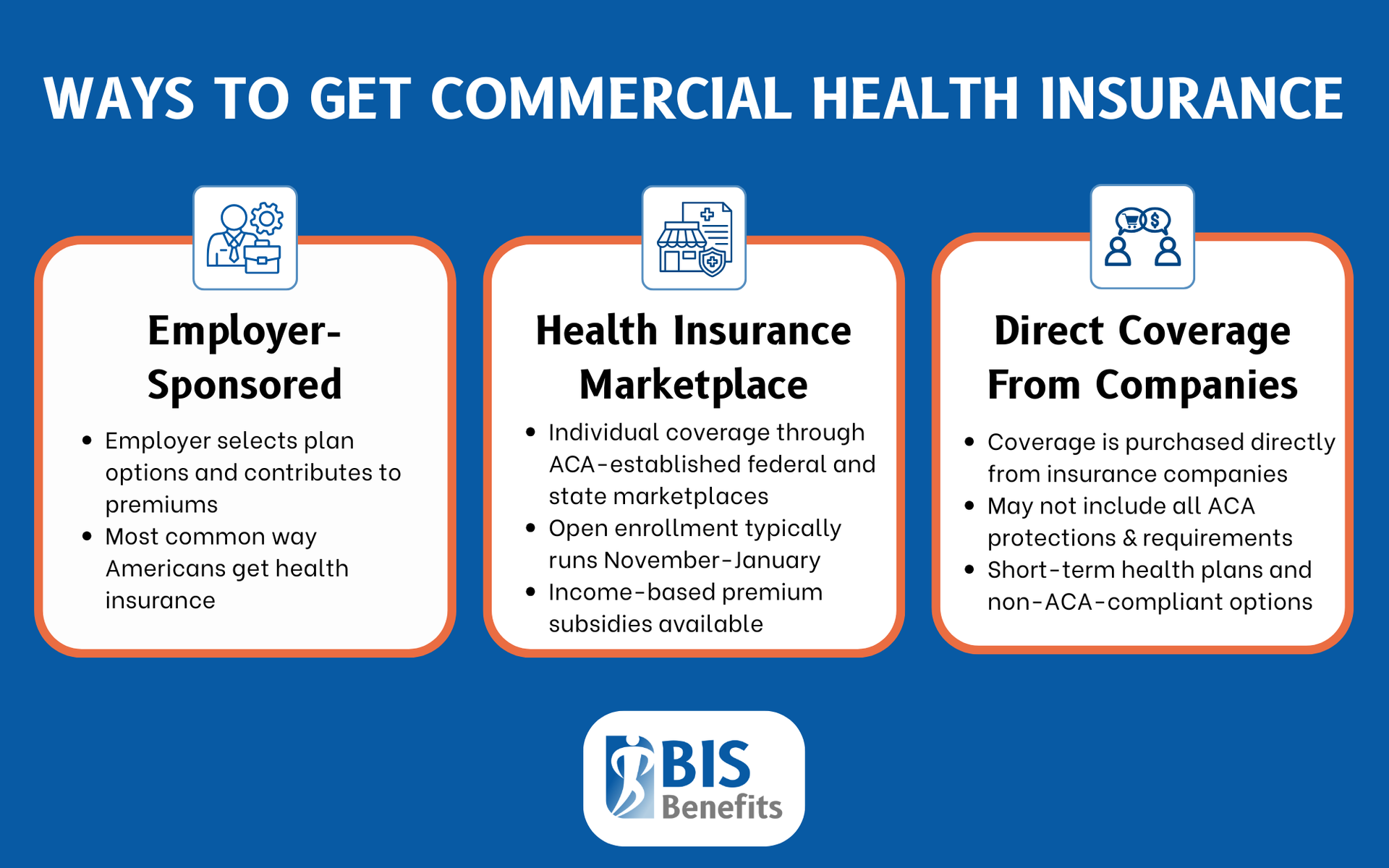
The most common way Americans obtain commercial health insurance is through an employer. With one of these plans, the employer selects plan options and contributes to premiums. Enrollment typically occurs during an open enrollment period or after a qualifying life event such as marriage, birth of a child, or loss of other coverage. Coverage often begins on the first day of employment or after a waiting period, and dependent coverage is usually available for spouses and children.
Health Insurance Marketplace
The ACA established federal and state marketplaces for individual coverage. Open enrollment typically runs from November through January, with special enrollment periods available after qualifying life events. Premium subsidies are available based on income, making coverage more affordable for many individuals.
Marketplace plans are categorized by
metal tiers (Bronze, Silver, Gold, Platinum) that indicate the level of cost-sharing between the plan and the member.
Direct Coverage From Health Insurers
Individuals can also purchase coverage directly from insurance companies, which may be available outside of marketplace enrollment periods. Short-term health plans and other non-ACA-compliant options are available but may not include all ACA protections and requirements.
Professional Organizations
Some professional or trade associations offer group health plans to members, providing access to group rates for self-employed individuals.
Limitations of Commercial Health Insurance
Commercial health insurance has limitations that individuals should understand before enrolling.
Costs
Premiums can be expensive, especially for individual and family coverage purchased outside of employer-sponsored plans. Deductibles and out-of-pocket costs add to total healthcare spending, and these costs must be paid before coverage fully kicks in for many services. Premium increases over time are common as healthcare costs rise, and some services may not be covered or have limited coverage depending on the plan.
Coverage Gaps
Not all services are covered under every plan. Out-of-network care can result in significantly higher costs or no coverage at all. Pre-authorization requirements may delay care for certain procedures and treatments, and coverage denials require navigating an appeals process. Understanding plan terms, networks, and cost-sharing can be challenging, and comparing plans requires a careful review of benefits and limitations.
Choosing the Right Commercial Health Insurance Plan
Choosing the right plan starts with assessing your healthcare requirements.
Consider Current & Future Health Needs
- Review your current health status and anticipated medical needs
- Review prescription medications to ensure they are covered
- Identify preferred doctors and specialists to verify network participation
Compare Costs
- Evaluate monthly premiums against deductibles and out-of-pocket costs
- Consider the total annual cost including premiums and expected out-of-pocket spending
- Review copays and coinsurance for common service
- Understand the out-of-pocket maximum and when it applies
Review Plan Features
Check the insurance plan's provider network size, access to preferred providers, and coverage for specific services important to you.
Discover Commercial Insurance Solutions From BIS Benefits
Commercial health insurance is private coverage purchased from insurance companies, available through employers, the health insurance marketplace, or directly from insurers. It includes various plan types like HMO, PPO, POS, and HDHP, each with different costs, provider networks, and flexibility.
Understanding plan options and comparing costs and benefits helps individuals and businesses select the right coverage. Evaluate your healthcare needs and budget, compare available commercial health insurance options, and consult with an insurance professional to find the plan that fits your requirements.
The qualified insurance brokers at BIS Benefits have spent decades helping Atlanta-based businesses find the best coverage option for their needs. We offer
Group Health and
Business Insurance services to provide comprehensive solutions for our clients. If your business has at least 15 employees,
Request a Quote today to find out what we can do for your company.