How to Reduce Small Business Health Insurance Costs
How to Reduce Small Business Health Insurance Costs
At a Glance: Small business health insurance costs can vary based on factors such as company size, employee needs, plan design, and available coverage options. Employers can explore strategies like health reimbursement arrangements (HRAs), high-deductible health plans with health savings accounts (HSAs), tax credits, and alternative funding options to manage expenses. Comparing group health insurance plans and working with a benefits advisor can help businesses find coverage that balances affordability with valuable employee benefits.
Offering health insurance can help small businesses attract and retain employees, but it can also represent a significant monthly expense. As healthcare costs change, employers may need to review their benefits strategy to control spending without reducing the coverage employees value.
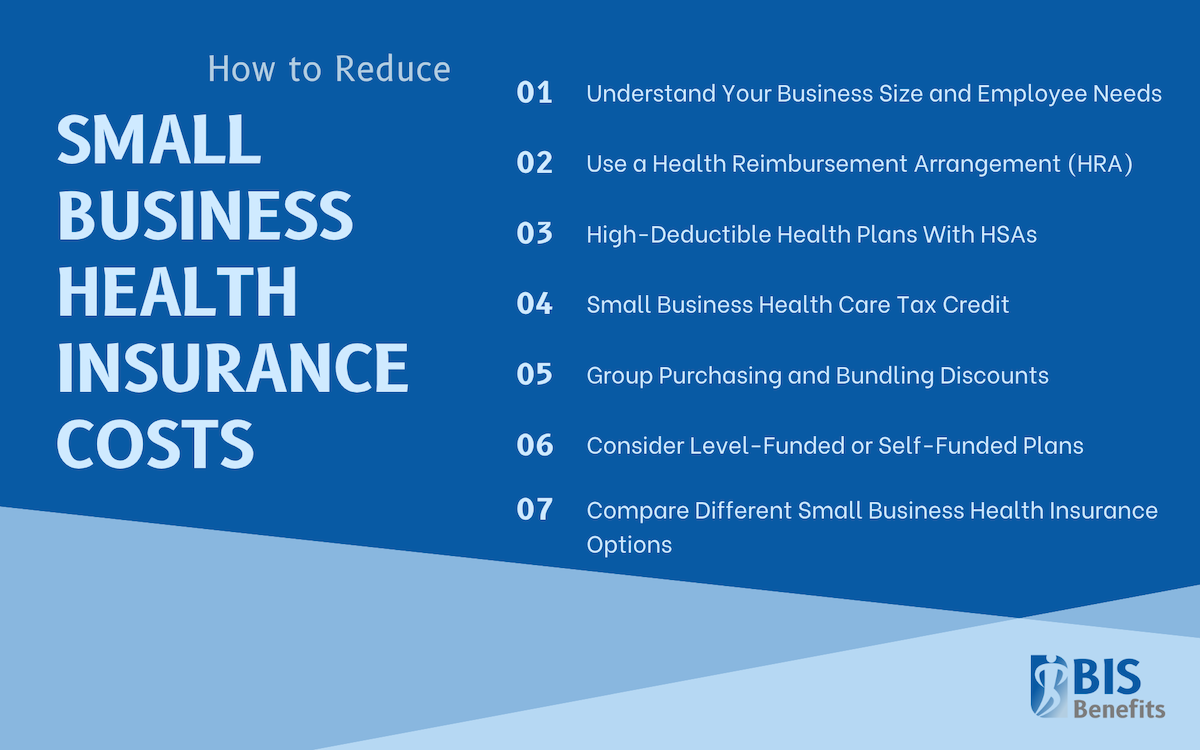
Several strategies can help manage small business health insurance costs, including health reimbursement arrangements, high-deductible health plans paired with HSAs, tax credits, bundled benefits, and alternative funding models.
The right approach depends on company size, employee needs, budget, and available small business health insurance options. Comparing costs, coverage, and employee priorities can help businesses choose a more sustainable benefits strategy.
Understand Your Business Size and Employee Needs
The best strategy for reducing small business health insurance costs starts with understanding the needs of your workforce. A healthcare plan that works well for a small company with a growing team may not be the right fit for a larger employer with dozens of employees.
For example, a company focused on recruiting and retaining employees may place more value on broad provider networks and lower out-of-pocket costs. Another business may be more concerned with maintaining predictable monthly expenses.
Business owners should consider factors such as:
- Number of employees
- Employee demographics, such as age and family coverage needs
- Employee healthcare preferences
- Current employee healthcare costs
- Current employer contribution amounts
- Available provider networks
- Deductibles and out-of-pocket expenses
Health insurance costs can be influenced by factors such as employee age, company location, family coverage needs, plan design, and the type of funding arrangement. Employer contribution strategy also affects company expenses and employee participation, making it important to review how much the business contributes toward premiums.
Offering multiple plan options can give employees more flexibility, since some may prefer lower premiums while others value broader provider networks or lower out-of-pocket costs. A benefits advisor can help employers compare available group health insurance plans and find a balance between affordability, coverage, and employee needs.
Use a Health Reimbursement Arrangement (HRA)
A health reimbursement arrangement, or HRA, is an employer-funded benefit that reimburses eligible employees for qualified healthcare expenses.
There are several types of HRAs, and the rules depend on the specific arrangement. Some HRAs work alongside traditional group health insurance plans, while others can reimburse employees for eligible individual health insurance premiums and medical expenses.
Rather than allowing employees to contribute their own money, an employer funds the HRA and determines the available reimbursement amount within applicable federal rules.
Potential benefits of health reimbursement arrangements include:
- More predictable employer healthcare contributions
- Greater flexibility for employees
- Potential tax advantages
- More control over benefits spending
- Reduced administrative responsibilities in some arrangements
Certain HRA reimbursements can generally be provided to employees tax-free when applicable requirements are met. Because HRA rules vary significantly by type, employers should review their options with a benefits professional before making a change.
Individual Coverage HRA (ICHRA)
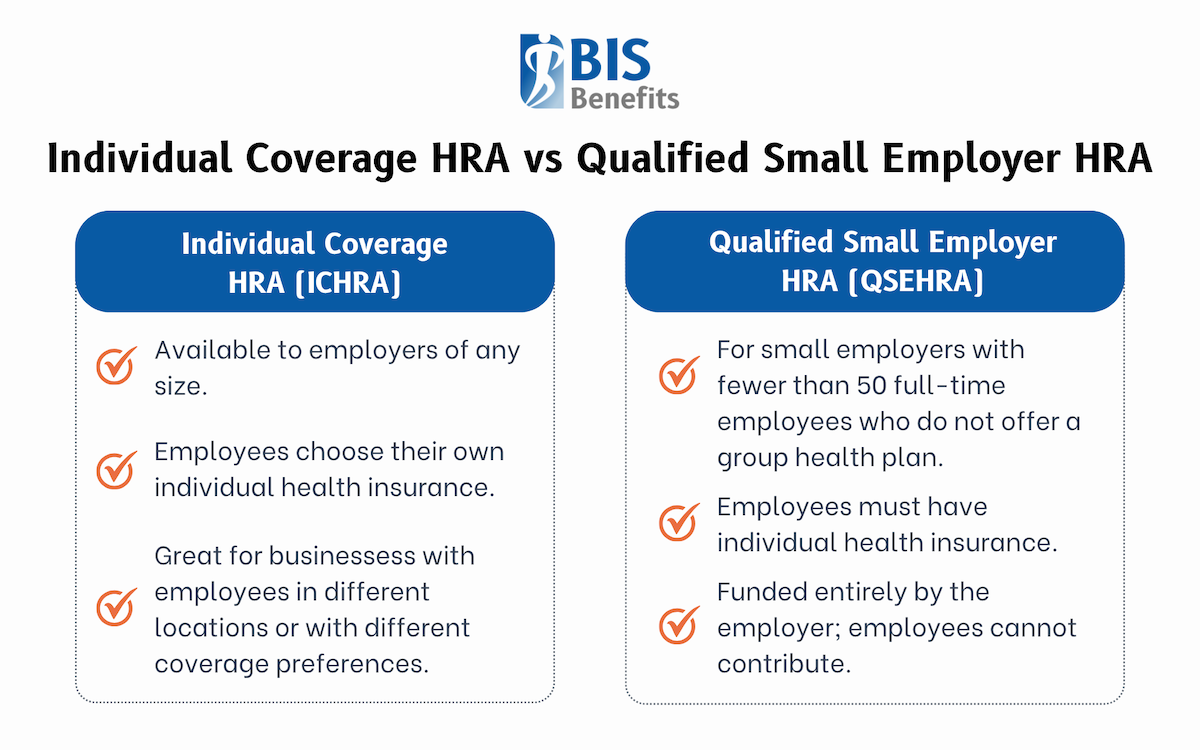
An Individual Coverage HRA, or ICHRA, allows employers to reimburse eligible employees for individual health insurance premiums and certain qualified medical expenses.
Instead of requiring participating employees to enroll in one employer-selected group health plan, an ICHRA allows employees to select qualifying individual health insurance coverage that fits their healthcare needs.
Employers of different sizes can offer an ICHRA, provided the arrangement follows federal requirements. This flexibility may be useful for companies with employees in different locations or with different coverage preferences.
Employees generally need qualifying individual health insurance coverage or Medicare to participate. Employers should also understand how an ICHRA offer can affect an employee's eligibility for Marketplace premium tax credits.
Qualified Small Employer HRA (QSEHRA)
A Qualified Small Employer HRA, or QSEHRA, is designed for eligible smaller employers.
Generally, an employer must have fewer than 50 full-time employees, including full-time equivalents, and cannot offer a group health plan to employees in order to offer a QSEHRA. The arrangement must be funded entirely by the employer. Employees cannot contribute to a QSEHRA through salary reductions.
A QSEHRA can reimburse eligible medical expenses, including certain health insurance premiums. Reimbursements can generally be tax-free to employees when applicable coverage requirements are met.
For smaller businesses that do not offer traditional group health insurance, a QSEHRA can provide another way to offer employee health benefits while setting a defined employer contribution.
High-Deductible Health Plans With HSAs
A high-deductible health plan, or HDHP, may be another way for businesses to manage health insurance costs.
HSA-eligible HDHPs generally have lower monthly premiums than plans with lower deductibles. In exchange, employees typically pay more out of pocket before the plan begins paying for most non-preventive medical services.
When paired with a Health Savings Account (HSA), employees can use tax-advantaged funds to help manage those higher healthcare expenses.
HSAs offer several benefits:
- Employers can make tax-favored contributions for eligible employees
- Employees may make pre-tax contributions through payroll when an eligible arrangement is available
- Funds can be used for qualified medical expenses
- Unused funds roll over from year to year
- HSA funds remain with the employee if they change jobs
Unlike many other benefit accounts, unused HSA funds do not expire at the end of the year. Employees can continue building the balance for future healthcare expenses. Qualifying employer HSA contributions may also provide payroll tax advantages.
However, an HDHP may not be the best choice for every workforce. Employees who regularly use healthcare services may prefer higher monthly premiums in exchange for a lower deductible and more predictable out-of-pocket expenses.
Employers should consider employee preferences and healthcare needs before switching plans.
Small Business Health Care Tax Credit
Some smaller employers may qualify for the federal Small Business Health Care Tax Credit, which can help offset a portion of the cost of providing employee health insurance.
General eligibility requirements include:
- Fewer than 25 full-time equivalent employees
- Average employee wages below the applicable IRS threshold
- The employer pays at least 50% of the cost of employee-only health insurance coverage
- Qualifying health coverage is offered to employees
Eligible employers generally must purchase qualifying coverage through the Small Business Health Options Program, or SHOP, to claim the credit.
The maximum credit can equal up to 50% of qualifying premiums paid by an eligible small business. Eligible tax-exempt organizations may qualify for a credit of up to 35%. The credit is generally available for two consecutive taxable years.
Because wage thresholds and other requirements can change, business owners should review current IRS guidance and work with a qualified tax professional to determine whether they qualify for the small business health insurance tax credit.
Group Purchasing and Bundling Discounts
Businesses may be able to manage overall insurance expenses by comparing group purchasing opportunities and bundled benefit packages. Health coverage may be offered alongside benefits such as dental, vision, life, and disability insurance, and some carriers may offer pricing advantages when multiple products are purchased together.
Discounts are not guaranteed, so employers should compare the full cost and coverage of each option. Monthly premiums, contributions, provider networks, deductibles, out-of-pocket costs, and available benefits should all be considered before making a change.
Consider Level-Funded or Self-Funded Plans
Level-funded and self-funded plans provide alternatives to traditional fully insured coverage. Level-funded plans typically combine predictable monthly funding for expected claims, administrative expenses, and stop-loss insurance. Depending on the contract, employers may receive a refund or credit when claims are lower than expected.
Self-funded plans place more responsibility for healthcare claims on the employer and can provide greater flexibility, but they also involve additional financial risk. Employers should consider workforce size, cash flow, administrative requirements, stop-loss coverage, and risk tolerance before choosing either option.

Compare Different Small Business Health Insurance Options
Business owners should compare several small business health insurance options before choosing or renewing coverage.
Common options can include Preferred Provider Organization (PPO) plans, Health Maintenance Organization (HMO) plans, Health Savings Account (HSA)-eligible plans, and other group health insurance arrangements.
- PPO plans generally provide more flexibility when employees choose healthcare providers and may provide some out-of-network benefits, although those services typically cost more.
- HMO plans generally use a more limited provider network and may offer lower premiums or deductibles. Members typically need to receive non-emergency services within the plan's network.
- HSA-eligible plans meet federal requirements that allow qualifying individuals to contribute to a Health Savings Account.
No single health plan will be the best option for every workforce. Comparing the overall cost and structure of available plans can help employers balance business expenses with employee expectations.
How to Choose the Right Cost-Saving Strategy for Your Business
Reducing healthcare expenses requires more than finding the plan with the lowest monthly premium. Employers should consider their financial goals alongside the type of coverage employees actually need.
Choosing a lower-premium policy could increase deductibles, limit provider access, or shift more costs to employees. For that reason, health insurance strategies for employers should consider both employer expenses and employee healthcare costs.
Business owners can start by:
- Reviewing current healthcare spending
- Reviewing employer and employee contribution amounts
- Gathering employee feedback
- Comparing available plan options
- Evaluating HRA and HSA opportunities
- Reviewing available tax-saving opportunities
- Considering alternative funding arrangements
- Working with a health insurance advisor
An experienced benefits advisor can help businesses compare carriers, understand plan structures, and identify options that fit the company's budget and workforce needs.
BIS Benefits works with major health insurance carriers in Georgia and shops the market to help employers compare available coverage. Their brokers focus on businesses with 15 or more employees and offer support for health insurance along with other employee health benefits.
Reduce Healthcare Costs While Providing Valuable Benefits
Small businesses have several options for managing health insurance costs while continuing to provide competitive employee benefits. HRAs, HSA-eligible HDHPs, tax credits, carrier comparisons, bundled benefits, and alternative funding arrangements can all help employers manage expenses.
The right strategy depends on company size, employee needs, budget, available plans, and financial risk. Reviewing current coverage and comparing small business health insurance options can help employers find a more sustainable approach.
BIS Benefits takes a hands-on approach to helping Georgia employers compare coverage and find solutions based on their business and employees. If your business is located in Georgia and has at least 15 employees, Request a Quote to learn more about available group health insurance options.