Employee Benefit Plan Strategies That Attract and Retain Talent
Employee Benefit Plan Strategies That Attract and Retain Talent
At a Glance: An effective employee benefits strategy balances what employees value with what the business can afford. Employers can customize their benefits package by offering flexible coverage options, voluntary benefits, financial wellness programs, and other benefits based on employee needs, company goals, and benchmarking data.
In a competitive labor market, the benefits package a company offers often decides which candidates accept an offer and which ones go elsewhere. Salary still matters, but many workers now compare health coverage, retirement contributions, and supplemental options just as closely before making a decision.
Too many organizations renew the same package year after year without checking whether it still fits the people using it. An effective employee benefits strategy balances what the business can afford against what a productive workforce actually needs, offering a valuable competitive advantage. Building that strategy requires looking at company size, workforce demographics, industry trends, and available budget.
Why Employee Benefits Strategy Matters
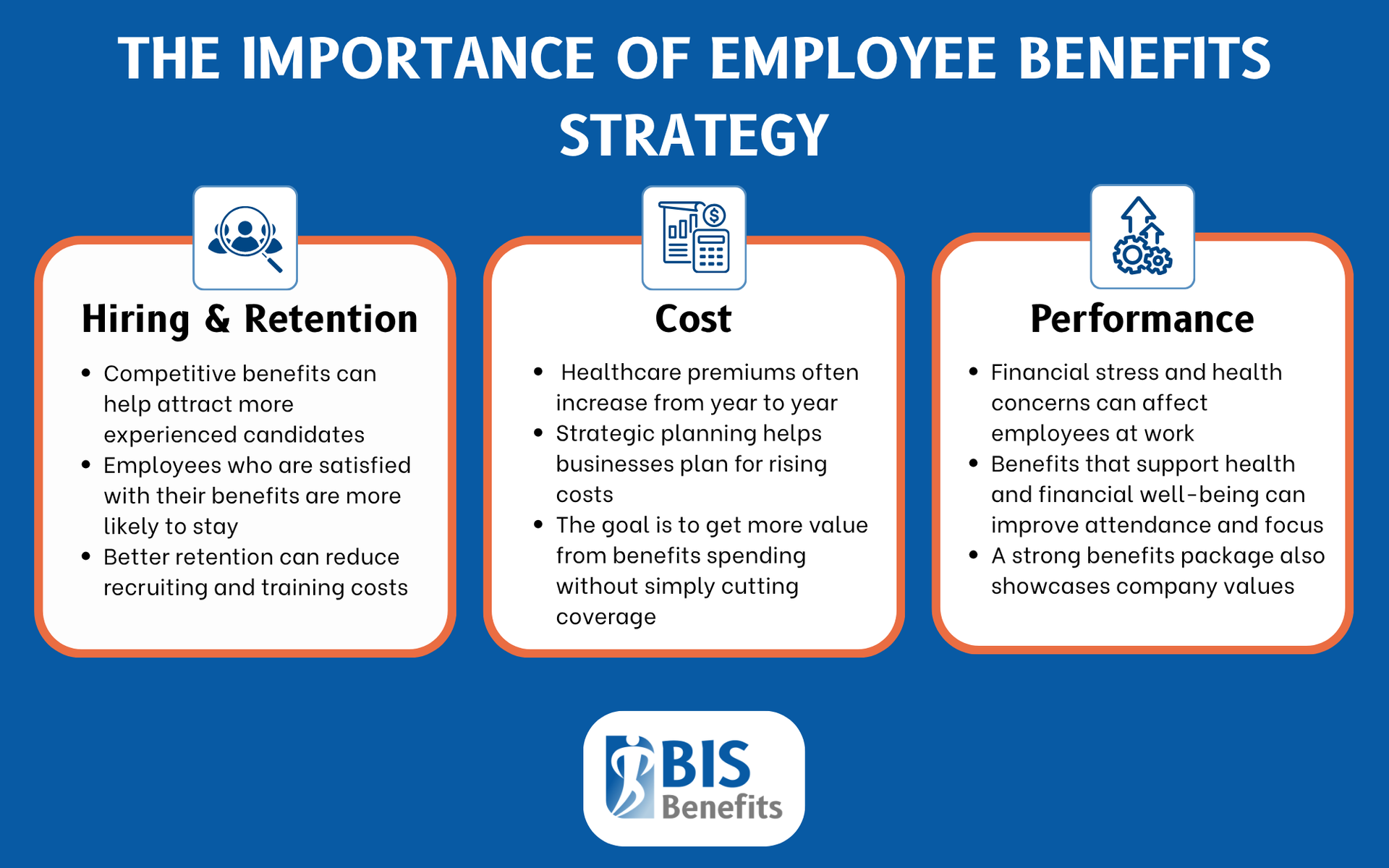
Benefits plans influence hiring outcomes and turnover rates in measurable ways.
Hiring & Retention
Candidates weigh coverage quality and employer contributions when comparing offers, and strong packages tend to attract applicants with more experience. Employees who are satisfied with their benefits also tend to stay longer, which lowers the cost of recruiting and training replacements.
Cost
Healthcare premiums rise most years, and business owners who do not plan for those increases either absorb them or shift them to employees without a clear rationale. Strategic planning gets more value out of every dollar spent rather than simply cutting coverage when renewal quotes arrive.
Performance
Financial stress and untreated health issues follow employees into the workplace. Programs that address both improve attendance and help people stay focused. Benefits also signal what a company values, which shapes how the organization is perceived by current employees and by candidates researching it during a job search.
Different Ways Employers Can Improve Their Benefits Plan
Offer Personalized and Flexible Choices
Medical, dental, vision, and life insurance remain the foundation of most packages, but a single benefits plan design rarely fits an entire workforce. Personalization solves that without necessarily raising costs. Common supplemental options include:
- Tuition support
- Pet insurance
- Legal services plans
- Childcare assistance
None of these carries the price tag of a medical plan, and each one matters a great deal to a specific segment of employees.
Flexible structures make personalization workable at scale.
Cafeteria plans let employees direct pretax dollars toward the coverage they select. Some employers provide a fixed
benefit allowance that employees allocate themselves. They can also offer tiered plan options at different price points so people can trade premium cost against deductible level. Each approach raises the perceived value of the package because employees end up with coverage they chose.
Add Voluntary Benefits
Voluntary benefits are offered through the employer but paid for by the employee, usually through payroll deduction. The employer negotiates group rates and handles administration, and employees decide individually whether to enroll. This structure broadens the package with little to no direct cost to the company.
Options in this category include:
- Accident insurance
- Critical illness coverage
- Hospital indemnity plans
- Short-term and long-term disability
- Supplemental life insurance
- Long-term care coverage
- Vision and dental (when the employer does not fund them directly)
The advantage for employers is straightforward. The package grows more competitive, administration runs through existing payroll processes, and total compensation looks stronger to candidates. Employees gain access to group pricing they could not get on the individual market, along with pretax premium treatment in some cases and coverage that fills gaps left by the primary medical plan.
To implement voluntary benefits well, business owners should:
- Survey employees first to learn which options they would actually use.
- Select carriers with a track record of paying claims promptly.
- Communicate the options clearly during open enrollment.
- Provide decision support tools so employees understand what each policy covers.
- Review utilization annually.

Include Financial Wellness Programs
Financial stress affects concentration, attendance, and retention. Many employees have little retirement savings, and younger workers often carry student loan balances that limit what they can set aside. Employers who address this see returns in employee engagement and in reduced turnover.
Retirement Plans
A 401(k) or 403(b) with an employer match gives employees a reason to participate, and automatic enrollment raises participation rates substantially compared with opt-in designs. Target-date funds simplify investment decisions for employees who do not want to manage allocations themselves. Pairing the plan with education on how contributions and compounding work helps people use it.
Student Loan Assistance
Student loan repayment assistance has become a meaningful differentiator for employers competing for early-career talent. Employer contributions toward loan principal address a concern that salary alone does not resolve, and current tax rules allow certain programs to be structured advantageously.
Other Financial Programs
Beyond retirement and loans, financial wellness platforms offer budgeting tools, access to advisors or coaches, educational content, emergency savings programs, and debt management resources. Employee discount programs, early wage access, and tax preparation assistance round out the category at modest cost.
Optimize Plan Budget
Review Claims Data
Cost management starts with claims data. Reviewing utilization patterns identifies the conditions and services driving spend, which tells you where plan changes will actually move the number.
Consider HDHP Options
High-deductible health plans (HDHP) paired with health savings accounts remain a common cost strategy. Premiums run lower than traditional plans, employees save pretax dollars for medical expenses, and unused HSA funds roll over year to year instead of disappearing. Employer HSA contributions offset the higher deductible and keep the design from feeling like a benefit cut.
Network Decisions
Narrow network plans reduce premiums by limiting the provider list. Centers of excellence direct high-cost procedures to facilities with better outcomes. Telehealth handles routine visits at lower cost, and urgent care steering keeps non-emergency cases out of the emergency room. Pharmacy benefit management deserves separate review, since drug spend often grows faster than medical spend.
Plan Design
Plan design offers additional options that account for the specific needs of a business:
- Tiered cost-sharing tied to provider quality
- Reference-based pricing for specific services
- Value-based designs that reward preventive care
- Spousal surcharges when other coverage is available
Funding Structure
- Fully insured plans provide predictability for employers and employees.
- Self-funded plans give access to claims data and reduce carrier margin.
- Level-funded plans give mid-size employers a middle option.
- Stop-loss coverage limits the downside on self-funded arrangements.
Evaluate Relevant Data
Decisions hold up better when supported by evidence.
Keep an Eye on Enrollment Rates
Track enrollment rates by benefit type, claims patterns and costs, wellness program participation, and voluntary benefit uptake. Low enrollment in a specific offering usually means employees do not understand it or do not need it, and those two problems call for different responses.
Review Benchmarking Data
Benchmarking against similar employers shows where your package sits in the market. Compensation surveys and industry benefits data identify gaps and confirm which offerings have become standard in your field.
At BIS Benefits, we aggregate our clients’ data, without revealing names, with agencies across the United States. This allows us to offer valuable benchmarking data about average deductibles, copays, and employee health insurance costs.
Ask for Employee Input
Employee feedback fills in what the numbers cannot explain. Satisfaction surveys, input gathered during open enrollment, exit interviews, and small focus groups all surface priorities that utilization data misses. Combining the two sources lets you retire underused benefits, protect popular ones, and justify changes to leadership with support behind them.
Important Factors to Consider
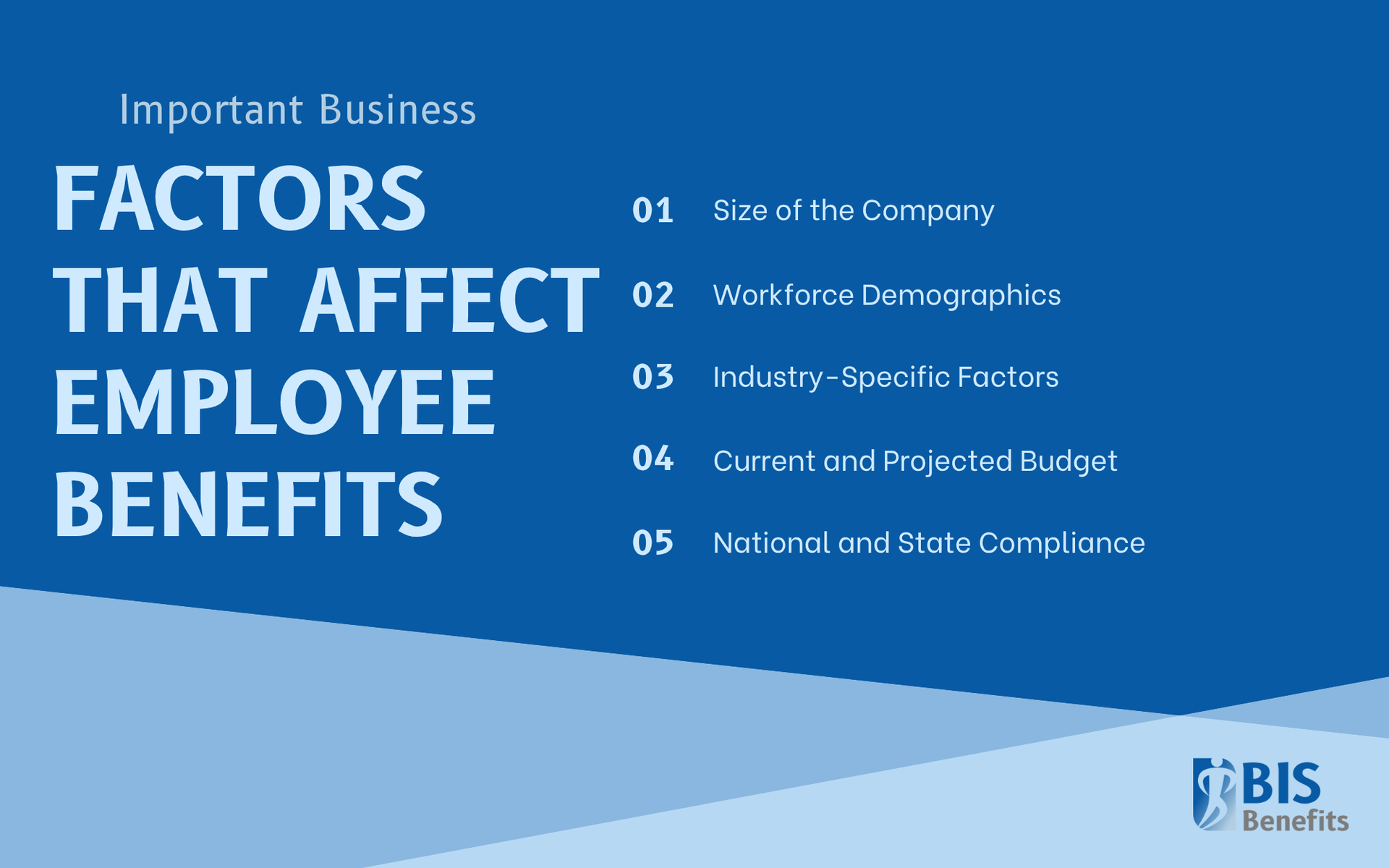
Several company-specific variables shape which strategies apply:
- Company Size: Headcount affects carrier negotiating power, administrative capacity, and compliance obligations. Crossing 50 full-time equivalents triggers the ACA employer mandate, so projected growth belongs in the planning conversation.
- Workforce Demographics: Average age, family status, dependent coverage needs, geographic distribution, and generational preferences all influence which benefits get used.
- Industry Factors: Typical offerings, labor regulations, safety and risk profiles, competition for talent, and any collective bargaining requirements set the baseline you are working from.
- Budget: Available employer contribution, cost-sharing philosophy, multi-year planning horizon, and expectations for return on the investment.
- Compliance: Affordable Care Act (ACA) requirements, Employee Retirement Income Security Act (ERISA) obligations, state insurance regulations, COBRA continuation coverage, and reporting and disclosure duties.
Building Your Benefits Program
- Assess the Current Policy: Audit existing offerings, analyze utilization and costs, gather information about employee satisfaction, and benchmark against competitors to identify strengths and gaps.
- Define Objectives: Clarify what the program should accomplish, align those goals with business strategy, set measurable targets, prioritize among competing aims, and establish budget parameters.
- Develop the Strategy: Select the benefits mix based on your objectives and data, design plan structures and cost-sharing, choose voluntary offerings, plan financial wellness components, and build an implementation timeline.
- Communicate and Implement: Create an effective communication plan, provide decision support tools, train managers and HR staff, run the enrollment process, and monitor adoption.
- Evaluate and Adjust: Measure results against your objectives, review utilization and costs, collect ongoing feedback, and make adjustments before the next plan year.
Trust a Qualified Insurance Broker with Strategic Employee Benefits Planning
An effective benefits strategy balances budget limits against workforce needs by combining personalized choices, voluntary options, financial wellness support, and plan designs informed by claims data. Company size, employee needs, and industry conditions should guide those decisions rather than last year's package.
An employee benefits broker can help employers build a plan that supports recruiting, retention, cost management, and overall business goals. BIS Benefits supports businesses with at least 15 employees that are looking for customized, long-term group benefits and commercial insurance solutions.
Request a Quote to get in touch with one of our expert brokers today.