What Is Commercial Fire Insurance?
What Is Commercial Fire Insurance?
At a Glance: Commercial fire insurance is often included as part of a commercial property insurance or Business Owner’s Policy (BOP) plan. It helps protect businesses from the financial losses that can follow a covered fire, including damage to buildings, equipment, inventory, and other business property. Depending on the policy, coverage may also help with smoke and water damage, liability claims, and lost income when fire damage temporarily interrupts operations.
A fire can create serious challenges for a business in a matter of minutes. Beyond damage to a building, flames, smoke, and firefighting efforts can affect equipment, inventory, technology, documents, and the ability to continue daily operations. For many businesses, recovering from a fire involves significant repair costs and unexpected financial pressure.
Commercial fire insurance helps businesses recover from losses caused by fire-related damage. This type of coverage can help pay for repairs, replacement costs, cleanup services, liability claims, and lost income when a business must temporarily close.
Commercial fire insurance is often included as part of a
commercial property insurance plan. Understanding how this coverage works, what it protects, and what factors affect costs can help business owners make informed decisions about their commercial insurance needs.
What Is Commercial Fire Insurance?
Commercial fire insurance is comprehensive coverage designed to protect businesses from financial losses caused by fire damage. It helps businesses recover after a covered fire damages their property, equipment, inventory, or other assets.
A fire can impact many parts of a business beyond the physical flames. For example, a fire in a manufacturing facility could cause damage to specialized equipment and cause production delays that affect revenue.
Commercial fire insurance may help cover costs associated with:
- Repairing or rebuilding damaged property
- Replacing destroyed business assets
- Removing debris after a fire
- Restoring smoke and soot damage
- Addressing water damage caused by firefighting efforts
- Covering certain legal expenses related to third-party insurance claims
The exact protection provided depends on the details of the insurance policy. Coverage limits, deductibles, exclusions, and included protections can vary between policies. Business owners should review their policy details to understand what losses are covered and where gaps may exist.
How Does Commercial Fire Insurance Work?
Commercial fire coverage is included as part of a commercial property insurance or business owner’s policy (BOP) to help businesses recover financially after a covered fire loss.
The amount a business receives after a claim depends on the specific commercial fire insurance policy. Some policies may cover the full repair or replacement cost, while others may provide reimbursement based on the value of damaged items or the limits selected by the business owner.
Because every business has different risks, reviewing policy details with an insurance professional can help owners understand what protection they currently have and what additional coverage may be needed.
What Does Commercial Fire Insurance Cover?
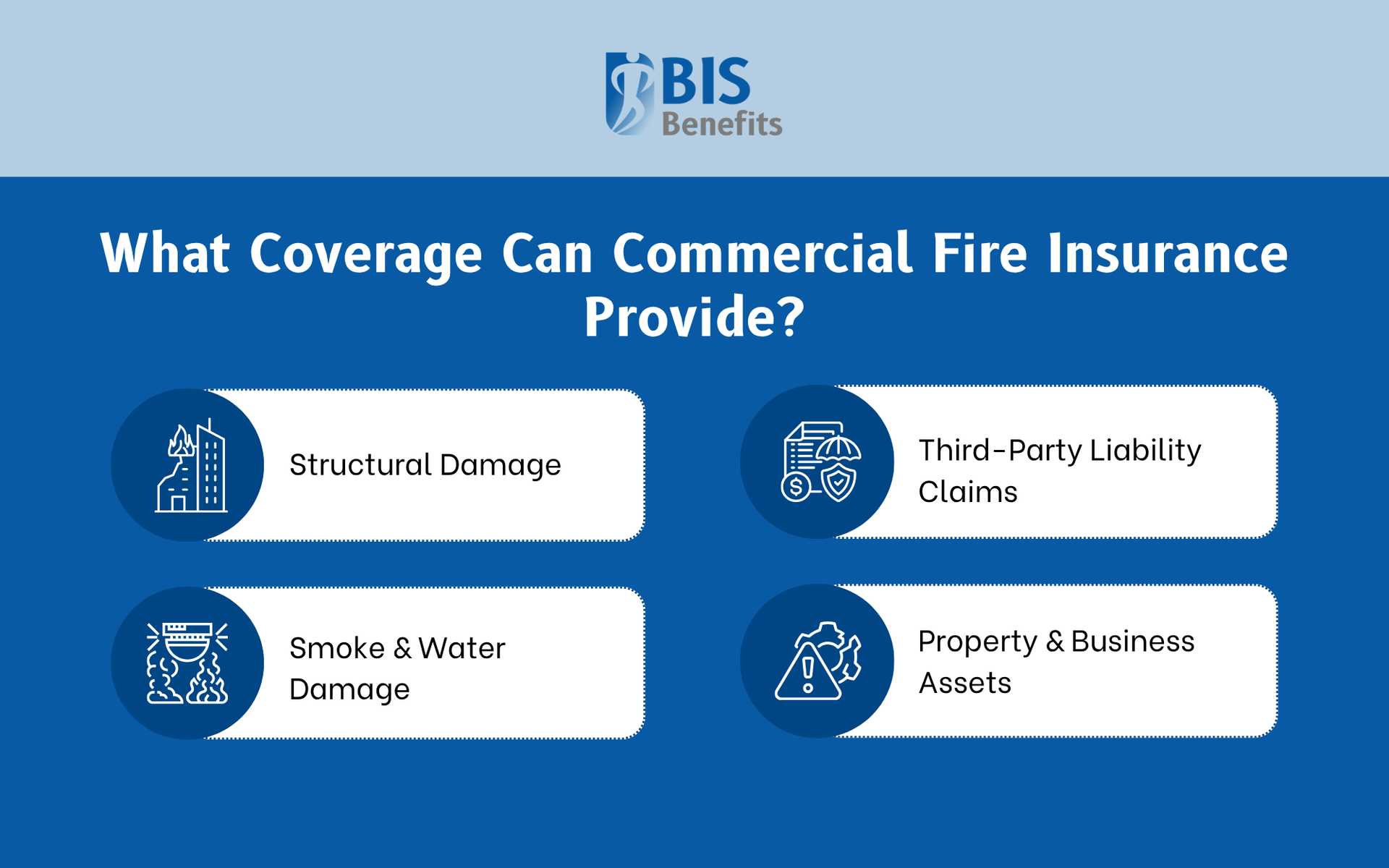
Commercial fire insurance coverage can include several areas of protection. The exact benefits depend on the policy, but many plans address damage to buildings, business property, liability risks, and income losses caused by fire-related events.
Structural Damage
One of the primary purposes of commercial fire insurance is to protect the physical structure of a business property.
If a fire damages a commercial building, coverage may help pay for repairs or rebuilding costs. This can include repairs to walls, roofing, electrical systems, plumbing, and other structural elements affected by the fire. For businesses that own their property, this protection can help reduce the financial impact of major repairs. For businesses that lease their space, coverage may still help protect improvements, fixtures, and other property connected to their operations.
The cost of rebuilding after a fire can vary based on the size of the building, construction materials, labor costs, and local requirements. Having the right property damage insurance coverage can help businesses prepare for these expenses.
Property and Business Assets
A fire can destroy valuable business property beyond the building itself. Commercial fire insurance may help cover damage to assets needed for everyday operations.
Examples of insured property may include:
- Inventory and products
- Furniture and fixtures
- Computers and technology
- Specialized equipment
- Tools and machinery
- Business supplies
Replacing these items can be expensive, especially for businesses that rely on specialized equipment or maintain large amounts of inventory. Having the right insurance coverage can help businesses repair or replace damaged assets so they can resume normal operations.
Smoke and Water Damage
Fire damage often extends beyond areas directly affected by flames. Smoke, soot, and water used during firefighting efforts can create additional repair needs.
Commercial fire insurance may help cover restoration costs related to:
- Smoke damage
- Soot buildup
- Water damage from firefighting efforts
- Cleaning and restoration services
These secondary damages can create significant expenses after a fire. A business may need professional cleaning, equipment repairs, or restoration services before reopening.
Third-Party Liability
A fire can sometimes affect people or properties outside of the business itself. For example, flames or smoke may spread to nearby buildings, causing damage to neighboring businesses or property owners.
Depending on the policy, commercial insurance coverage may help protect businesses from certain third-party claims related to:
- Property damage caused by a covered fire
- Bodily injury claims
- Legal expenses associated with covered incidents
Liability protection can be especially important for businesses located near other commercial properties or in shared buildings.
Business Interruption Coverage
A fire can interrupt business operations long after the flames are gone. Repairs, inspections, and restoration work may require a business to temporarily close or operate at reduced capacity.
Business interruption insurance may help replace lost income and cover certain ongoing expenses during a temporary closure. This type of protection may help with costs such as:
- Lost revenue during downtime
- Payroll expenses
- Rent or lease payments
- Temporary operating expenses
Business interruption coverage helps businesses manage financial obligations while they work to restore their operations.
What Does Commercial Fire Insurance Not Cover?
While commercial fire insurance provides important protection, policies often have exclusions and limitations. Coverage varies depending on the insurer and the terms of the commercial insurance policy.
Common exclusions or limitations may include:
- Intentional damage caused by the business owner or employees
- Certain equipment failures unrelated to fire
- Damage caused by events outside the policy terms
- Coverage limits that do not fully match rebuilding costs
Business owners should carefully review their commercial fire insurance policy to understand what is included and what may require additional coverage.
Working with an insurance professional can help identify potential coverage gaps and determine if adjustments are needed as the business changes.
Factors That Influence the Cost of a Commercial Fire Insurance Policy
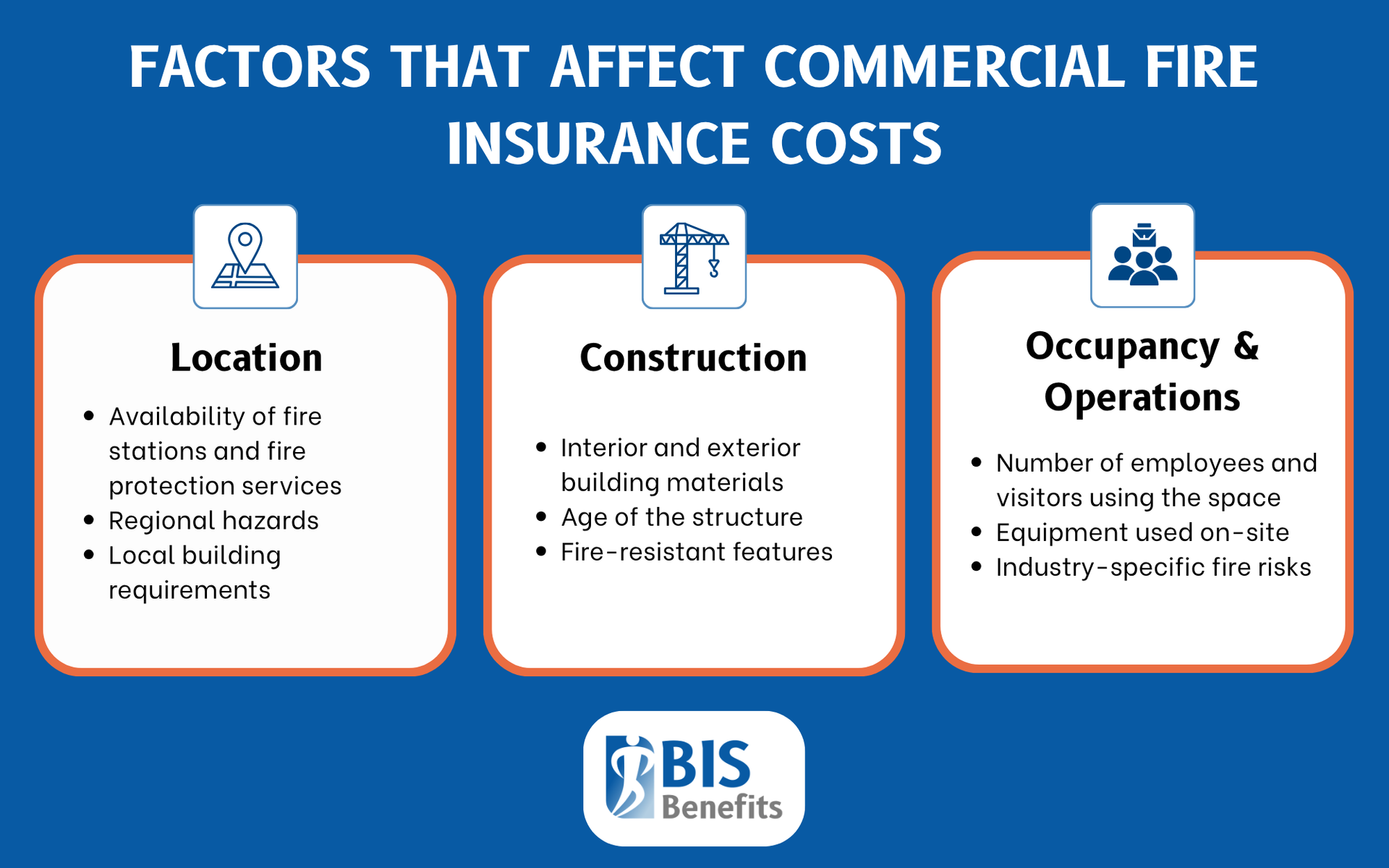
The cost of a commercial fire insurance policy depends on several factors related to the property, business operations, and level of risk. Insurance providers evaluate these details when determining coverage options and pricing.
Location
A business’s location can influence commercial insurance costs. Insurance providers may consider factors such as:
- Distance from fire stations
- Availability of local fire protection services
- Regional hazards
- Local building requirements
Properties in areas with greater fire risks or limited emergency services may have different insurance costs than businesses in lower-risk areas.
Construction
The design and materials used to build a property can affect fire risk. Insurance providers may review factors such as:
- Building materials
- Age of the structure
- Fire-resistant features
- Interior construction elements
Buildings with certain safety features, updated systems, or fire-resistant materials may have different coverage considerations than older structures.
Occupancy and Business Operations
How a business uses its property also affects fire insurance pricing. Different industries have different levels of fire risk based on their daily activities, equipment, and materials.
Insurance providers may consider:
- Number of employees and visitors using the space
- Type of business operations
- Equipment used on-site
- Industry-specific fire risks
For example, a restaurant, manufacturing facility, and office building may have different coverage needs because each business faces different potential risks.
How to Choose the Right Commercial Fire Insurance Coverage
Choosing the right commercial fire insurance coverage starts with understanding the risks associated with a business’s property and operations.
Business owners should consider several factors when reviewing coverage options:
- Estimate property replacement costs
- Review the value of inventory and equipment
- Evaluate potential income losses during a closure
- Compare coverage limits and exclusions
- Review policy details as the business grows or changes
A commercial insurance policy should reflect the current needs of the business. Property values, equipment, inventory levels, and operations can change over time, making regular policy reviews important.
Protect Your Business With the Right Commercial Insurance Coverage
Commercial fire insurance helps businesses recover from fire-related losses involving property damage, business assets, legal liability claims, and temporary closures. Since every business has different risks, coverage needs can vary based on factors such as location, building construction, and daily operations.
Reviewing your commercial insurance policy regularly can help confirm that your coverage aligns with your current business needs. An experienced insurance professional can help you understand your options and choose protection that fits your operations.
Discover Personalized Insurance Solutions with BIS Benefits
Working with a qualified insurance broker who understands your industry can help you find coverage designed around your specific risks and business goals. At BIS Benefits, our professional brokers take a hands-on approach to help Georgia businesses find insurance plans that fit their needs. We'll help you find general liability insurance, commercial auto insurance, workers' compensation insurance, and more commercial insurance plans. If your business is located in Georgia and has at least 15 employees, Request a Quote to learn more about our commercial insurance products.