
What Does an Insurance Broker Do?
What Does an Insurance Broker Do?
At a Glance: Insurance brokers are licensed professionals who represent clients rather than insurance companies, helping individuals and businesses find, compare, and purchase coverage from multiple carriers. Working with a broker provides access to more coverage options, independent guidance, time savings, and advocacy throughout the relationship.
Navigating the insurance market can be overwhelming, with countless carriers, policy types, and coverage options to evaluate. This is why many individuals and businesses turn to insurance brokers for guidance. Insurance brokers are licensed professionals who help clients find and purchase insurance coverage that meets their specific needs.
Unlike
insurance agents who represent carriers, brokers work on behalf of the client, providing independent advice and access to multiple insurance companies. Understanding what brokers do and how they differ from other insurance professionals helps you decide whether working with a broker is the right choice for your insurance needs.
What Is an Insurance Broker?
An insurance broker is a licensed professional who acts as an intermediary between clients and insurance companies. Brokers represent the client's interests rather than the insurance carrier, helping clients find, compare, and purchase insurance policies. They work with multiple insurance carriers to offer a range of options and must hold a state license to sell insurance products.
Brokers are typically
compensated through commissions paid by insurance carriers when policies are sold, calculated as a percentage of the premium. Some charge a broker fee for consulting or advisory services, which provides transparency and may reduce potential conflicts of interest.
Types of Insurance Brokers
Several types of insurance brokers serve different markets:
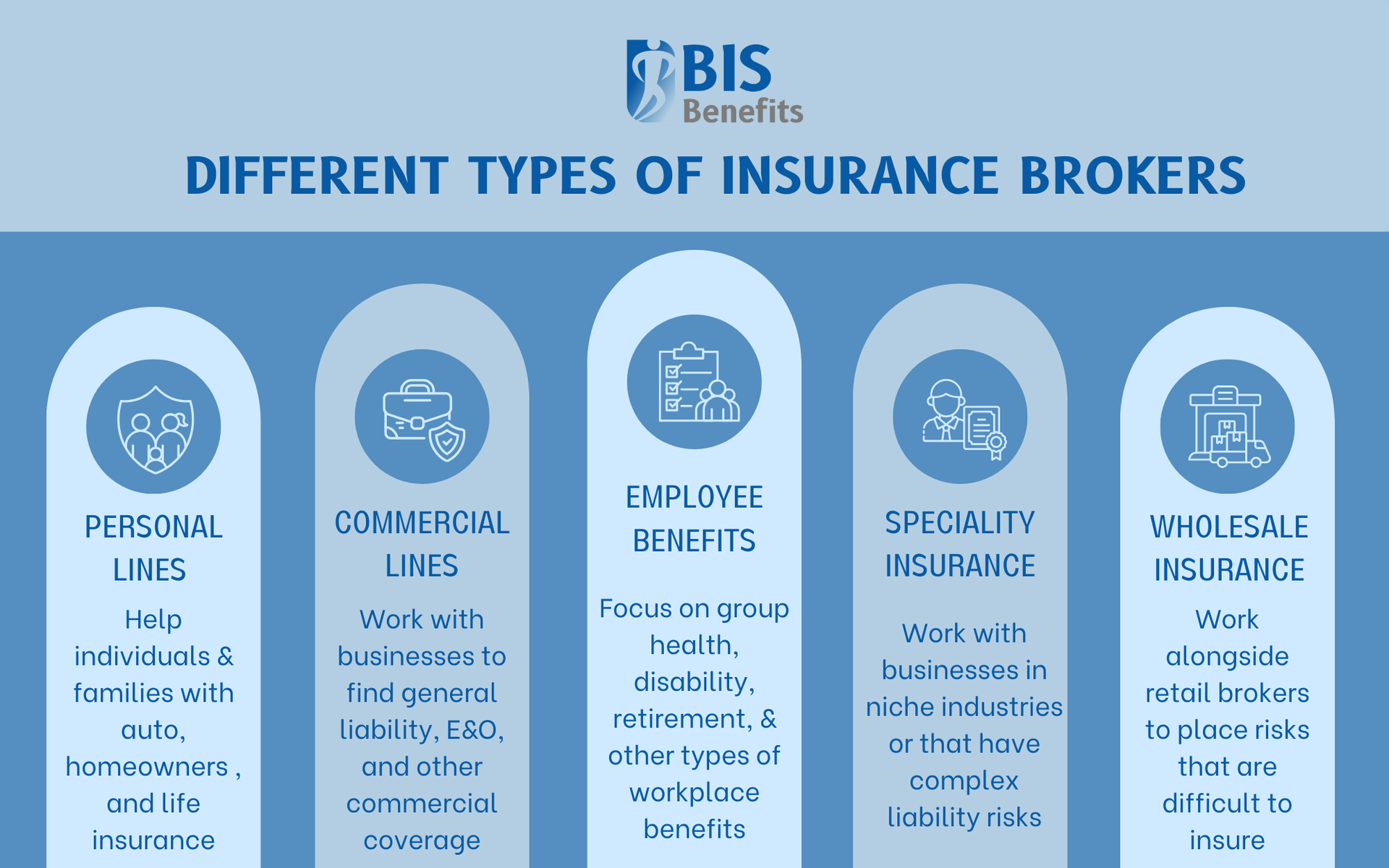
- Personal Lines Brokers: Help individuals and families with coverage like car insurance, homeowners insurance, and life insurance
- Commercial Lines Brokers: Specialize in business insurance
- Employee Benefits Brokers: Focus on group health, retirement, and other workplace benefits
- Specialty Insurance Brokers: Handle niche industries or complex risks
- Wholesale Insurance Brokers: Work with retail brokers to place hard-to-insure risks
What Does an Insurance Broker Do?
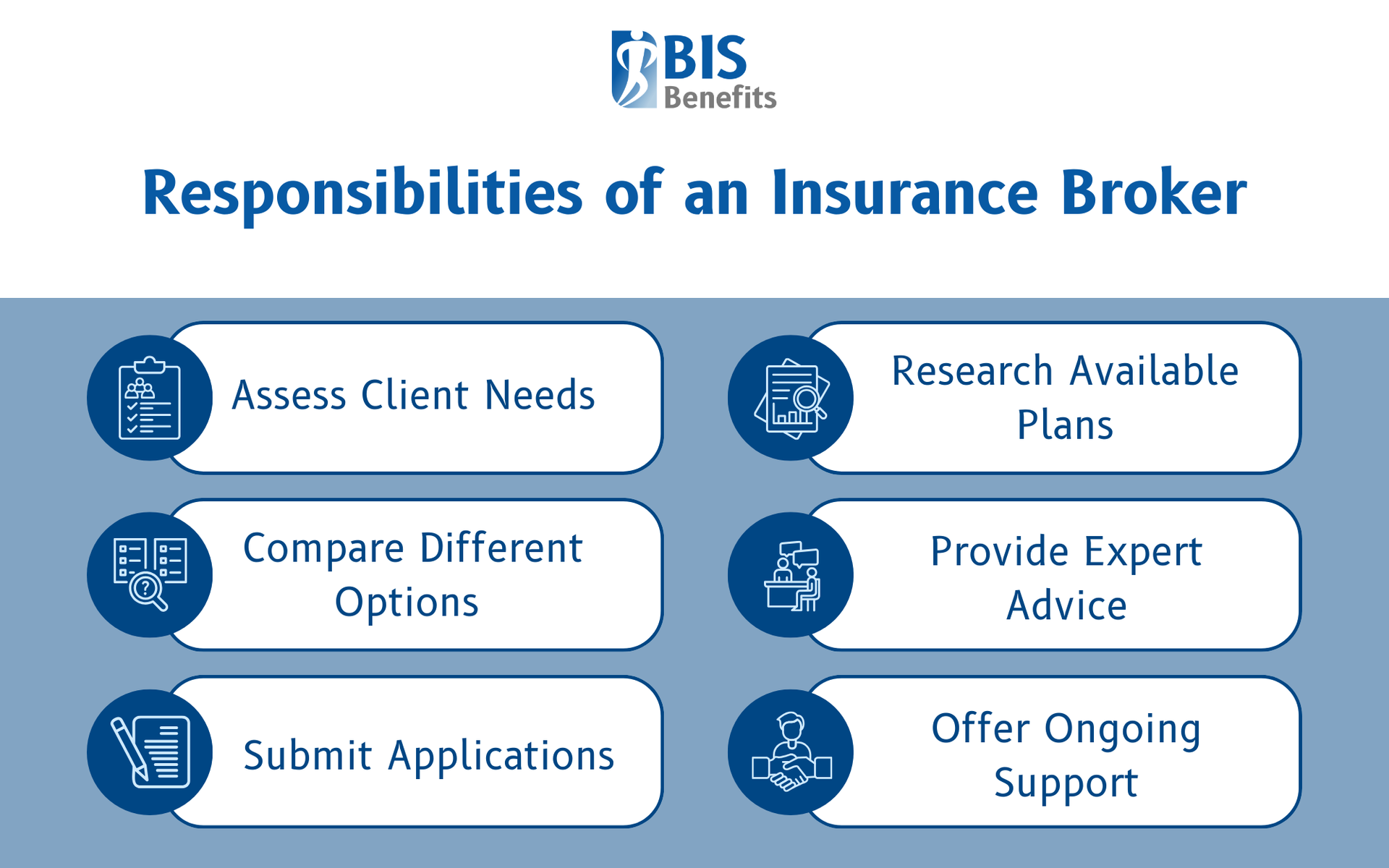
Assess Client Needs
Brokers begin by meeting clients to understand their specific risks and coverage requirements. They evaluate current insurance policies and identify coverage gaps that could leave clients exposed. Brokers consider the client's budget, risk tolerance, and long-term goals when developing recommendations. For commercial clients, brokers analyze industry-specific risks and gather the information needed for accurate quotes from carriers.
Research & Compare Options
Brokers have access to multiple insurance carriers and policy options, allowing them to compare coverage terms, exclusions, and limitations across different insurers. They evaluate pricing from various carriers for similar coverage and identify policies that best match client needs and budget.
Provide Expert Advice and Recommendations
Many policies contain complex terms that can be difficult for people not familiar with the insurance industry to understand. Brokers explain policy language in plain terms and recommend coverage levels and options based on the client's situation. They also advise on risk management strategies beyond insurance. Because brokers are not tied to a specific insurance company, they can offer unbiased advice focused on the client's best interests.
Facilitate Application & Underwriting Process
Brokers complete and submit insurance applications on behalf of clients, gathering required documentation and information for underwriters. They communicate with carriers throughout the underwriting process and negotiate terms and pricing with insurers when possible. Brokers streamline what can otherwise be a complex and time-consuming process.
Provide Ongoing Service and Support
The broker relationship extends well beyond the initial policy purchase. Brokers serve as the point of contact for policy questions and changes and assist with policy renewals and annual reviews. They advocate for clients in disputes with insurance carriers and update coverage as client needs change over time.
Insurance Broker vs. Insurance Agent
Understanding the difference between brokers and agents helps clarify which type of professional best suits your needs.
Brokers represent the client, while agents represent insurance companies.- Brokers work with multiple carriers. Captive agents represent a single insurance company. Independent agents represent multiple carriers but may have agreements with specific carriers.
- Brokers offer independent insurance advice, while agents promote their carrier's products.
- Brokers are generally beneficial when comparing options across multiple carriers, while agents may be sufficient for straightforward coverage from a specific carrier.
- Brokers often play a crucial role for complex commercial or specialty coverage where access to multiple markets is valuable.
Types of Insurance Brokers by Specialty
Personal Lines Brokers
These professionals help individuals and families with personal insurance needs including auto insurance, home insurance, renters insurance, and personal liability coverage. They also assist with life insurance, individual health insurance, and coverage for high-value assets like jewelry, and art.
Commercial Insurance Brokers
Specializing in business insurance coverage, these brokers work with general liability, property, workers compensation, and commercial auto insurance. They also handle professional liability (E&O), directors and officers (D&O), and cyber liability coverage, along with industry-specific coverage for unique business risks.
Employee Benefits Brokers
These health insurance brokers focus on group health and employee benefits programs, including medical, dental, vision, life, and disability coverage. They assist with retirement plans and voluntary benefits, provide compliance guidance for benefits regulations, and support employee communication and enrollment processes.
Specialty & Wholesale Brokers
These specialized brokers handle complex, high-risk, or hard-to-place coverage. They work with surplus lines and non-admitted carriers, bringing industry-specific expertise in areas like construction, healthcare, aviation, and marine. These brokers can access specialized markets and handle large or unusual risks that standard carriers may decline.

Benefits of Working with an Insurance Broker
Working with an insurance broker provides access to multiple carriers and options. Brokers work with many different insurance companies, and more choices mean a better chance of finding the right coverage and price. Clients gain access to carriers and products not available directly to consumers and can compare policies from different insurers on an equal basis.
Expert Knowledge and Guidance
Brokers understand complex policy language and coverage nuances, and their industry expertise helps identify risks clients may overlook. Brokers stay current on market conditions and regulatory changes, providing education and clarity on insurance decisions.
Time & Effort Savings
Brokers handle research, quotes, and paperwork, so clients avoid contacting multiple carriers individually. The process from application to policy issuance is streamlined, and ongoing service reduces administrative burden for clients.
Advocacy & Claims Support
Brokers advocate for clients during the claims process, assist with claim filing and documentation, help resolve disputes with insurance carriers, and work to ensure fair claim settlements. This advocacy can make a significant difference in claim outcomes.
Customized Solutions
Brokers tailor recommendations to the client's needs, identify coverage gaps, structure policies to address unique risks, and adjust coverage as needs evolve.
Cost Savings
Brokers can help clients reduce costs by accessing competitive pricing from multiple carriers, negotiating terms and premiums, identifying discounts, and avoiding overpaying for unnecessary coverage.
How to Choose the Right Insurance Broker
Verifying Licensing & Credentials
Confirm the broker holds a valid state insurance license and check for professional designations. Verify there are no disciplinary actions or complaints through your state insurance department and ensure the broker is licensed for the type of insurance you need.
Evaluate Experience & Expertise
Look for a broker with experience in your type of insurance needs. Ask about industry-specific expertise for commercial coverage, inquire about carrier relationships and market access, and consider years in business and reputation in the market.
Assess Service & Communication
Evaluate responsiveness and communication style. Ask about the service model and who will handle your account, understand how the broker handles claims and ongoing support, and look for a broker who takes time to understand your needs.
Ask the Right Questions
When selecting a broker, ask them questions about their services:
- How many carriers do you work with?
- What is your experience with my type of coverage or industry?
- How are you compensated?
- What services do you provide beyond placing coverage?
- How do you handle claims and policy changes?
- Can you provide references from similar clients?
Find the Right Insurance Coverage with a Broker from BIS Benefits
Insurance brokers are licensed professionals who represent clients in finding, comparing, and purchasing insurance coverage from multiple carriers. Working with a qualified broker provides access to more options, expert advice, time savings, and ongoing support throughout the insurance relationship.
If you're a business owner shopping for insurance or reviewing your current coverage, consider working with a licensed insurance broker from BIS Benefits. We work with Georgia-based businesses with at least 15 employees to help them find competitive rates for insurance plans that meet their unique needs.
Request a Quote to get in touch with one of our experts today.