
Is General Liability the Same as Professional Liability?
Is General Liability the Same as Professional Liability?
At a Glance: General liability and professional liability insurance protect businesses against different types of claims. General liability typically covers certain third-party bodily injury, property damage, and personal or advertising injury claims. Professional liability addresses allegations that a mistake, omission, or failure in professional services caused a client financial harm. Some businesses may need both policies, depending on their operations, contracts, and potential risks.
General liability and
professional liability are two different types of business insurance, and they handle two different kinds of risk. General liability deals with physical risks that come up in everyday operations, like a customer slipping in your office or your crew damaging someone’s property. Professional liability picks up the financial side, like when a client says your work or advice cost them money.
The two cover separate exposures, so a business that provides professional services often needs both. Knowing where one coverage stops and the other starts helps you avoid a coverage gap that leaves you paying claims out of pocket.
General Liability and Professional Liability Explained
General liability and professional liability insurance cover different risks, and one policy generally does not replace the other.
General Liability Insurance
Also called commercial general liability (CGL), this typically covers certain claims involving bodily injury, property damage, and personal or advertising injury connected to business operations. For example, a customer might fall at your office, or an employee might accidentally damage a client's property while working. There are different types of third party claims that can be covered.
Professional Liability Insurance
Also known as errors and omissions (E&O) insurance, this focuses on claims involving professional services. A client might allege that incorrect advice, an error, or an omission caused a financial loss.
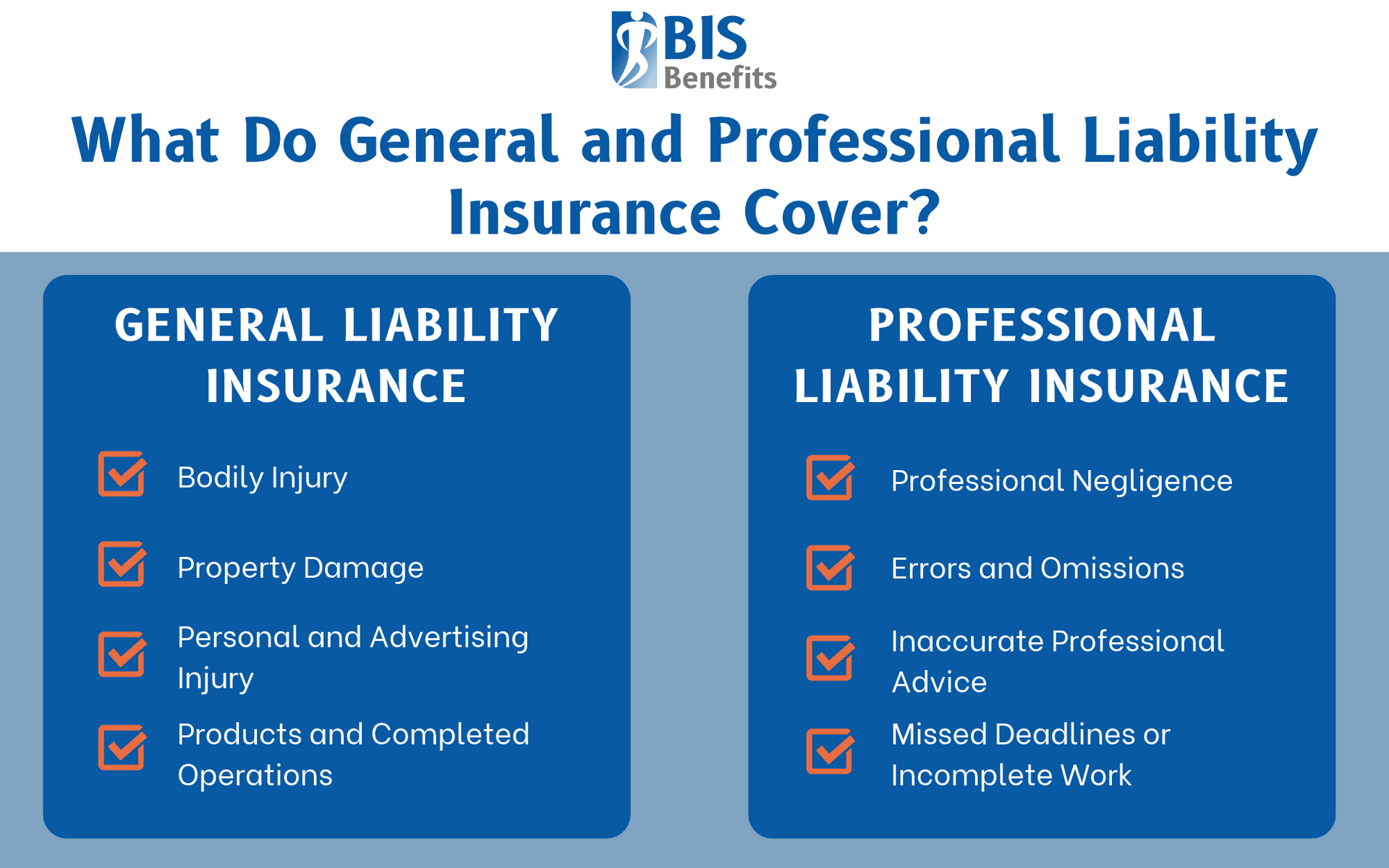
What Does General Liability Insurance Cover?
General liability insurance can help businesses manage certain claims brought by customers, visitors, and other third parties. Coverage depends on the policy, its exclusions, and its limits.
Bodily Injury
A customer or visitor who gets hurt during a business-related incident may bring a claim against the company. If the claim falls within the policy, general liability insurance may help cover eligible medical expenses, legal defense costs, and damages. The policy determines which expenses qualify and how much the insurer will pay.
Property Damage
General liability insurance may cover claims involving damage your business causes to someone else's property.
Imagine an employee accidentally damages a client's equipment while completing a job. If the resulting claim qualifies under the policy, general liability insurance may help cover repair costs and related legal expenses.
Personal and Advertising Injury
Some general liability policies cover specific personal and advertising injury claims. Depending on the policy, these may involve libel, slander, invasion of privacy, wrongful eviction, or certain copyright infringement claims related to advertising. Whether coverage applies depends on the allegation and the policy's terms.
Products and Completed Operations
Some general liability policies include products and completed operations coverage. This may apply to certain bodily injury or property damage claims involving products a business sells or work it has completed.
A customer might allege that a product caused an injury, for example, or that completed work damaged their property. Coverage depends on the circumstances and policy terms.
What Does Professional Liability Insurance Cover?
Professional liability insurance addresses claims involving the services, advice, or expertise a business provides. Also called errors and omissions insurance, it may help cover legal defense costs and cover settlements when a client alleges that professional work caused financial harm.
There are several reasons why businesses that provide professional services may need professional liability coverage.
Professional Negligence
A client may claim that a professional failed to meet the standard of care expected for the service provided.If the client alleges that a business error caused a loss, professional liability insurance may help with covered legal expenses and damages, subject to the policy.
Errors and Omissions
Errors and omissions coverage may apply to claims involving mistakes, missed steps, or failures to complete agreed professional work. Whether the policy responds depends on the services covered and the contract's terms.
Inaccurate Professional Advice
Clients often rely on professional advice when making business or financial decisions. If a client alleges that inaccurate guidance caused a loss, the business could face a professional liability claim.
Missed Deadlines or Incomplete Work
A missed deadline or incomplete service can lead to a claim if a client alleges that the error or omission caused financial harm.
Professional liability insurance may help with a covered claim of this kind. However, a contractual dispute is not automatically covered. Exclusions, the nature of the claim, and the policy's terms all matter.
Key Differences Between General Liability and Professional Liability
The main difference is the type of claim each policy is designed to address:
Primary Focus
- General liability covers certain third-party injuries, property damage, and personal or advertising injury claims.
- Professional liability addresses claims involving errors, omissions, negligence, or professional services.
Property Damage
- General liability may cover qualifying damage to someone else's property.
- Professional liability primarily addresses claims related to professional services, although some policies may include limited coverage for related bodily injury or property damage.
Legal Expenses
Both policies may cover legal defense costs for claims covered under their respective terms.
Neither policy covers every business risk. Some professional liability policies may include limited coverage for bodily injury or property damage arising from professional services, so businesses should check the wording of their particular policy.
Do Businesses Need Both Types of Insurance?
A business may face general liability risks alongside risks connected to the professional services it provides. Whether both policies make sense depends on the company's work, client relationships, contracts, and potential exposures.
Businesses That May Want to Evaluate Both Policies Include:
Consultants, Accountants, and Financial Advisors
These professionals may face claims involving advice, calculations, or recommendations, along with general business liability risks.
Architects, Engineers, and Design Firms
A client may allege that a design error caused financial harm, while separate accidents or property damage may create general liability exposures.
Attorneys and Healthcare Practices
These businesses may need specialized professional liability or malpractice insurance, depending on their services and applicable requirements.
IT Service Providers and Software Companies
Clients may allege that mistakes, incomplete work, or inaccurate recommendations caused losses.
Marketing Agencies
Professional liability may address certain service-related claims, while general liability may cover qualifying injuries, property damage, or advertising injury claims.
Staffing and Recruiting Firms
These businesses may face claims involving their services as well as risks arising from everyday operations.
Real Estate Professionals
Errors involving transactions, contracts, or professional services may create E&O exposures.
When Is Liability Insurance Required?
Insurance requirements depend on the business, its location, and the work it performs. General liability or professional liability coverage may be required by a client contract, lease, or industry-specific rules, even if the law does not require every business to carry these policies.
However, a business may need coverage in certain situations:
- Contracts and Leases: Clients, landlords, or other parties may require proof of insurance before agreeing to work with a business or lease space to it.
- Industry and Licensing Requirements: Some industries or professional licenses have specific insurance requirements. Businesses should check the rules that apply to their profession and location.
- Project Requirements: A customer or project owner may specify coverage types and minimum limits in a contract.
For Georgia businesses, in most instances,
residential or general contractors are required to carry general liability insurance. Requirements for other businesses and professions may differ.
Even when a policy is not legally required, going without coverage can leave a business responsible for eligible claims and legal expenses that would otherwise have been covered under a policy.
How Do You Decide Which Coverage Your Business Needs?
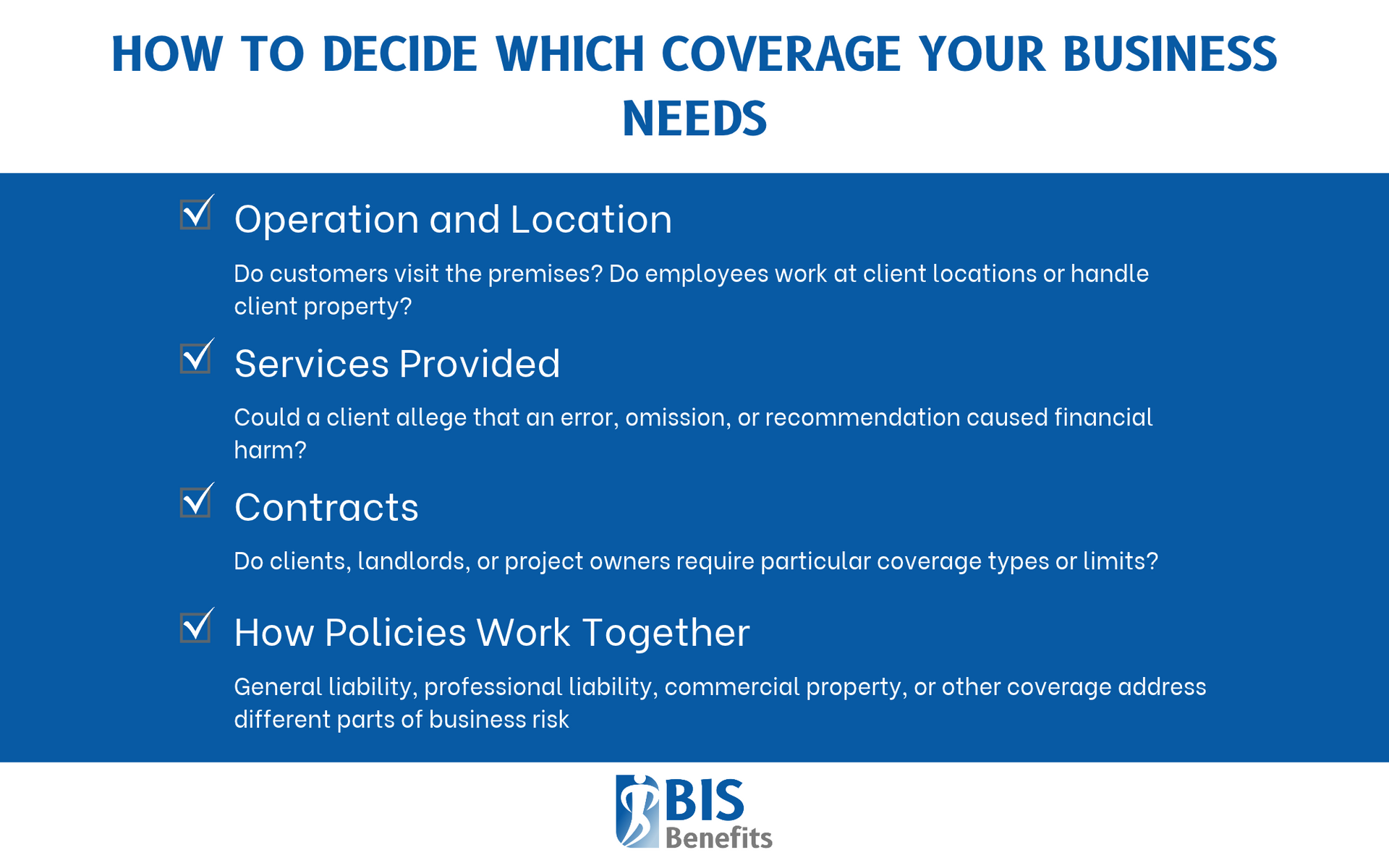
Start by looking at what your company does and the kinds of claims it could face. A business with a storefront has different exposures from a consultant who works remotely, while a company that provides specialized advice may face risks that a product retailer does not.
Your Operations and Location
- Do customers visit your premises?
- Do employees work at client locations or handle client property?
The Services You Provide
- Could a client allege that an error, omission, or recommendation caused financial harm?
Your Contracts
- Do clients, landlords, or project owners require particular coverage types or limits?
How Your Policies Work Together
- Would general liability, professional liability, commercial property, or other coverage address different parts of your business risk?
Workers' compensation is another consideration for many businesses. It addresses qualifying workplace injuries and illnesses under applicable state law. In Georgia, employers that regularly employ three or more people, including regular part-time employees,
generally must provide workers' compensation coverage, subject to applicable exceptions.

Review Your Business Insurance Options With BIS Benefits
General liability and professional liability insurance serve different purposes. Some businesses may need both policies, while others may have different priorities based on their operations and contracts. Reviewing your potential risks is a useful starting point when deciding what coverage to consider.
BIS Benefits’ expert brokers offer advice that include general liability and errors and omissions coverage. BIS works with major insurance carriers to help businesses compare available options. If your business is in Georgia and has at least 15 employees,
Request a Quote from BIS Benefits to discuss your business insurance needs.