What Is Employee Life Insurance? A Guide for Employers
What Is Employee Life Insurance? A Guide for Employers
At a Glance: Employee life insurance is a workplace benefit that pays a death benefit to an employee's designated beneficiary if the employee dies while covered by the policy. Many employers offer group term life insurance, paying some or all of the cost of basic coverage while allowing eligible employees to purchase additional life insurance.
Life insurance can be one part of an employee benefits package. Employers decide which coverage options to offer, how much they will contribute, and whether a benefits-eligible employee can purchase additional coverage. Eligibility, coverage amounts, premiums, and continuation options depend on the policy. Understanding how group life insurance works helps business owners compare plans, manage costs, and explain available options to their teams.
What Is Employee Life Insurance?
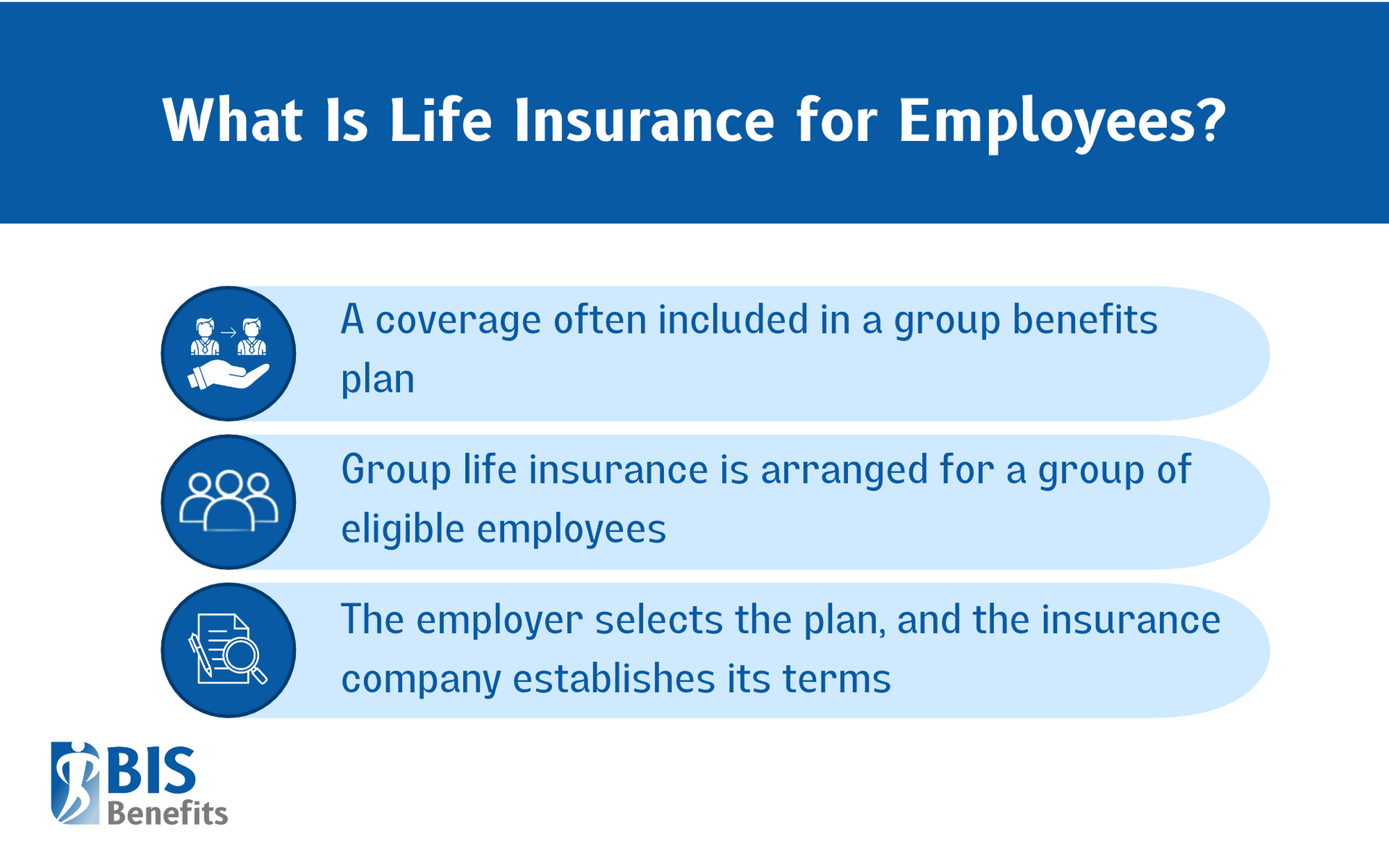
Life insurance is coverage an employer makes available to eligible employees through a workplace benefits plan. One common option is group term life insurance, which provides a benefit to the beneficiaries if an insured employee dies while the policy is in force.
Unlike an individual policy purchased directly by a person, group life insurance is arranged for a group of eligible employees under a group contract. The employer selects the plan, and the insurance company establishes its terms, including eligibility requirements, coverage limits, and premiums.
Life insurance can be purchased through
individual policies or group plans. Employers may provide basic coverage automatically or give employees the option to purchase additional life insurance through a group policy.
Employers commonly consider two levels of coverage:
- Basic Life Insurance: A set coverage amount offered to eligible employees. The employer may pay some or all of the life insurance premiums.
- Supplemental or Optional Life Insurance: Additional coverage that an eligible employee can elect beyond the basic benefit, often paying some or all of the added cost.
Some group plans offer coverage without a medical examination or detailed health underwriting, although
underwriting requirements can vary, particularly within a guaranteed-issue limit. Other coverage amounts or enrollment situations may require evidence of insurability, such as health information or additional underwriting.
Group coverage can sometimes cost less than an individual policy, although rates and benefits vary. Employer-sponsored life insurance is also often connected to employment. If an employee leaves the company, coverage may end unless the policy provides an option to continue or convert it. Employers should
review the laws, agreements, and plan terms that apply to their circumstances when deciding which benefits to offer.
Types of Group Life Coverage
Group life insurance plans can include several types of coverage. An employer may provide basic life insurance and make additional options available for employees who want more financial protection.
- Basic Group Term Life: Employer-sponsored coverage based on a flat dollar amount or a formula, such as a multiple of the employee's annual salary. The employer may pay the premium or share the cost.
- Supplemental or Voluntary Life: Additional life insurance an eligible employee can elect beyond the basic benefit, subject to plan limits and eligibility requirements.
- Dependent Life Insurance: Some plans let employees purchase dependent coverage for an eligible spouse, domestic partner, or dependent child. Eligibility and benefit amounts depend on the policy.
- Accidental Death and Dismemberment (AD&D): Coverage that may pay benefits after a covered accidental death or certain specified injuries. The benefit amount and covered circumstances depend on the policy.
Dependent coverage can give employees the option to purchase life insurance for an eligible family member recognized by the plan. Employers should check the policy documents to confirm who qualifies, whether child coverage is available, and what benefit amounts apply.
How Much Employee Life Insurance Should an Employer Offer?
There is no single life insurance coverage amount that works for every business. Employers generally need to consider their budget, workforce needs, and the role life insurance will play in the overall benefits package.
Common approaches include:
- A Flat Amount: Every eligible employee receives the same basic benefit.
- A Multiple of Salary: Coverage is tied to annual earnings, such as one or two times the employee's annual salary, subject to the plan's maximum.
- Basic Coverage Plus Optional Insurance: The employer provides a base amount and allows employees to purchase more coverage if they want it.
Supplemental coverage gives employees more choices, but additional life insurance may cost more or require evidence of insurability. The monthly premium depends on the coverage amount, the employee's circumstances, and the terms of the plan. Employers should compare plan designs, premium costs, eligibility rules, and coverage limits before choosing an approach.
Terms Employers Should Understand
A few insurance terms are worth knowing before selecting a group life plan. They can affect eligibility, the amount of insurance coverage an employee receives, and what happens when employment ends.
- Guaranteed-Issue Amount: The amount of coverage an eligible employee can obtain without evidence of insurability, if the plan offers this feature. Higher amounts may require health information or insurer approval.
- Portability: A provision that may allow an employee to continue group life insurance coverage after leaving employment, subject to the policy's rules.
- Conversion: An option that may allow an employee to change group life coverage into an individual policy after a qualifying event, such as leaving employment. The available policy, cost, and deadline depend on the contract.
- Waiting Period: A period an employee must satisfy before coverage begins, if the plan has one. The plan documents explain the eligibility requirements and effective date, including whether an employee must complete a certain number of days of employment before coverage starts.
Availability depends on the contract and applicable state rules. Taxes also matter when setting up a plan. Employer-paid group life insurance can have tax implications for employees. When coverage exceeds the IRS exclusion limit, the taxable cost of the additional coverage generally must be included in the employee's wages. Employers must calculate and report this amount according to
IRS guidelines.
Why Employers Offer Employee Life Insurance
Life insurance gives employees a way to provide financial protection for their beneficiaries if they die while covered. Depending on the benefit amount and the family's circumstances, the proceeds may help with household expenses, outstanding debts, or other financial needs.
For employers, group life insurance is one option to consider when building a benefits package. It can sit alongside health insurance, disability coverage, and retirement benefits, with each addressing a different need.
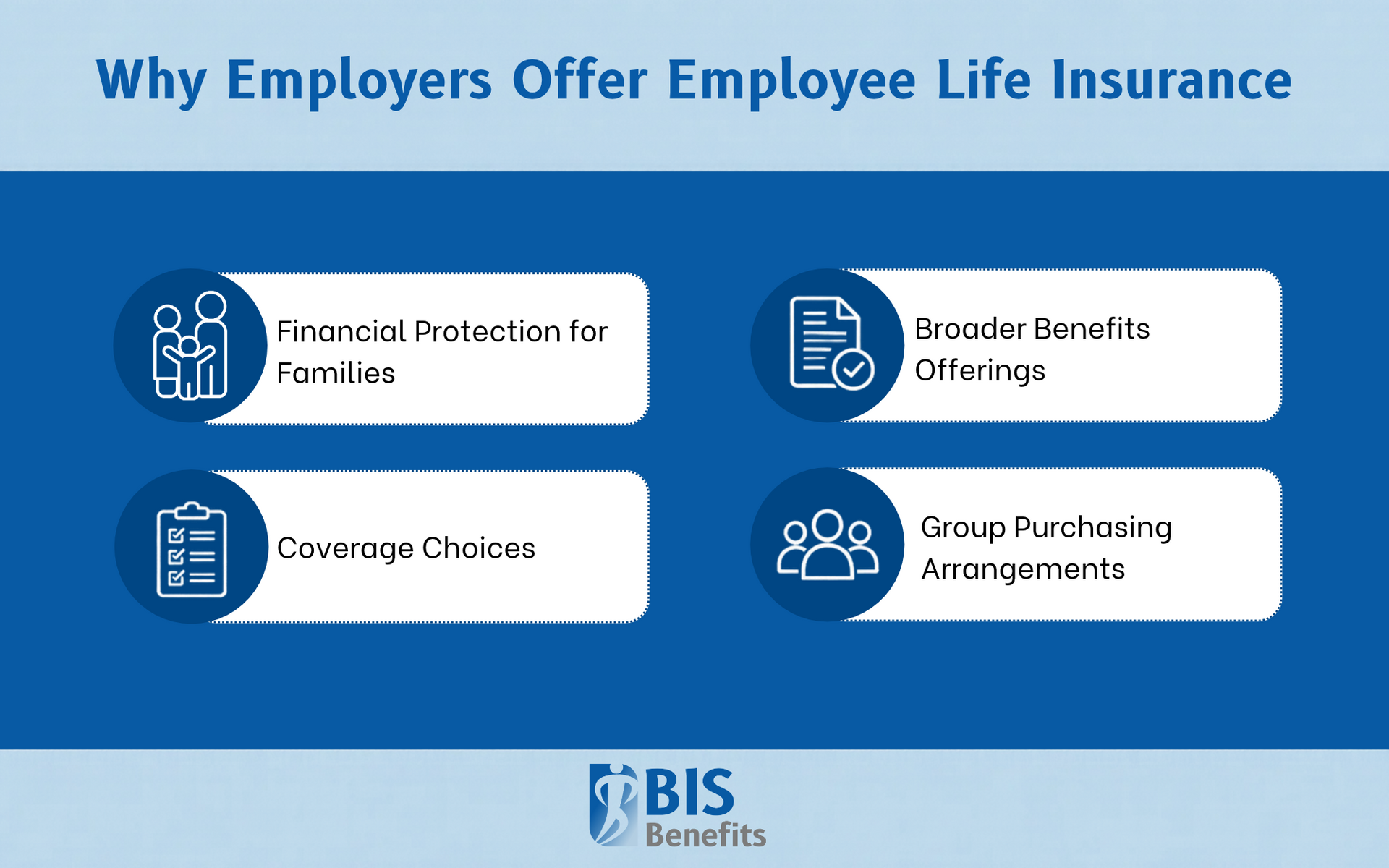
Employers may consider group life insurance for several reasons:
- Financial Protection for Families: A death benefit can help beneficiaries manage expenses after an employee's death.
- Broader Benefits Offerings: Life insurance adds another form of financial protection to the benefits available through work.
- Coverage Choices: A plan may offer basic life insurance alongside optional benefits for employees who want additional protection.
- Group Purchasing Arrangements: Employees may be able to access coverage through an employer-sponsored plan rather than applying for an individual policy, subject to eligibility and underwriting rules.
The cost and value of a group life plan depend on the employer's contribution, employee participation, benefit amounts, and policy terms. Employers should compare these factors before deciding which coverage to offer.
How Employees Enroll in Group Life Insurance
Enrollment procedures depend on the employer's plan and the insurer's requirements. Employees commonly make their initial elections when they become eligible for benefits or during the employer's designated open enrollment period.
Employer-sponsored coverage may include premium payments, coverage limits, and beneficiary payments.
Employees should not assume that marriage, the birth of a child, or another major life change automatically allows them to change life insurance elections outside open enrollment.
A qualifying life event may allow changes to certain benefits, particularly health coverage, but the rules for changing life insurance elections depend on the specific plan.
Employees should also review their beneficiary designation after major life changes. Keeping beneficiary information current helps ensure that the insurance company has the intended recipient on record.
Tax Considerations for Employers
The tax treatment of group life insurance depends on the arrangement, who pays the premiums, and the amount of coverage.
For businesses, life insurance premium deductions require separate consideration.
Premiums generally cannot be deducted when the business is directly or indirectly a beneficiary of the life insurance policy. Employers should confirm the tax treatment of their particular arrangement with a qualified tax professional.
Explore Employee Life Insurance With BIS Benefits

Employee life insurance can be one part of a benefits package that gives employees additional financial protection. The right plan depends on the business's budget, workforce needs, available coverage, and how life insurance fits with the rest of its benefits.
BIS Benefits helps employers explore life insurance plan options. Our experienced brokers can help Georgia businesses with at least 15 employees review eligibility requirements, coverage amounts, and additional benefit options.
Request a quote from BIS Benefits to discuss group life insurance and other employee benefits options.