What Is Accident Insurance Through Your Employer?
What Is Accident Insurance Through Your Employer?
At a Glance: Accident insurance through your employer is a supplemental benefit that pays specified benefits after a covered accidental injury, with the benefits varying by policy. Many plans pay the insured directly, and that money can often be used for medical or everyday expenses. It’s meant to work alongside major medical insurance, not replace it.
Even with good health insurance, an accident can get expensive. One trip to the emergency room, an X-ray, and a couple of follow-up visits can leave an employee with bills their health plan doesn’t fully cover. Accident insurance pays benefits after a covered injury, and depending on the policy, employees can put that money toward medical costs or other expenses while they recover. For employers, it’s a common voluntary benefit to consider adding to a wider employee benefits package.
What is Accident Insurance?
Accident insurance is a kind of supplemental coverage that pays set benefits after a covered accident. It’s sometimes sold as accident-only coverage, and depending on the plan, benefits may come as a lump sum or as fixed amounts tied to specific injuries or treatments. The idea is to add a layer of financial protection on top of your health plan, not to take its place. Employers can offer it as a group plan that employees can choose during open enrollment.
What actually gets paid depends on the injury, the treatment, and the terms of the policy. Because every plan is structured differently, two employees with the same injury could receive different benefits depending on their policies.
How Benefits Are Paid
Accident insurance pays specified benefits when an insured person experiences a covered accidental injury. Benefit amounts and eligible treatments depend on the policy. Many policies pay the benefit directly to the insured rather than to the doctor or hospital, and because the payment isn’t tied to the actual cost of care, the money can often be used for medical or nonmedical expenses. The benefit amount depends on the injury and the specific services received, and each plan sets its own benefit schedule, so what one plan pays for a given injury can differ from another.
How It Works With Your Health Plan
Accident insurance is designed to sit alongside major medical insurance rather than take its place. Health insurance covers medical services, but it often leaves deductibles, copays, and other out-of-pocket costs behind. That gap can matter most for employees on a high-deductible health plan, who may face large upfront costs before their coverage kicks in. After a covered injury, the cash from an accident policy may help offset some of those expenses, though it doesn’t guarantee payment of the full deductible or every cost a health plan leaves behind.
What Accident Insurance Covers
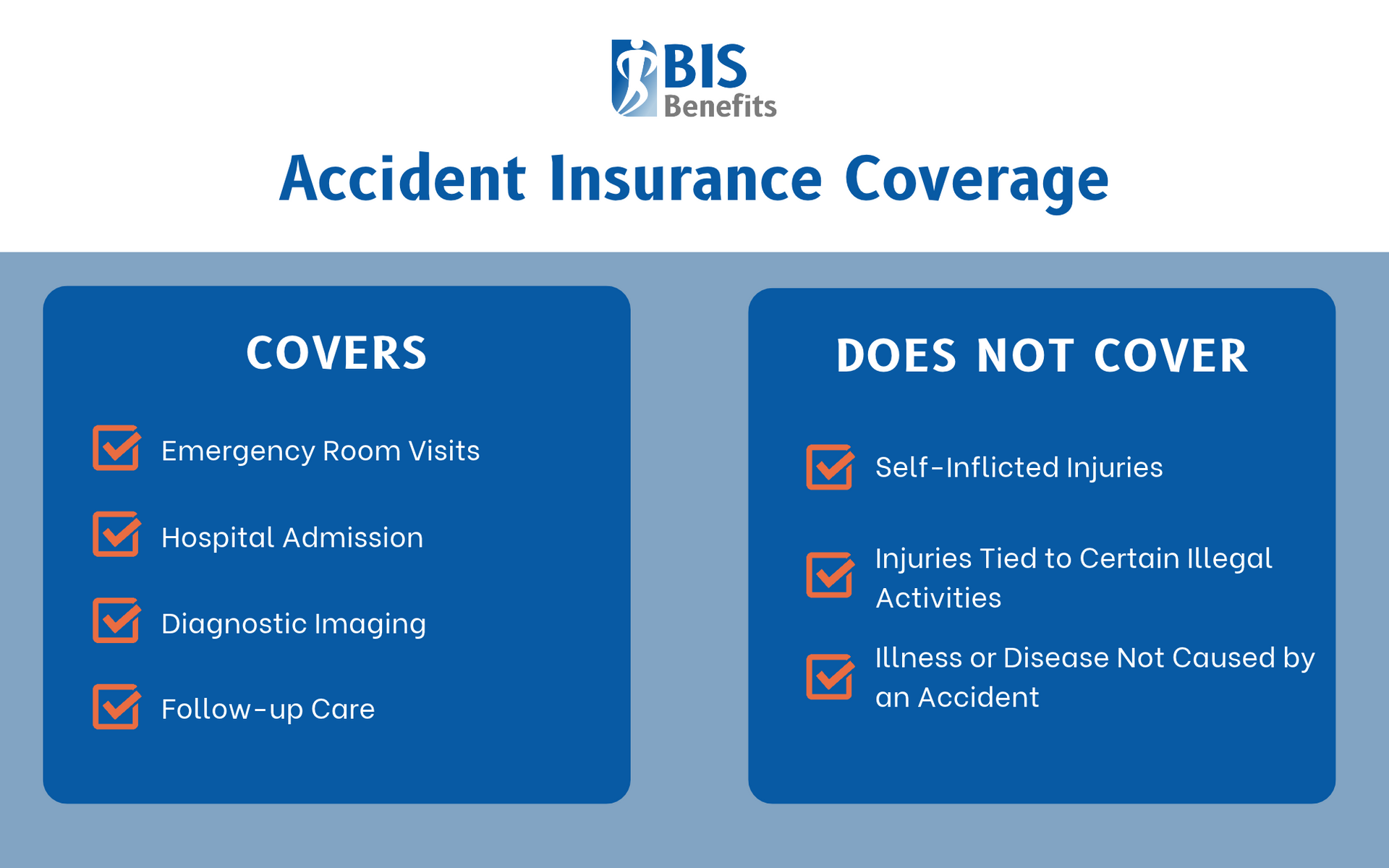
What’s covered comes down to the policy, but many accident plans pay benefits for the kinds of care people tend to need after an accidental injury. Examples of benefits that may be included:
- Emergency Room and Urgent Care Visits: A set benefit for eligible emergency care after a covered accident.
- Hospital Admission and Confinement: Fixed benefits for qualifying accident-related hospital stays.
- Diagnostic Imaging: Benefits for covered X-rays, MRIs, CT scans, and similar tests tied to the accident.
- Follow-up Care: Benefits that may apply to physical therapy, medical appliances, follow-up visits, or transportation to treatment.
Most plans pay a set amount for each covered service rather than a percentage of the bill, which makes the benefits easier to anticipate. Some plans also include a wellness or health screening benefit that pays a small amount when an employee completes a covered checkup, though this isn’t part of every plan. Because product availability and the specific benefits vary by state and policy, plan documents are where details can be confirmed.
What Accident Insurance Does Not Cover
Every policy has exclusions, and they differ by insurer. Common examples include:
- Self-Inflicted Injuries: Injuries that were caused on purpose.
- Injuries Tied to Certain Illegal Activities: Injuries that happen while committing or taking part in certain unlawful acts.
- Illness or Disease that Was Not Caused by an Accident: Medical conditions that develop on their own rather than resulting from a covered accident.
Work-related injuries are another area to check. Some accident policies exclude injuries from a workplace accident that falls under
workers’ compensation, while others include on-the-job coverage, so it’s worth confirming how a given plan treats injuries at work.
Accident insurance and workers’ compensation are not the same thing. Under Georgia’s workers’ compensation system, employers carry coverage for qualifying work-related injuries and illnesses. This can include medical treatment and part of lost wages based on an employee’s average weekly wage, so the two shouldn’t be treated as interchangeable. Because exclusions change by plan, employees and employers should read the certificate of coverage instead of assuming an injury is covered.
Accident Insurance and Other Supplemental Options
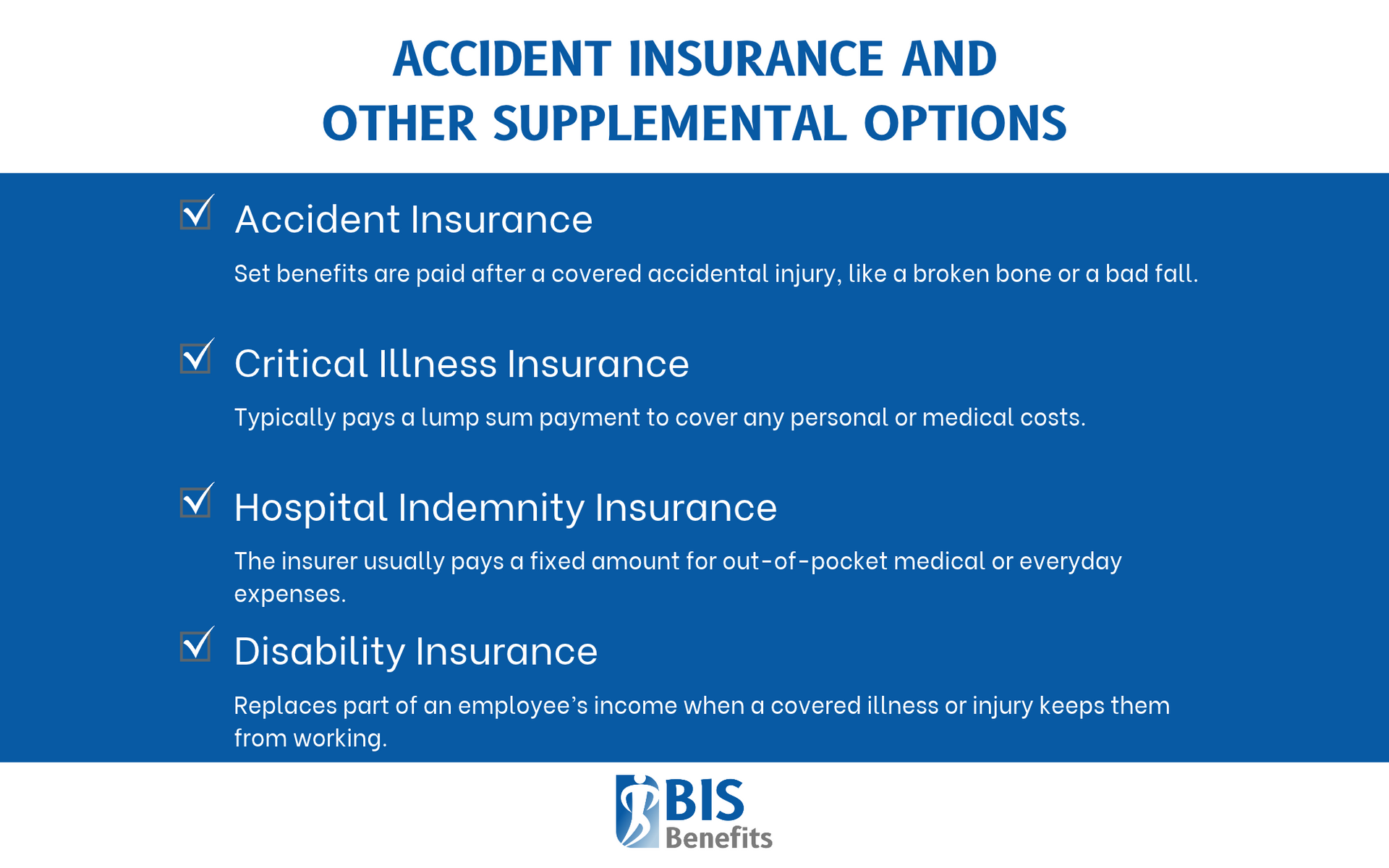
Accident insurance is one of several supplemental policies, so it helps to see how it compares. Each one is built for a different situation, and the specific terms depend on the policy:
- Accident Insurance: Set benefits are paid after a covered accidental injury, like a broken bone or a bad fall.
- Critical Illness Insurance: Typically pays a lump sum payment to cover any personal or medical costs.
- Hospital Indemnity Insurance: The insurer usually pays a fixed amount for out-of-pocket medical or everyday expenses.
- Disability Insurance: Replaces part of an employee’s income when a covered illness or injury keeps them from working.
None of these take the place of major medical insurance.
Dental insurance can help pay for routine cleanings,
vision coverage may help with the cost of eye exams and glasses, and
group life insurance provides a death benefit to an employee's designated beneficiaries. Coverage and out-of-pocket costs depend on the plan.
They cover different gaps, and some employers offer more than one so employees can pick what fits their needs and budget. Payment conditions and benefit amounts vary by product and policy, so the specifics are worth comparing side by side. This allows employers to build a benefits package around their major medical coverage.
What to Weigh Before Offering Accident Insurance
Adding accident insurance is a decision worth looking at from a few angles. Rather than assuming it’s right for every company, employers can weigh a handful of factors:
- Cost and Who Pays: Look at the premium and how it would be funded. Many voluntary plans are offered to employees through payroll deduction, with the employee paying some or all of the cost, but arrangements vary by plan.
- Your Workforce: Consider the makeup of your team and the kinds of injuries and expenses they’re most likely to face. Workers with active lifestyles or physically demanding jobs may need different types of plans.
- Coverage and Exclusion: Review what each plan actually pays, how benefits are structured, and what it leaves out.
- Fit with Your Current Benefits: Think about how accident coverage would sit alongside your health plan and any other supplemental benefits you offer.
What a plan costs depends on the coverage level, the employee’s age, and who pays the premium, so the most reliable way to get an accurate number is to request a quote for your specific group. Eligibility is worth confirming too, since it depends on the plan and the carrier.
Tax Treatment
Whether accident insurance benefits are taxable depends on how the premiums were paid and the circumstances of the benefit. In general, benefits may be tax-free when the employee pays the premium with after-tax dollars, and taxable when the employer pays with pre-tax dollars, though the details vary for
specific plans.
Portability
Portability matters if employees change jobs. Some group plans are portable, which means employees can continue the coverage and pay the premium directly, while others end when employment ends, so it’s worth checking the portability terms before enrolling. A benefits broker can walk through these options with you and help you compare how different plans would work for your team.

Explore Accident Insurance With BIS Benefits
Accident insurance can give employees added financial protection after an unexpected injury, and it’s one more piece of a benefits package built around major medical coverage. The right plan depends on your workforce, your budget, and how the coverage fits with the benefits you already offer.
BIS Benefits helps Georgia businesses with 15 or more employees find
group benefits and
supplemental coverage, and represents major carriers to help you compare options. Along with group health insurance, an experienced broker can review the choices with you and explain how each plan is structured.
Request a Quote from BIS Benefits to talk through accident insurance and the rest of your employee benefits.