What to Look for in a Group Health Insurance Broker: What Employers Should Know
What to Look for in a Group Health Insurance Broker: What Employees Should Know
At a Glance: A group health insurance broker is a licensed professional who helps r businesses compare health insurance plans, set up group coverage, and support employee benefits after enrollment. The right broker offers access to multiple carriers, clear help with compliance and renewals, easy enrollment technology, a responsive service team, and honest answers about how they are paid.
A
group health insurance broker is a professional who helps you find, compare, and manage health insurance and other insurance plans. The broker you choose becomes increasingly important as your company grows. That decision shapes which coverage options you see, how smoothly enrollment runs, and how much support your team gets during the year. A strong broker helps you balance employee needs against your budget and keeps your group plan working as your workforce changes.
What Does a Group Health Insurance Broker Do?
A group health insurance broker is a licensed insurance professional who helps businesses find and manage group health coverage for their employees. A broker can compare insurance plans across multiple carriers and help you choose benefits that fit your workforce and budget.
Once you select a plan, a good broker stays involved. Depending on your agreement, that can include help with renewals, enrollment questions, billing problems, and coverage changes during the year. Because services vary by brokerage, it is worth confirming what is included before you sign.
A group health insurance broker often helps with:
- Comparing health insurance plans and insurance carriers
- Reviewing premiums, deductibles, and provider networks
- Explaining health insurance coverage options and how plans differ
- Supporting employee enrollment and benefits education
- Reviewing renewal offers and alternative plans
- Clarifying which administrative responsibilities fall to you
For a growing business with at least 15 employees, you want a dynamic licensed agent or broker who can explain your options in plain language, answer questions as they come up, and revisit your benefits as the company changes.
What to Look for in a Group Health Insurance Broker
Not every broker offers the same services or the same level of support. Before you commit, look closely at a few areas that tell you how involved the broker will be with your group health insurance and your wider employee benefits.

Access to Insurance Carriers
A broker’s carrier relationships decide which insurance plans they can actually put in front of you. Ask which insurance companies they work with in your market and how they compare the options.
A few questions worth raising:
- Which insurance carriers can the broker quote?
- Can they explain how the available plans differ?
- How do they compare premiums, provider networks, and access to medical services?
- Will they tell you why they recommend one plan over another?
A good broker can walk you through how they reviewed the options and why a particular health insurance plan fits your business. If their carrier access is limited, it helps to know that up front so you understand which alternatives are on the table.
Compliance and Administrative Support
Group health insurance comes with paperwork, notices, and rules that may apply to your business. A broker may help with some of it, though the exact support depends on the brokerage.
Ask how the broker handles things like:
- Applicable Affordable Care Act (ACA) requirements
- Required plan documents and notices
- COBRA continuation coverage responsibilities
- Administrative deadlines
- Knowing when another specialist or service provider is needed
Clear communication on who owns each task. Hiring a broker does not automatically move every legal or administrative obligation off your plate, so it helps to confirm the split in writing.
Benefits Enrollment Technology
Benefits administration technology helps you organize enrollment and gives employees a place to review their coverage options. Ask whether the broker provides an enrollment platform and what support comes with it.
Make sure to confirm with your broker:
- Can employees review and select plans online?
- Does the platform handle new-hire enrollment and coverage changes?
- Will the broker help set the system up?
- Is employee education included?
- Who fixes technology or enrollment problems when they come up?
The point is to understand how the technology fits your company and whether your team will have support when they need it.
Service Team and Ongoing Support
The relationship should not end once open enrollment wraps up. Find out who will manage your account day-to-day and how both employees and administrators get help when they need it. Sorting this out early sets clear expectations on both sides.
Renewal Strategy
Health insurance plans and costs can shift at renewal. A broker should explain the renewal process, review your options, and help you understand the trade-offs before anything changes.
Ask potential brokers how they:
- Review the carrier’s renewal offer
- Compare alternative plans and carriers
- Explain changes to premiums and coverage
- Weigh employer contributions against employees’ premiums
- Present recommendations to your leadership team
A useful renewal review spells out what changed, which alternatives were considered, and why the recommended option makes sense for your business. Standardized documents can make these comparisons easier. The Summary of Benefits and Coverage shows how a common format helps employers and employees compare health plan benefits side by side.
Additional Benefits and Business Coverage
Your business may need more than group health insurance. Ask whether the brokerage can also help with dental, vision, and life insurance.
Some businesses also carry commercial insurance for their operations. A brokerage that handles both
group benefits and
business coverage lets you talk through different needs in one place.
Questions to Ask Before Signing With a Broker
Before you choose a group health insurance broker, ask questions that help you understand their experience, their services, and how they will manage your benefits. Ask your broker on their compliance resources, if they have in-house communication experts, employee engagement, and the team that will be working on the account.
A practical list to work through:
- Are you licensed and in good standing in your state? This confirms the broker can legally place your coverage.
- Which carriers do you work with in our market? This shows how many insurance options they can bring you.
- How many employers of our size do you currently service? Previous experience with a comparable company can be valuable.
- What does your renewal process look like? You want to know how they review costs and compare alternatives.
- What is included in your service throughout the year? This sets the scope of ongoing support.
- Will you help with employee enrollment and education? This tells you what your full-time employees can expect.
- How are you compensated, including direct and indirect compensation? Ask for a plain explanation of fees, commissions, and any other payments.
Understanding Broker Compensation
Brokers get paid in different ways. Some earn commissions from insurance carriers, some charge fees paid by the employer, and some use a mix of both. Whatever the setup, you should understand how your broker is paid and what you get in return.
Federal rules now back up that transparency. According to the U.S. Department of Labor,certain service providers to employer-sponsored group health plans
must disclose their indirect fees and compensation.
How to Choose the Right Broker for Your Business
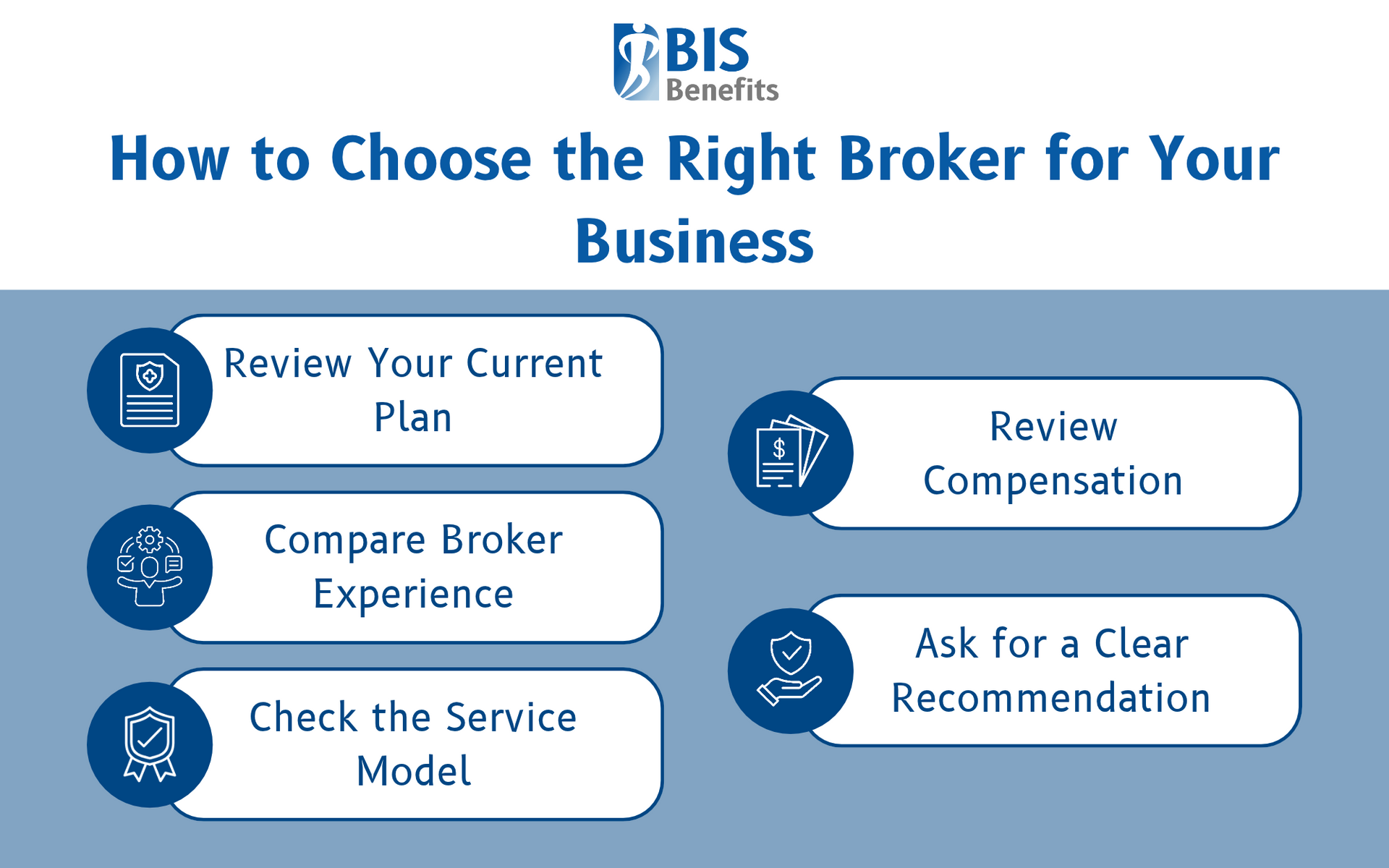
Start by getting clear on your own priorities. Look at your current health insurance costs, your employees’ needs, your existing group coverage, and the kind of support your HR team needs day-to-day.
From there, a few steps help:
- Review Your Current Plan: Note coverage gaps, cost concerns, and any employee feedback.
- Compare Broker Experience: Favor brokers who have worked with businesses like yours.
- Check the Service Model: Confirm who handles renewals, enrollment questions, and ongoing support.
- Review Compensation: Make sure you understand the broker’s fees, commissions, and services.
- Ask for a Clear Recommendation: Expect an explanation of your options and why the proposed plan fits.
The right broker helps you see your choices clearly, so you can make an informed decision about your company’s health benefits and settle on
health insurance coverage that respects both your employees’ needs and your budget.

Find the Right Group Health Insurance Support With BIS Benefits
The broker you choose affects how your business evaluates coverage, manages renewals, and supports employees all year long. Look for a partner who understands your workforce, explains your options clearly, and stays involved after the paperwork is signed.
BIS Benefits works with Georgia businesses to find
employee benefits packages that fit their needs. Our brokers shop the major carriers, help with details like
COBRA, and take a personalized approach to each company’s needs. We can also help with
dental,
vision,
life, and
disability coverage, plus
business insurance when your operations call for it.
If your business is located in Georgia and has at least 15 employees,
request a quote from BIS Benefits to talk through your
group health insurance options.