The Impact of Technology on Commercial Liability Insurance
The Impact of Technology on Commercial Liability Insurance
At a Glance: Recent technology developments have created new commercial liability exposures, including cyber threats, AI-related risks, and emerging technologies, that traditional general liability policies often do not cover. However, this technology also gives insurers powerful tools like predictive analytics and automation to assess risk and process claims more efficiently. Businesses should review their current coverage for technology-related gaps and work with qualified brokers to address evolving exposures.
Technology is reshaping commercial liability insurance from both sides, creating new and complex risks that businesses must protect against while simultaneously providing insurers with powerful tools to assess and manage those risks more effectively. The rapid pace of technological change presents challenges and opportunities for businesses and insurers alike, and staying ahead of these developments is critical for maintaining adequate protection.
Traditional
general liability insurance policies often fall short in addressing modern technology-related exposures. Understanding how technology impacts liability coverage is essential for business owners, risk managers, and insurance professionals navigating this evolving landscape.
How Technology Creates New Commercial Insurance Liabilities
The rapid adoption of technology introduces novel exposures that traditional commercial general liability policies were never designed to cover. Businesses face evolving threats that require specialized coverage, and understanding these new liabilities helps organizations protect themselves appropriately.
Cyber Liability
Modern businesses face increased risks of cyberattacks that can result in significant financial losses and exposures that extend far beyond traditional liability concerns. Standard commercial general liability policies often exclude cyber incidents entirely, leaving businesses exposed. These risks can include:
- Data breaches
- System outages
- Intellectual property theft
- Ransomware attacks
- Compromised customer data
As cyber threats continue to evolve, specialized
cyber insurance coverage has become essential for businesses of all sizes.
Artificial Intelligence and Automation Liability
AI systems can make errors with significant consequences, and businesses using these technologies face new liability exposures:
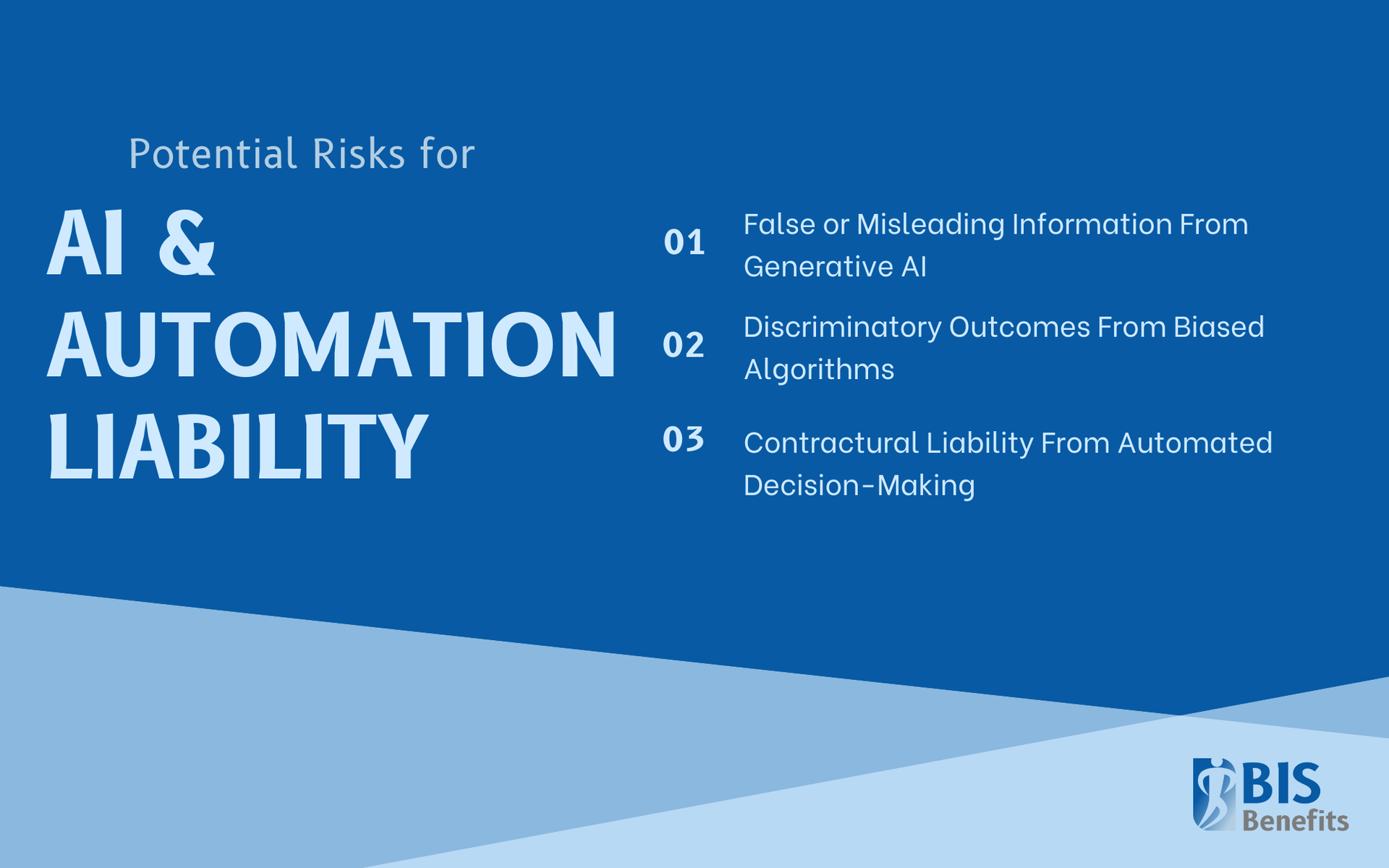
- Biased algorithms may produce discriminatory outcomes in hiring, lending, or customer service applications
- Generative AI can produce incorrect or misleading information that leads to poor decisions or reputational harm
- Automated decision-making may trigger contractual liability claims when outcomes fail to meet expectations or cause financial losses
Accountability Challenges
Determining responsibility for AI-driven decisions is complex, since liability may involve software providers, users, and insured parties. Traditional liability frameworks struggle to assign fault to autonomous systems, and the evolving legal landscape creates uncertainty for businesses deploying these technologies.
Professionals relying on AI tools may face malpractice claims if the AI fails, with healthcare, legal, and financial sectors particularly exposed. Professional liability insurance policies may need endorsements to adequately address AI-related risks.
Emerging Advanced Technologies and Risk Scenarios
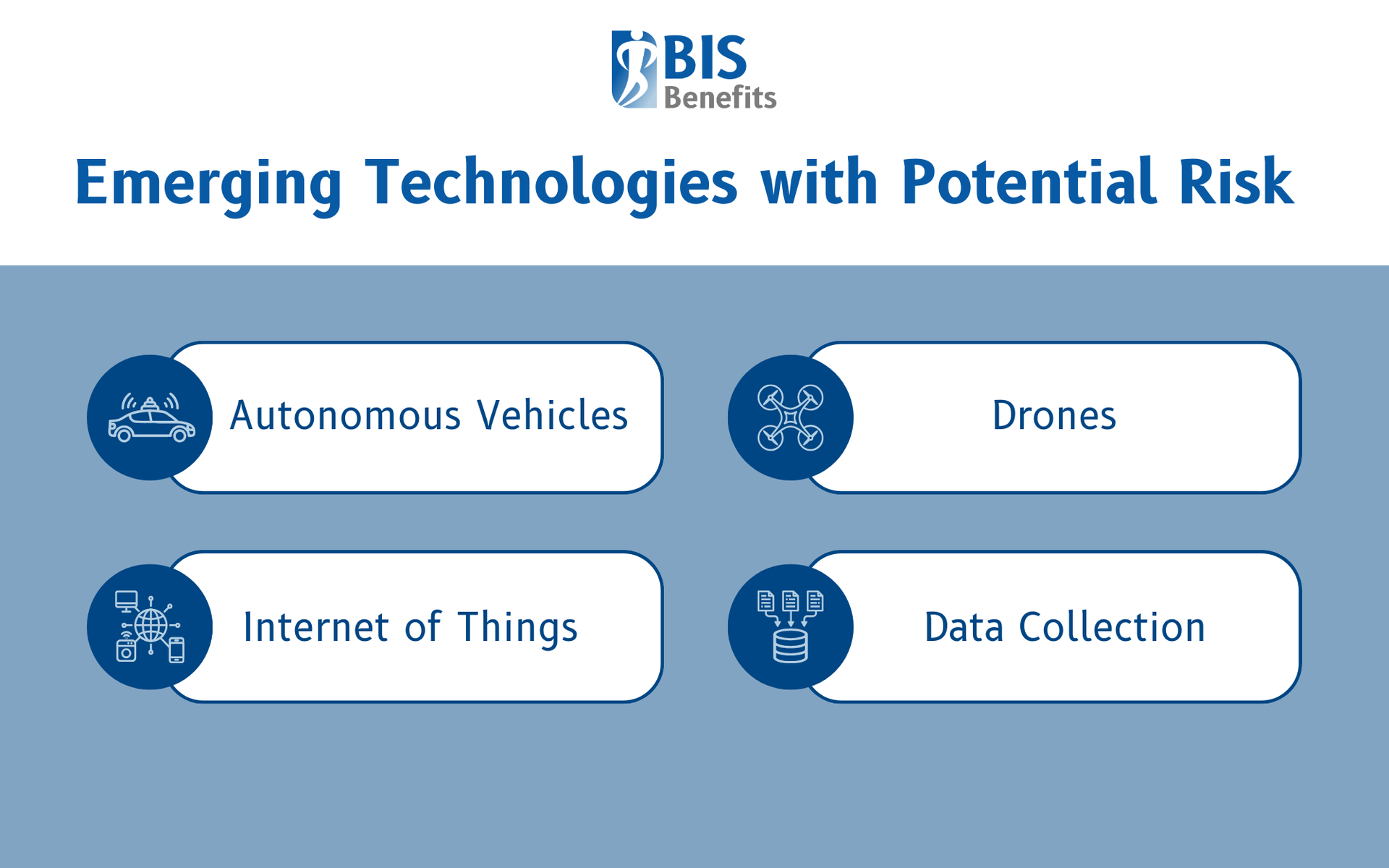
Drones
Commercial drone use creates new liability exposures, including property damage and bodily injury from drone operations and privacy concerns from aerial surveillance capabilities. Traditional policies may exclude or limit drone-related claims, requiring businesses to seek specialized coverage.
Autonomous Vehicles
Since liability shifts from the human driver to vehicle systems and manufacturers, personal and commercial auto liability policies may not apply to autonomous operations. Commercial fleets adopting autonomous technology may create product liability implications that affect vehicle manufacturers and software providers.
Internet of Things (IoT)
IoT creates additional exposures as connected devices open new entry points for cyberattacks. Product liability concerns arise from IoT device failures or security vulnerabilities, and data privacy issues emerge from devices collecting personal information. Complex liability chains involving device manufacturers, software providers, and users make determining responsibility challenging.
Professional and Management Liability in the Digital Age
Technology and IT Risks
Technology service providers face unique errors and omissions exposure if their products or services fail. Risks businesses might face include:
- Client financial losses from software bugs
- System implementation failures leading to business disruption
- Data loss or corruption from service provider negligence
Errors & Omissions Insurance (E&O) is essential for technology companies and any business providing technology-related services.
Directors and Officers (D&O) Exposures
Corporate leadership faces increased scrutiny over technology governance, creating D&O liability exposures. Board responsibility for cybersecurity oversight means D&O policies may need to address technology-related claims specifically.
Contractual Risks
Technology agreements often include indemnification requirements that create contractual liability for businesses. Service level agreements establish liability for performance failures, and limitation of liability clauses may not fully protect against claims.
How Technology Transforms Risk Management and Insurance Operations
Risk Assessment
While technology creates new risks, it also provides the insurance industry with powerful digital tools for assessment and management, including:
- Big Data Analytics: Provide deeper insights into risk factors
- Machine Learning Models: Used to improve underwriting accuracy
- Real-time Data Collection: Enables dynamic risk evaluation, resulting in more precise pricing based on actual risk characteristics rather than broad classifications.
Predictive Analytics
Insurers use predictive analytics to anticipate claims and losses before they occur. Fraud detection algorithms identify suspicious claims patterns, and loss prevention recommendations based on data analysis help policyholders reduce their exposures. Portfolio risk management has improved significantly through these analytical capabilities, benefiting both insurers and the businesses they cover.

Operational Efficiency Through Technology
Underwriting
AI and automation streamline underwriting processes, enabling faster policy issuance with reduced manual intervention. Improved accuracy and consistency in risk evaluation allow underwriters to focus on complex risks while routine tasks are automated. This efficiency benefits policyholders through faster service and potentially lower costs.
Claims Processing
Automated claims intake and initial assessment, AI-powered damage estimation and documentation review, and streamlined workflows result in faster claims resolution and improved customer satisfaction.
Policy Administration
Digital platforms simplify policy administration through automated renewals, endorsement processing, and self-service portals for policy changes and documentation.
What Businesses Should Consider
Evaluate Current Coverage
Businesses should review existing commercial liability policies for technology-related exclusions and identify gaps in their insurance coverage for cyber, AI, and emerging technology risks. Assessing whether professional liability coverage addresses technology exposures and considering D&O implications of technology governance are essential steps in maintaining adequate protection.
Work with Qualified Brokers
Partnering with insurance professionals who understand technology risks is crucial. Brokers with expertise in cyber and technology liability can help businesses navigate the evolving coverage landscape and stay informed about new options and market developments. Regular coverage reviews as technology adoption changes ensure that protection keeps pace with evolving exposures.
Plan for the Future
Businesses should always anticipate new liabilities as technology continues to evolve. Building flexibility into insurance programs for emerging risks, monitoring regulatory developments affecting technology liability, and engaging with insurers on innovative coverage solutions positions businesses to adapt as the landscape changes.
Find the Right Insurance Plan for an Evolving Future with BIS Benefits
Technology profoundly impacts business insurance by creating new and complex risks like cyber threats and emerging technology exposures while simultaneously transforming how insurers operate. Businesses must understand these evolving liabilities and ensure their coverage keeps pace with technological change. Work with an experienced insurance professional to evaluate your technology-related exposures and ensure your commercial liability coverage addresses the unique risks your business faces today and in the future.
At BIS Benefits, we will help you find the right coverage for your specific needs. Our brokers can help you find
Cyber Insurance,
E&O Insurance, and other coverage plans that provide long-term protection for your business. If your Georgia-based company has 15 employees or more,
Request a Quote to find out how we can support you with our
Group Benefits and
Business Insurance solutions.