Top Employee Benefits Platforms for HR Teams
At a Glance: Employee benefits platforms help HR teams simplify benefits administration by centralizing enrollment, carrier connections, compliance tracking, and employee self-service tools in one system. These platforms reduce manual work, minimize errors, and improve the employee experience, but the right solution depends on factors like company size, integration needs, and administrative goals
Managing employee benefits with spreadsheets, paper forms, and manual carrier updates is time-consuming and error-prone. The right benefits platform can transform how employers and HR professionals handle enrollment, compliance, and administration, freeing up time for more strategic initiatives.
Employee benefits platforms streamline open enrollment, carrier connections, and benefits administration in a single platform. These centralized hubs reduce administrative tasks and empower employees with self-service enrollment capabilities. The best platform for any specific business depends on company size, geographic reach, and industry. Understanding what the leading platforms offer helps you find the solution that fits your organization's current needs while supporting future growth.
What is an Employee Benefits Platform?
An employee benefits platform is software that centralizes benefits administration tasks, connects with insurance carriers and payroll systems, and provides employee self-service enrollment capabilities for healthcare benefits. These platforms automate compliance tracking and reporting while replacing manual processes with digital workflows that save time and reduce errors.
Core functions of a comprehensive benefits software include:
- Open enrollment management
- Carrier connections and data integration
- New hire onboarding and benefits enrollment
- Life event processing for changes like marriage or the birth of a child
- Compliance documentation and reporting
- Employee self-service portals
As HR software, these platforms offer several benefits, including:
- Reducing repetitive tasks
- Minimizing manual errors in enrollment data
- Streamline communication with carriers
- Centralize employee benefits information
- Automate compliance tracking
Employees benefit from easy access to benefits information, self-service enrollment and changes, clear plan comparisons, mobile access to benefits details, and faster processing of requests.
Top Employee Benefits Platforms
Employee Navigator
Employee Navigator is a cloud-based software platform that automates benefits administration, new hire onboarding, and compliance reporting for human resources teams and insurance brokers. This user-friendly tool integrates with over 600 of the world's largest insurance carriers and payroll companies to deliver a truly connected benefits and HR solution. The platform's strong carrier connectivity and broker support make it a popular choice for organizations that work closely with insurance brokers.
BambooHR
BambooHR offers an all-in-one HRIS platform best suited for small-to-mid-sized teams seeking an easy-to-use, unified interface for hiring, time-off, and benefits administration. The streamlined employee experience and single-system approach make it a good option for companies that want to consolidate their HR tools without the complexity of enterprise-level solutions.
ADP Workforce
ADP Workforce Now features hundreds of real-time carrier connections, total benefits outsourcing options, and powerful compliance tools. As an established provider with extensive support resources, ADP offers strong payroll integration and scalability for growing organizations. The platform is well-suited for companies that need robust compliance capabilities and may want to outsource portions of their benefits administration.
Paylocity
Paylocity provides a comprehensive, cloud-based platform that replaces multiple HR and payroll vendors with a unified system for benefits, payroll, and HR functions. The modern interface includes employee engagement tools and strong reporting and analytics capabilities, making it suitable for mid-sized companies looking to consolidate vendors.
Paycor
Paycor combines automated payroll and advanced HR tools into one unified platform, offering robust analytics and streamlined onboarding processes. The platform is a good fit for companies that prioritize data insights and want a scalable solution that can grow with their business.
Rippling
Rippling is ideal for fast-growing companies that need robust benefits administration alongside global payroll and IT provisioning. The platform automates employee onboarding across systems and takes a modern, tech-forward approach that appeals to technology companies and organizations with distributed workforces.
What to Consider When Choosing an Employee Benefits Platform
The business's primary needs should guide platform selection.
- How many employees does the business have? Should they be factoring scalability?
- Does the company have any complex compliance needs?
- What industry is the business in?
- Does the business have established broker relationships?
- Are features like payroll system compatibility, carrier connection quality, third-party HR tool integrations, and API availability important?
- Is the company looking to replace multiple vendors?
- Does the business have any other unique needs, such as significant compliance and outsourcing requirements?
What to Look for in an Employee Benefits Platform
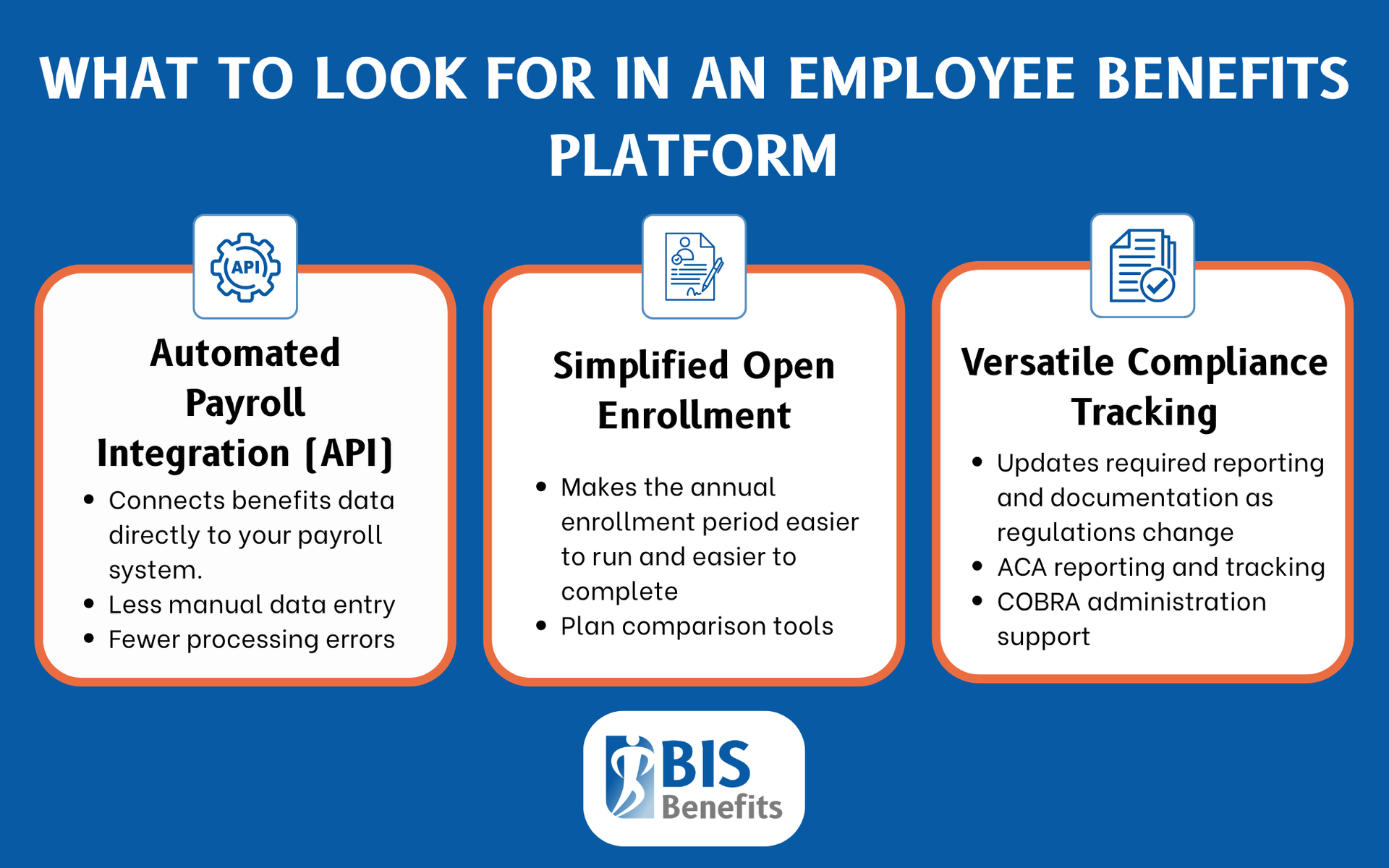
Automated Payroll Integration (API)
Automated payroll integration creates seamless data flow between benefits and payroll systems, enabling automatic deduction calculations and reducing manual data entry. This integration minimizes errors in payroll processing and saves significant time for both HR and payroll teams.
Streamlined Open Enrollment
Streamlined open enrollment features include an easy-to-use enrollment interface for employees, automated enrollment windows and reminders, plan comparison tools so employees can make smarter decisions, electronic signature capabilities, and progress tracking for HR teams. These features reduce the administrative burden of annual enrollment while improving employee participation and satisfaction.
Versatile Compliance Tracking
Platforms that have compliance tracking capabilities can address ACA reporting and tracking, COBRA administration support, required notice distribution, audit trails and documentation, and regulatory updates and alerts. Strong compliance tools help organizations avoid penalties and stay current with changing regulations.
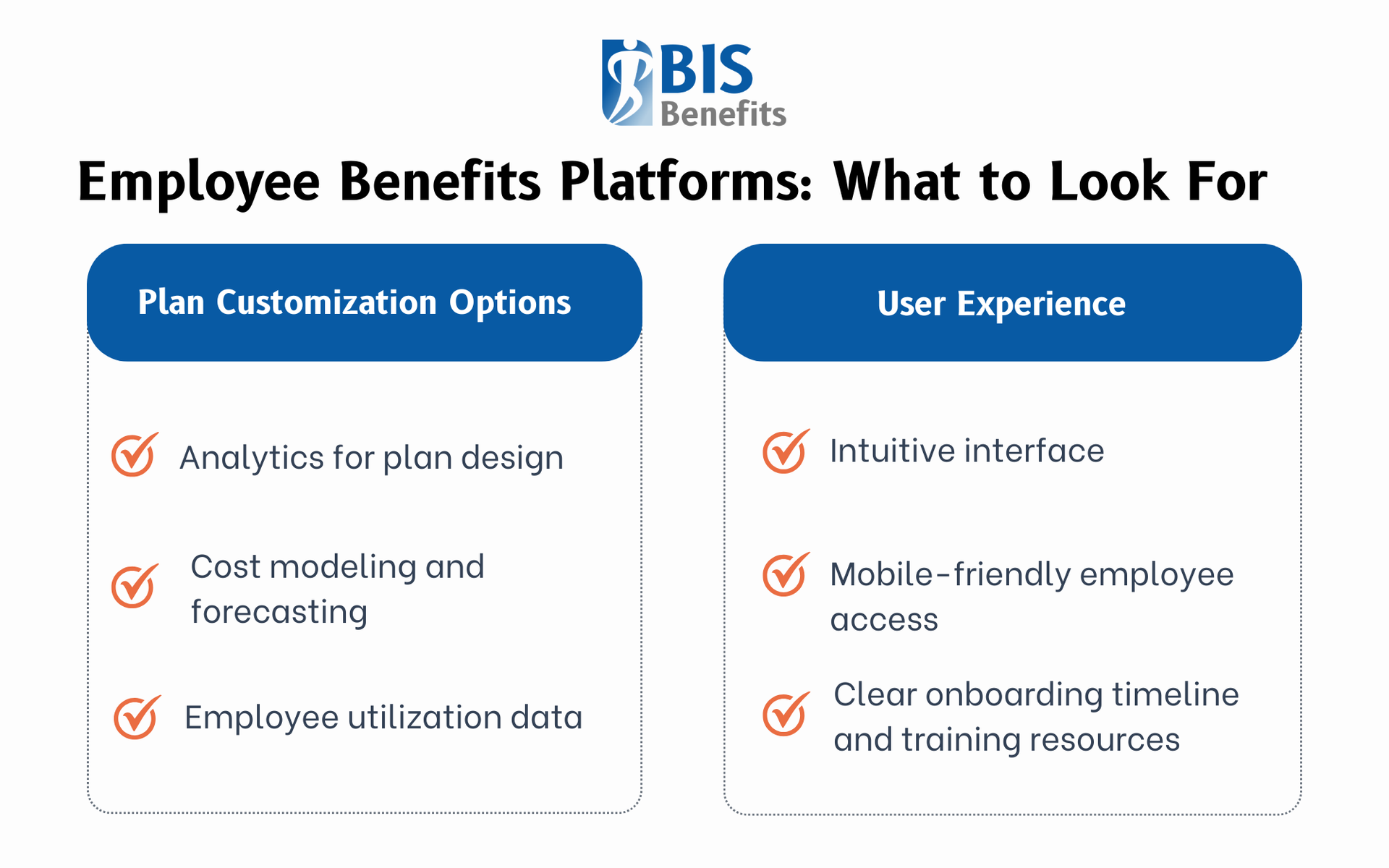
Plan Customization Options
Flexible, data-driven plan customization provides analytics to inform plan design decisions, cost modeling and forecasting tools, employee utilization data, benchmarking against industry standards, and custom reporting capabilities. These features help HR teams make informed decisions about benefits offerings and demonstrate value to leadership.
User Experience
User experience matters for both HR administrators and employees. Look for an intuitive interface, mobile-friendly employee access, self-service capabilities, minimal training requirements, and responsive customer support. Implementation and support quality, including onboarding process and timeline, training resources, customer support availability, and ongoing platform updates, should also factor into your decision.
How to Choose the Right Platform for Your Organization
Assess Your Current Challenges
Considering current business challenges helps clarify what you need from a new platform.
- Identify pain points in current benefits administration
- Determine which manual processes take the most time
- Evaluate compliance risks and gaps
- Consider employee feedback on the current experience
- Document integration requirements with existing systems
Think About Business Needs
The business's primary needs should guide platform selection.
- How many employees does the business have?
- Does the company have any complex compliance needs?
- What industry is the business in?
- Does the business have established broker relationships?
- Are features like payroll system compatibility, carrier connection quality, third-party HR tool integrations, and API availability important?
- Is the company looking to replace multiple vendors?
- Does the business have any other unique needs, such as significant compliance and outsourcing requirements?
Define Your Requirements
Clear requirements make vendor evaluation more efficient and effective.
- Distinguish your must-have features from nice-to-have features
- Understand your budget constraints and pricing models
- Set implementation timeline requirements
- Evaluate internal technical resources
- Consider future company growth
Get Information From Vendors
When evaluating vendor options, you should get as much information as you can to make the best decision.
- Request demos from multiple platforms and ask for references from similar-sized companies.
- Review carrier and payroll integrations carefully
- Understand each platform's pricing structure and total cost of ownership
- Assess customer support quality and availability.
Questions to Ask
Key questions to ask vendors include:
- What carriers and payroll systems do you integrate with?
- How long does typical implementation take?
- What support is included in pricing?
- How do you handle compliance updates?
- What training resources are available?
- Can the platform scale as the business grows?

Making the Transition to a New Benefits Platform
Picking the Right Time
Timing considerations are important when implementing a new platform. The ideal approach is to implement before open enrollment, allowing adequate time for data migration and testing before going live. Consider slower business periods for the transition and build in buffer time for unexpected issues.
Migrating the Data
Data migration requires gathering current employee data, cleaning and verifying data accuracy, working with the vendor on the migration process, testing data integrity after migration, and maintaining a backup of historical records. Thorough data preparation helps ensure a smooth transition.
Communicating with Employees
Employee communication supports successful adoption. Announce the change and explain the benefits to employees, provide training resources and guides, offer support during the initial enrollment period, gather feedback to address issues quickly, and celebrate successful adoption.
Measuring the Platform's Success
After the transition is complete, there are several ways that the effectiveness of the new platform can be measured:
- Tracking time savings for the HR team
- Monitoring employee satisfaction
- Measuring reduction in enrollment errors
- Evaluating compliance improvements
- Assessing overall return on investment
Find the Right Benefits Platform for Your Team
Employee benefits platforms streamline open enrollment, carrier connections, and benefits administration, reducing HR workload while empowering employees with self-service enrollment capabilities. Leading platforms like Employee Navigator, BambooHR, ADP Workforce Now, Paylocity, Paycor, and Rippling. Each platform offers distinct strengths suited to different company sizes and needs.
The ideal platform should provide automated payroll integration, streamlined open enrollment, robust compliance tracking, and flexible plan customization. Evaluate your organization's specific needs, request demos from multiple platforms, and choose the solution that best fits your HR team's requirements and supports your company's growth.
Explore Benefits Solutions with BIS Benefits
A qualified insurance broker who understands your industry can match coverage to your specific needs and keep you current on trends that affect your sector. At BIS Benefits, our brokers work directly with you to find insurance plans that fit how your business operates. We are proud to work with Employee Navigator to provide secure online enrollment for your team. If you run a business in Georgia with 15 or more employees, Request a Quote to learn more about our group benefits options.