What Is a Fully Insured Health Plan?
What is a Fully Insured Health Plan?
At a Glance: A fully insured health plan is a traditional employer-sponsored insurance model where the employer pays a fixed premium to an insurance carrier, and the carrier assumes responsibility for employee medical claims. These plans offer predictable costs, lower financial risk, and simpler administration, making them a popular option for employers that value stability and ease of benefits administration.
When it comes to offering health insurance to employees, employers face a fundamental choice about how much financial risk they are willing to take on. A fully insured health plan is a traditional employer-sponsored health insurance model where the employer pays a fixed premium to a commercial insurance carrier, and the insurer assumes all financial risk for paying employees' medical claims.
This model differs from self-insured health plans or self-funded plans, where the employer pays claims directly out of pocket. Understanding how fully insured plans work, their advantages and disadvantages, and which types of businesses benefit most from this approach helps employers make informed decisions about their health benefits strategy.
What Are Fully Insured Health Plans?
A fully insured health plan is the traditional employer-sponsored health insurance model. The employer pays a fixed monthly premium to an insurance carrier, and in return, the insurance company assumes all financial risk for paying employees' medical claims. The carrier also handles administrative tasks such as claims processing, customer service, and regulatory compliance.
Fully insured health plans follow a specific process:
- The employer selects a plan from the carrier's available options and pays a set premium each month, typically calculated on a per-employee basis.
- Employees pay their portion of the premium through payroll deductions.
- When employees receive medical care, the insurance carrier processes and pays all claims according to the plan terms.
- The carrier manages customer service and member support while ensuring compliance with Affordable Care Act (ACA) requirements and state insurance laws.
Several parties are involved in a fully insured arrangement:
- The employer serves as the plan sponsor, selecting and paying for the coverage.
- The insurance carrier bears the financial risk and handles administration.
- Employees are the plan members who receive coverage.
- Healthcare providers deliver care and submit claims to the carrier.
- An insurance broker may assist the employer in selecting plans and navigating the process.
How Do Fully Insured Plans Compare to Other Plan Types
Fully insured and self-funded plans are the two main types of health insurance plans. The primary difference between them is who bears the financial risk. With a fully insured plan, the insurance carrier assumes all financial risk in exchange for fixed premiums. With a self-funded plan, the employer assumes the financial risk and pays claims directly out of pocket.
Fully insured plans have fixed premiums regardless of claims experience, while self-funded plan costs vary based on actual claims. Fully insured plans offer limited customization from pre-packaged options, while self-funded plans allow greater flexibility in plan design.
Under a self-funded arrangement, the employer pays claims directly rather than paying premiums to a carrier. A third-party administrator processes claims on the employer's behalf.
Stop-loss insurance protects against catastrophic claims that exceed a certain threshold. If claims are low, the employer retains the savings rather than surrendering them to an insurance company. However, self-funding requires greater administrative responsibility and financial capacity.
Choosing between these models depends on several factors, including:
- Company size and financial stability
- Risk tolerance
- Desire for plan customization
- Administrative capabilities
- Cash flow considerations
Larger companies with stable finances and higher risk tolerance often find self-funding attractive. Smaller companies typically benefit from the predictability and risk transfer of fully insured plans. Mid-sized or growing companies might benefit from a hybrid model.
Advantages of Fully Insured Health Plans
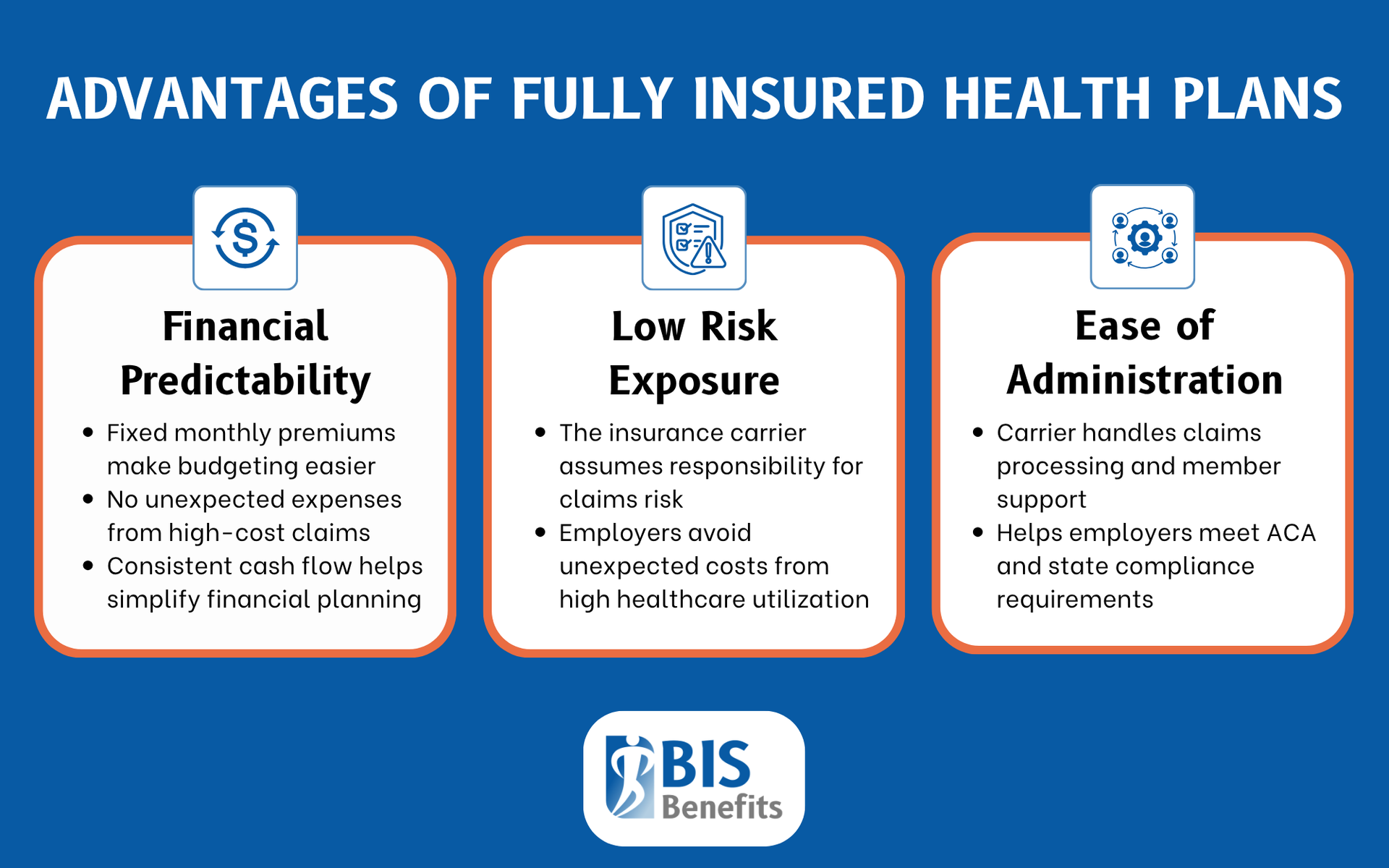
Financial Predictability
With a fully insured plan, employers pay fixed monthly premiums and know exactly what their health benefits will cost, making budgeting straightforward. There are no surprise expenses from high-cost claims, and the cash flow impact is consistent month to month. This predictability is particularly valuable for organizations with tight budgets or those that need certainty in their financial planning.
Low Risk Exposure
The insurance carrier absorbs all claims risk, protecting the employer from catastrophic healthcare claims. There is no exposure to unexpectedly high utilization, and the employer's financial stability is not affected by employee health issues. This peace of mind is valuable for risk-averse organizations that want to avoid the volatility that can come with self-funding.
Ease of Administration
Fully insured plans involve the insurance company managing claims processing, handling customer service for members, and ensuring regulatory compliance with ACA requirements and state laws. Employers benefit from access to the carrier's established provider networks and resources without needing to build that infrastructure themselves. This simplicity makes fully insured plans a good option for employers new to offering benefits or those without dedicated benefits staff.
Disadvantages of Fully Insured Health Plans
Higher Overall Costs
Premiums include not only the expected cost of claims but also administrative fees, state and federal taxes, and the insurer's profit margin. These additional costs often make fully insured plans more expensive than self-funded alternatives, particularly for larger organizations with favorable claims experience. Employers have less control over costs and fewer opportunities to reduce spending.
Limited Customization Options
Fully insured plans restrict employers to the carrier's pre-packaged plans. There is little room for tailoring coverage to specific employee needs, and off-the-shelf plan designs may not align perfectly with workforce demographics. Employers seeking unique benefit structures or specialized coverage may find fully insured options too restrictive.
No-Refund Structure
The no-refund structure means employers do not benefit from healthy years. If employees have low healthcare utilization and total claims are less than the premiums paid, the surplus stays with the insurance carrier rather than returning to the employer. This contrasts with self-funded plans, where the employer retains savings from low claims years. Additionally, annual renewals can bring significant premium increases, and employers have limited negotiating power. Rate increases are based on the broader risk pool, and there is less transparency into claims data that drives pricing decisions.
How to Choose the Right Fully Insured Health Plan
Evaluate Carrier Options
Research carriers available in your area, compare network size and provider access, review carrier reputation and financial stability, consider customer service quality, and assess claims processing efficiency. The carrier you choose will be your partner in delivering benefits to employees, so their capabilities and service quality matter.
Compare Plan Options
Identify the right coverage for your workforce by reviewing available plan types such as Health Maintenance Organization (HMO), Preferred Provider Organization (PPO), and high-deductible options. Compare deductibles, copays, and out-of-pocket expenses. Evaluate prescription drug coverage, preventive care and wellness benefits, and specialty care and mental health coverage. The goal is to find plans that meet employee needs while fitting within your budget.
Understand the Costs
Review the rate structure and understand employer versus employee cost sharing. Ask about rate guarantee periods and inquire about renewal history and trends. Factor in all fees and taxes to understand the true total cost. Working with an insurance broker can help navigate carrier options, access multiple quotes, and ensure you are getting competitive pricing.
Fully Insured Plan Compliance Requirements
In the United States, the Affordable Care Act requirements apply to fully insured plans. Applicable large employers with 50 or more full-time equivalent employees must offer coverage that meets minimum value and affordability standards. Reporting requirements, including Forms 1094-C and 1095-C, apply to these employers. The carrier handles most compliance requirements for fully insured plans, but employers remain responsible for making a compliant offer of coverage.
State insurance regulations also apply to fully insured plans. These plans are subject to state insurance laws, mandated benefits that vary by state, and state premium taxes. The carrier ensures compliance with state requirements, though multi-state employers may face complexity with varying state mandates.
Employee Retirement Income Security Act (ERISA) considerations still apply to fully insured plans, including plan document and summary plan description requirements, fiduciary responsibilities, claims and appeals procedures, and potential
Form 5500 reporting requirements.
Making the Decision
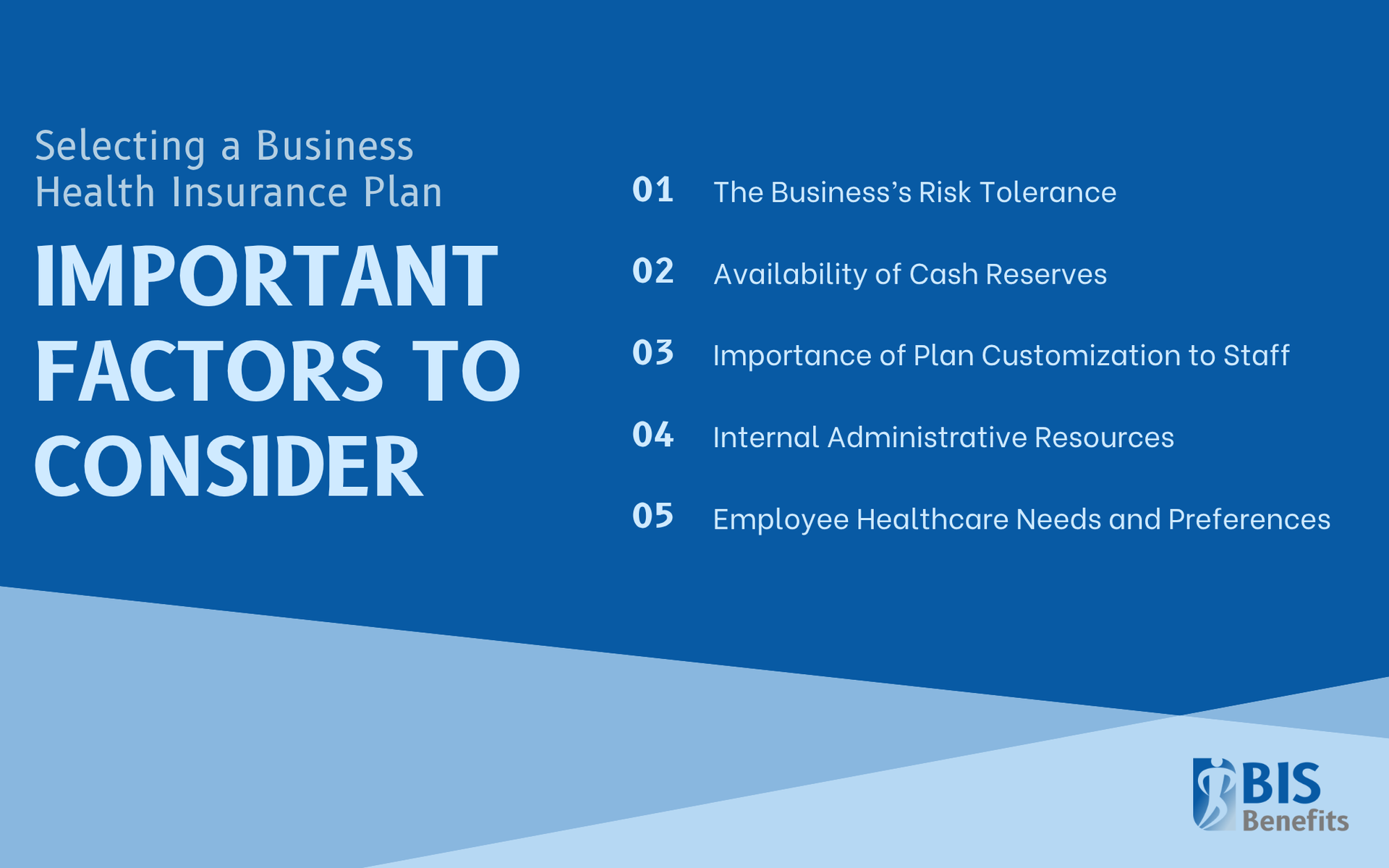
Several questions help guide the decision between fully insured and other funding arrangements. Employers should consider:
- The business’s risk tolerance
- Cash reserves to handle claims variability
- The importance of plan customization to staff
- Internal administrative resources
- Employee healthcare needs and preferences
A fully insured plan makes sense when predictability is a top priority, the company is small or mid-sized, administrative capacity is limited, risk aversion outweighs potential cost savings, and the employer values simplicity and carrier support.
Choose the Right Health Plan Structure for Your Business
A fully insured health plan is a traditional employer-sponsored model where the employer pays fixed premiums to an insurance carrier that assumes all financial risk, handles claims processing, and manages compliance. This approach offers financial predictability, low risk exposure, and ease of administration. However, it may also come with higher costs, limited customization, and no refunds when claims are lower than expected.
Fully insured plans work well for small businesses, risk-averse organizations, and employers seeking simplicity in their benefits administration. Evaluate your organization's size, risk tolerance, and administrative capacity to determine whether a fully insured health plan is the right choice, and work with an insurance broker to compare options from multiple carriers.
Discover the Right Health Plan for Your Business with BIS Benefits
With so many health plan options available, it can be difficult for business owners to feel confident about their choice. At BIS Benefits, our goal is to provide personalized insurance solutions that fit each business’s unique needs. An expert insurance broker from BIS can help you find fully insured health plans, commercial insurance policies like general liability and workers’ compensation, and more. Request a quote to get in touch with the BIS Benefits team today.