
Understanding Commercial Fleet Insurance
Understanding Commercial Fleet Insurance
At a Glance: Commercial fleet insurance is auto coverage that insures multiple business vehicles under a single policy, consolidating management, billing, and claims handling while often reducing per-vehicle premium costs. Coverage typically includes physical damage, liability, uninsured/underinsured motorist, and medical payments protection, with additional options like hired and non-owned auto coverage and cargo coverage available.
Managing insurance for multiple business vehicles can quickly become complicated and expensive. Commercial fleet insurance offers a streamlined solution that covers all your vehicles under a single policy. Fleet insurance is a type of commercial auto insurance designed for companies that own multiple vehicles, consolidating coverage into one plan rather than insuring each vehicle separately.
This approach can lower premium costs, simplify administration, and provide more comprehensive protection than individual commercial auto policies. Understanding how fleet insurance works, what it covers, and how costs are determined helps business owners make informed decisions about protecting their vehicles, drivers, and operations.
What Is Commercial Fleet Insurance?
Commercial fleet insurance is auto coverage that insures multiple business vehicles under one policy. Rather than managing separate policies for each vehicle, fleet insurance consolidates coverage into a single plan designed specifically for businesses that operate fleets of vehicles. This type of coverage is also called fleet auto insurance or business fleet coverage.
Fleet insurance options cover all eligible vehicles under one policy with a single renewal date and premium payment. Claims management and administration are centralized, making it easier to add or remove vehicles as your fleet changes.
Many types of businesses benefit from fleet insurance, including:
- Transportation and logistics companies
- Delivery services and couriers
- Construction and contracting businesses
- Sales organizations with company vehicles
- Service companies (HVAC, plumbing, electrical contractors, etc.)
Any business operating multiple vehicles should consider whether fleet insurance makes sense for their operations.
Compared to individual commercial auto policies, fleet insurance offers significant advantages. One policy and one renewal simplifies management, bulk pricing often reduces costs, and consistent coverage terms across the entire fleet eliminate gaps and confusion. The administrative burden of managing multiple separate policies disappears when everything is consolidated under one fleet policy.
Fleet Size Requirements
Fleet insurance coverage requirements vary by insurance carrier. Many traditional fleet insurance plans are designed for businesses with 10 or more vehicles, but some insurers offer fleet coverage for as few as two or three vehicles. Smaller fleets may qualify for small fleet or business auto policies that provide some of the same consolidated management benefits.
Small Fleets
Small fleet insurance policies for businesses with two to nine vehicles are available from insurance providers who specialize in this market. These policies may be structured as business auto policies with fleet features, still offering consolidated management benefits even if pricing differs from large fleet plans. Standard fleet coverage for 10 or more vehicles provides greater pricing flexibility, more coverage customization options, and often includes dedicated fleet management support.
Large Fleets
Large fleets of 50 or more vehicles often receive custom pricing and coverage structures, dedicated account management, and risk management services as part of their policies. Self-insured retention options may be available for large fleets, along with fleet safety programs and loss control support that help reduce claims and control costs over time.
What Does Fleet Insurance Cover?
Fleet insurance provides several types of coverage to protect your vehicles, drivers, and business.
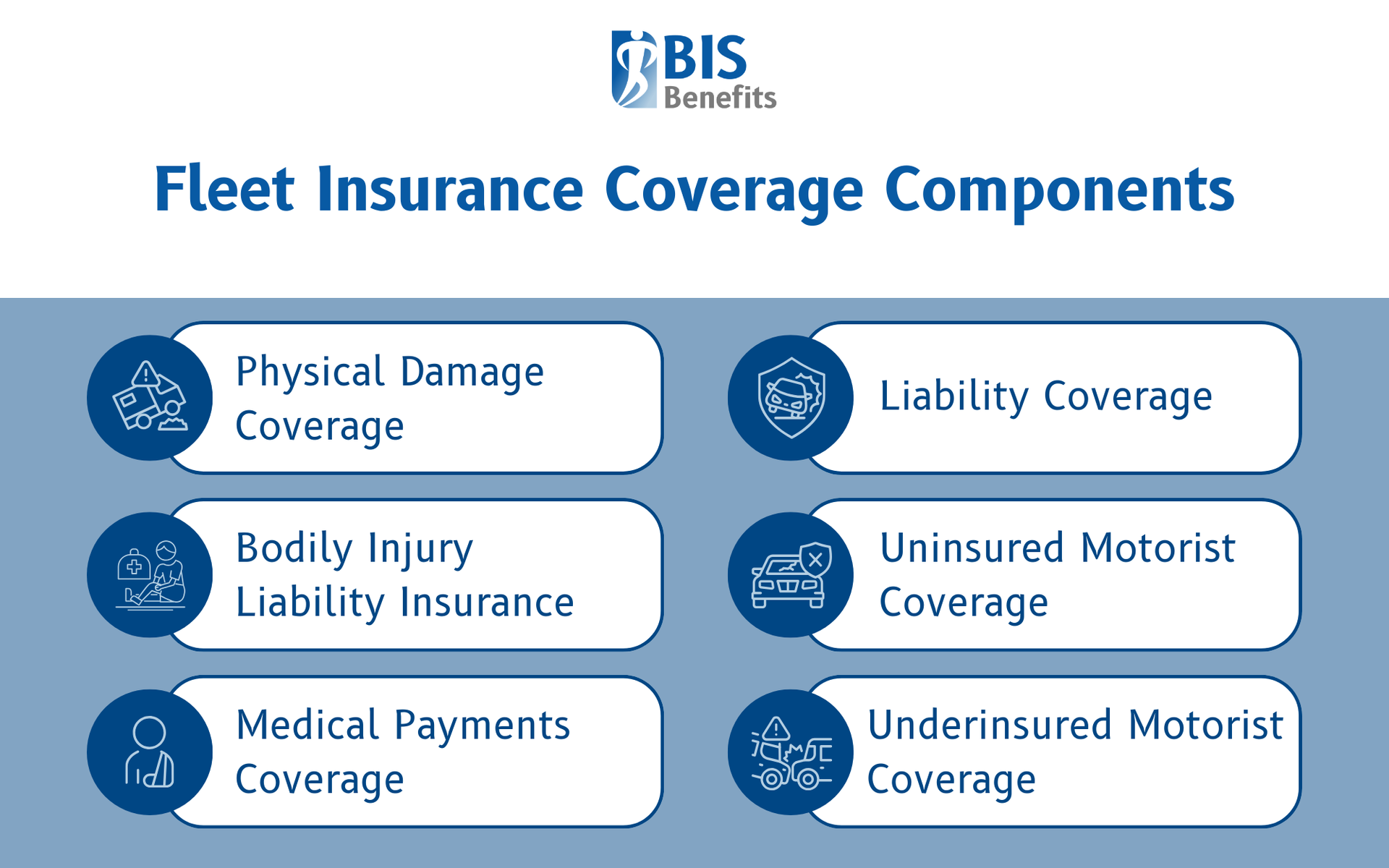
- Physical Damage Coverage: Includes collision coverage for accidents involving other vehicles or objects and comprehensive coverage for theft, vandalism, weather damage, and other non-collision events. This coverage pays for repair or replacement costs for fleet vehicles, with deductibles applying per incident.
- Liability Coverage: Protects your business when fleet vehicles cause injuries or property damage to others.
- Bodily Injury Liability Insurance: Covers injuries to third parties, while property damage liability covers damage to others' property. This coverage also pays legal defense costs if your business is sued, with limits applying per accident and in aggregate.
- Uninsured and Underinsured Motorist Coverage: Protects your drivers when the at-fault party in an accident lacks adequate insurance. This coverage pays medical expenses and lost wages for your employees and is especially important given the number of uninsured drivers on the road. Some states require this coverage.
- Medical Payments Coverage: Pays medical bills and other expenses for drivers and passengers in fleet vehicles regardless of fault, supplementing health insurance and providing immediate coverage without waiting to determine liability.
Additional Coverage Options
These innovative solutions expand protection beyond the basics.
- Hired and Non-Owned Auto Coverage: Protects the business when employees use rented or personal vehicles for business purposes.
- Cargo Coverage: Protects goods transported in fleet vehicles.
- Fleet Policy Add-Ons: Roadside assistance, towing coverage, rental reimbursement while vehicles are being repaired, and gap coverage for leased vehicles in commercial settings
Factors That Affect Fleet Insurance Costs
Several factors influence the cost of commercial fleet insurance. Business Industry
Some lines of work are higher risk than others, which impacts insurance rates. The transportation industry faces different risks than local delivery services, passenger transportation differs from cargo hauling, and hazardous materials transport increases premiums substantially. Industry loss history affects how underwriters view your business.
Fleet Size and Vehicle Types
The number of vehicles in your fleet, the types of vehicles (sedans, trucks, vans, or tractor trailers), the age and condition of vehicles, and installed safety features and technology all affect premiums. Vehicle value impacts physical damage coverage costs.
Driver Factors
The driving records of all fleet drivers, driver age and experience, the number of drivers relative to vehicles, and any driver training and certification programs influence pricing. Insurers often require Motor Vehicle Record (MVR) checks and ongoing monitoring.
Geographic Location
Location factors include the place where vehicles are primarily operated, urban versus rural driving environments, state insurance requirements, local traffic patterns and accident rates, and typical weather and road conditions.
Claims History
Prior claims filed under fleet or commercial auto policies, the frequency and severity of past losses, your loss ratio (claims paid versus premiums paid), time since your last claim, and steps taken to prevent future losses all factor into pricing. Coverage selections, including liability limits, deductible amounts, and optional coverages, also affect your premium.
Benefits of Fleet Insurance
Fleet insurance offers several advantages over insuring vehicles individually.
Cost Savings
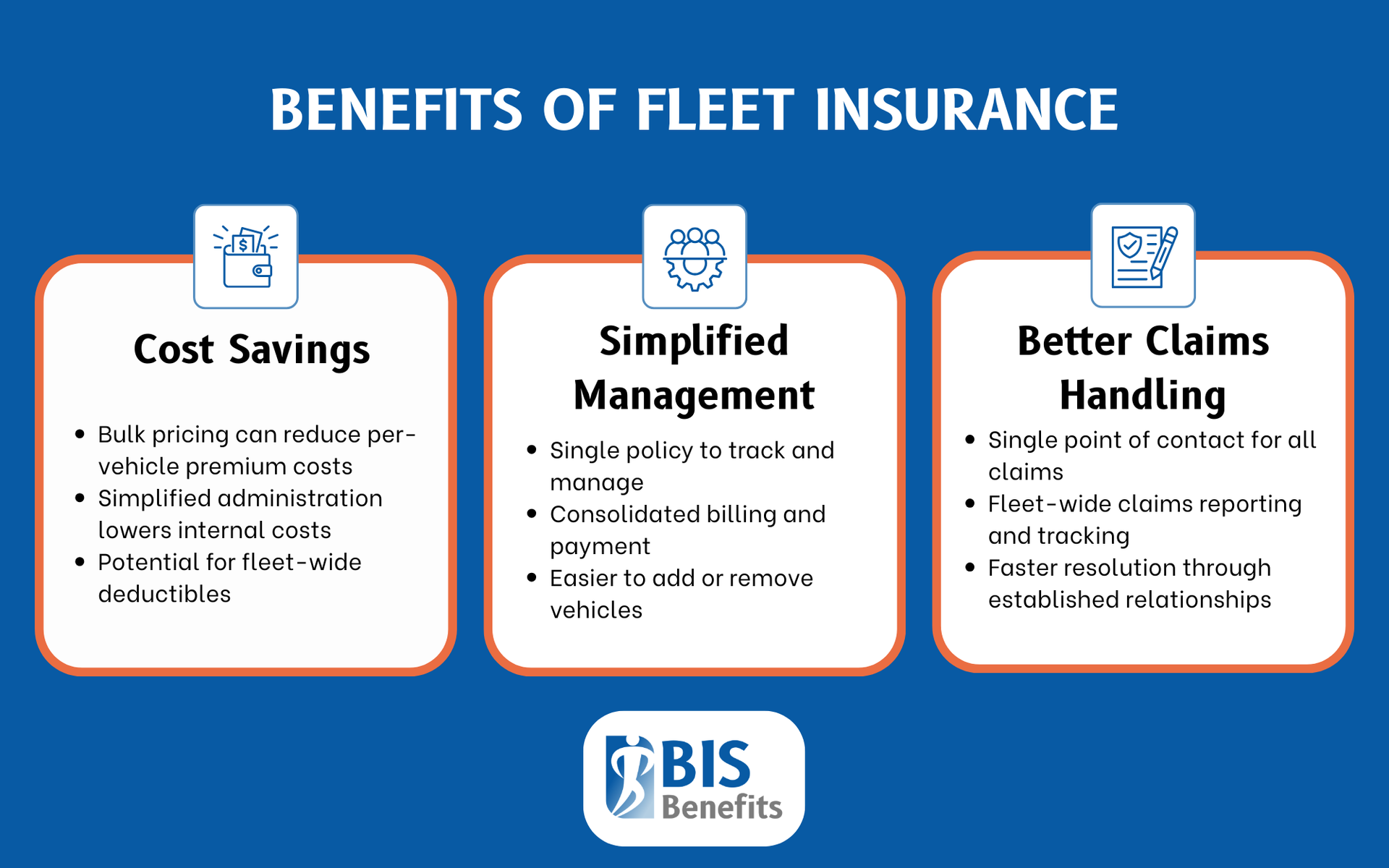
The bulk pricing that fleet insurance provides can often reduce per-vehicle premium costs, provide volume discounts for larger fleets, offer simplified administration that reduces internal costs, consolidate renewals into one process instead of multiple, and create the potential for fleet-wide deductibles.
Simplified Management
A single policy to track and manage, one renewal date to remember, consolidated billing and payment, easier processes for adding or removing vehicles, and centralized documentation all reduce administrative burdens. Consistent coverage ensures all vehicles are covered under the same terms and conditions with no gaps in coverage between vehicles, standardized limits and deductibles, and easier compliance verification across the fleet.
Claims Handling
Fleet insurance offers a single point of contact for all claims, fleet-wide claims reporting and tracking, and faster resolution through established relationships. Many insurers also provide risk management support, including fleet safety programs, driver training resources, telematics and monitoring options, loss control consultations, and accident prevention guidance.
How to Get Fleet Insurance
Assess Your Needs
Inventory all vehicles to be covered, document vehicle types, values, and uses, identify all drivers who will operate fleet vehicles, determine coverage needs based on your operations, and review current coverage to identify gaps.
Gather Required Information
Put together the vehicle identification numbers (VINs) for all vehicles, driver information and MVR consent forms, business information such as entity type and years in operation, current insurance policies and claims history, and a description of fleet operations and radius of travel.
Work with an Insurance Professional
Work with a commercial insurance specialist who has experience with fleet coverage. Compare quotes from multiple carriers and review coverage terms carefully, not just price. When evaluating quotes, business owners should:
- Compare coverage limits and deductibles
- Review exclusions and policy conditions
- Consider each insurer's claims handling reputation
- Ask about additional services included
- Understand the renewal process and potential rate changes
After implementing coverage, business owners should:
- Review policy documents thoroughly
- Establish procedures for adding and removing vehicles
- Train staff on claims reporting procedures
- Maintain driver qualification files
- Schedule regular policy reviews to ensure coverage keeps pace with your fleet operations
Protect Your Fleet with the Right Coverage
Commercial fleet insurance provides consolidated coverage for businesses operating multiple vehicles, offering cost savings, simplified administration, and comprehensive protection including physical damage, liability, and motorist coverage. Fleet insurance costs depend on factors including business industry, fleet size, vehicle types, driver records, geographic location, and claims history.
Working with an insurance broker who has commercial vehicle and fleet insurance experience helps businesses find the right coverage at an affordable rate. A qualified insurance professional can assess your fleet insurance needs, gather the required information, and find a fleet policy that protects your vehicles, drivers, and business operations. At BIS Benefits, we offer several group benefits and business insurance products for Georgia-based businesses, including
commercial auto,
workers' compensation, and
general liability. If you have 15 employees or more,
request a quote from BIS today!