How Does Restaurant Liability Insurance Work?
How Does Restaurant Liability Insurance Work?
At a Glance: Restaurant liability insurance covers third-party claims for bodily injury, property damage, and illness or allergic reactions caused by served food, along with the legal costs of defending those claims. Most restaurants carry a combination of general liability, property, and product liability coverage, since no single policy handles every risk. Employee injuries, alcohol-related incidents, and vehicle accidents fall outside standard liability policies and require separate coverage.
A customer slips on a wet floor, a guest has an allergic reaction to served food, or a server accidentally spills hot coffee on a patron. Any of these incidents could result in a lawsuit that threatens your restaurant's financial stability. Restaurant liability insurance protects food service businesses from claims arising from injuries, property damage, and other incidents that occur during normal operations.
This coverage is considered essential protection for any restaurant, cafe, bar, or food service establishment. Understanding how restaurant liability insurance works, what it covers, and how to select the right policy helps protect your business from potentially devastating claims.
What Is Restaurant Liability Insurance?
Restaurant liability insurance is coverage that protects restaurants from third-party claims for bodily injury, property damage, and related legal costs. Some form of this coverage is often required by most landlords, lenders, and licensing authorities.
The core coverages in restaurant liability insurance typically include:
- General Liability Insurance: Covers claims from third parties such as customers, vendors, and visitors.
- Property Insurance: Covers the restaurant's own building and equipment.
- Product Liability Insurance: Protects against adverse reactions caused by served food, including foodborne illness outbreaks or customer allergic reactions.
Each type of insurance addresses different risks, and most restaurants need multiple coverages for complete protection.
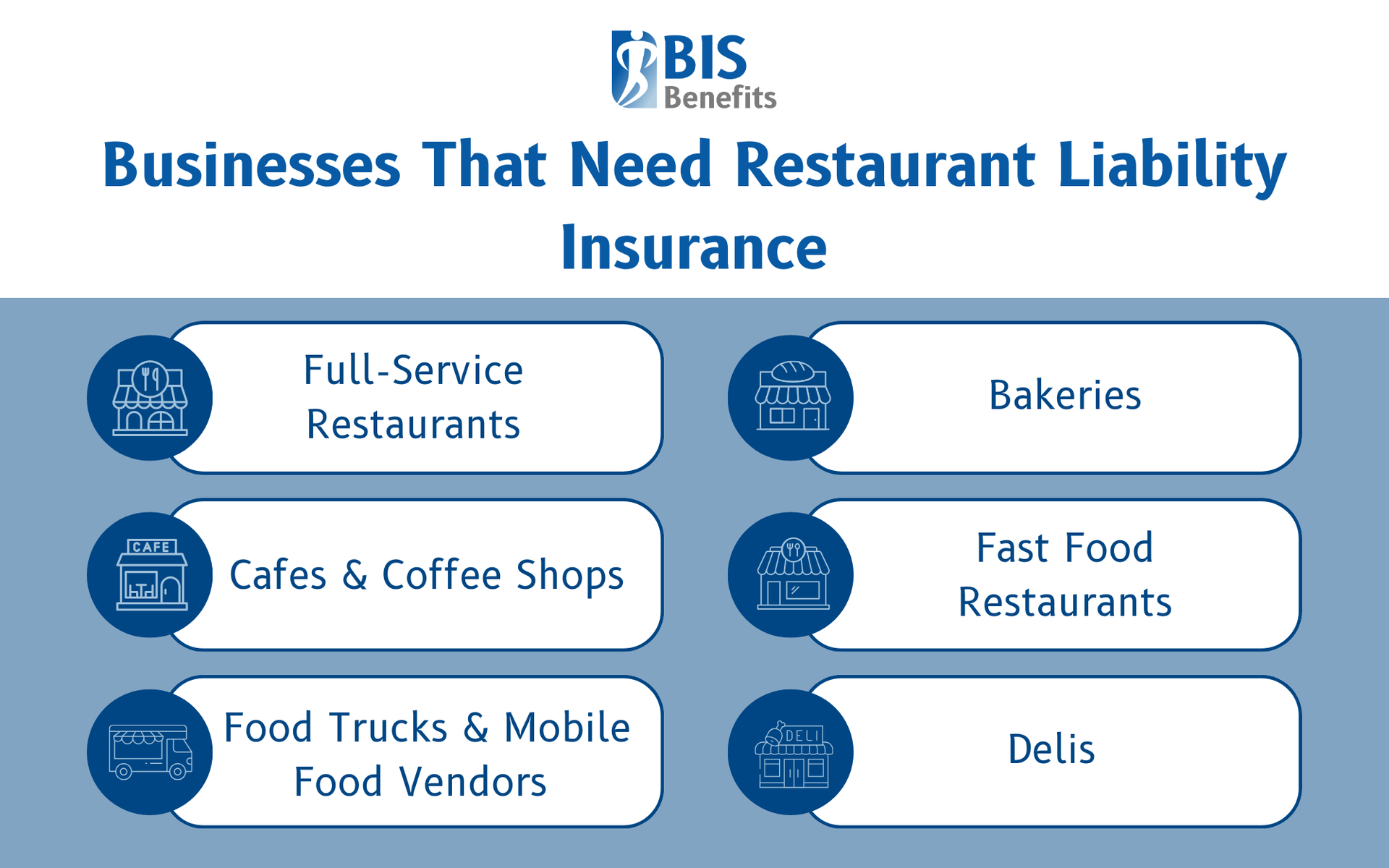
Who Needs Restaurant Liability Insurance?
Any business serving food to the public needs restaurant liability insurance. This includes:
- Full-service restaurants
- Fast food and quick-service restaurants
- Cafes and coffee shops
- Bars and nightclubs that serve food
- Catering companies
- Food trucks and mobile food vendors
- Bakeries
- Delis
Regardless of size or service style, liability coverage protects food service businesses from the claims that can arise during daily operations.
What Does Restaurant Liability Insurance Cover?
Bodily Injury Coverage
Bodily injury coverage protects against customer injuries on the premises. This includes slip and fall accidents, burns from hot food or beverages, injuries from falling objects or fixtures, and cuts from broken glass or dishes. The policy covers medical expenses for injured parties and provides legal defense if the restaurant is sued.
Commercial Property Insurance Coverage
Property coverage applies when the restaurant damages property belonging to others. This includes damage to customer property such as clothing, electronics, and personal items, damage to neighboring businesses from restaurant operations, and damage caused by employees during deliveries.
Foodborne Illness Coverage
Food spoilage and foodborne illness claims are a critical coverage area for any food service business. This includes claims from customers who become ill after eating at the restaurant, food poisoning and contamination incidents, and allergic reaction claims. Some policies may have sublimits for foodborne illness or require additional coverage, so review your policy carefully to understand your protection.
Personal and Advertising Injury Coverage
Personal and advertising injury coverage protects against libel and slander claims, false advertising allegations, copyright infringement in marketing materials, wrongful eviction of patrons, and invasion of privacy claims.
Legal Defense Coverage
Legal defense costs are also covered, including attorney fees for covered claims, court costs and filing fees, settlement negotiations, and expert witness fees. Coverage applies even for frivolous lawsuits, and defense costs are often provided in addition to liability limits.

What Does Restaurant Liability Insurance Exclude?
Employee injuries are not covered under liability insurance. Work-related injuries require workers' compensation insurance, since liability insurance covers third parties, not employees. Both coverages are needed for complete protection.
Liquor liability is a significant exclusion in standard liability policies. Alcohol-related claims require separate liquor liability insurance, which covers incidents involving intoxicated patrons. Dram shop laws in many states create significant exposure for restaurants serving alcohol, making this coverage essential for any establishment with a liquor license.
Other common exclusions include:
- Intentional acts, including deliberate harm, criminal acts, fraud, and dishonesty.
- Vehicle accidents (these require commercial auto insurance).
- Employment practices claims, including discrimination, wrongful termination, and harassment allegations (these require employment practices liability insurance)
- Pollution and environmental contamination
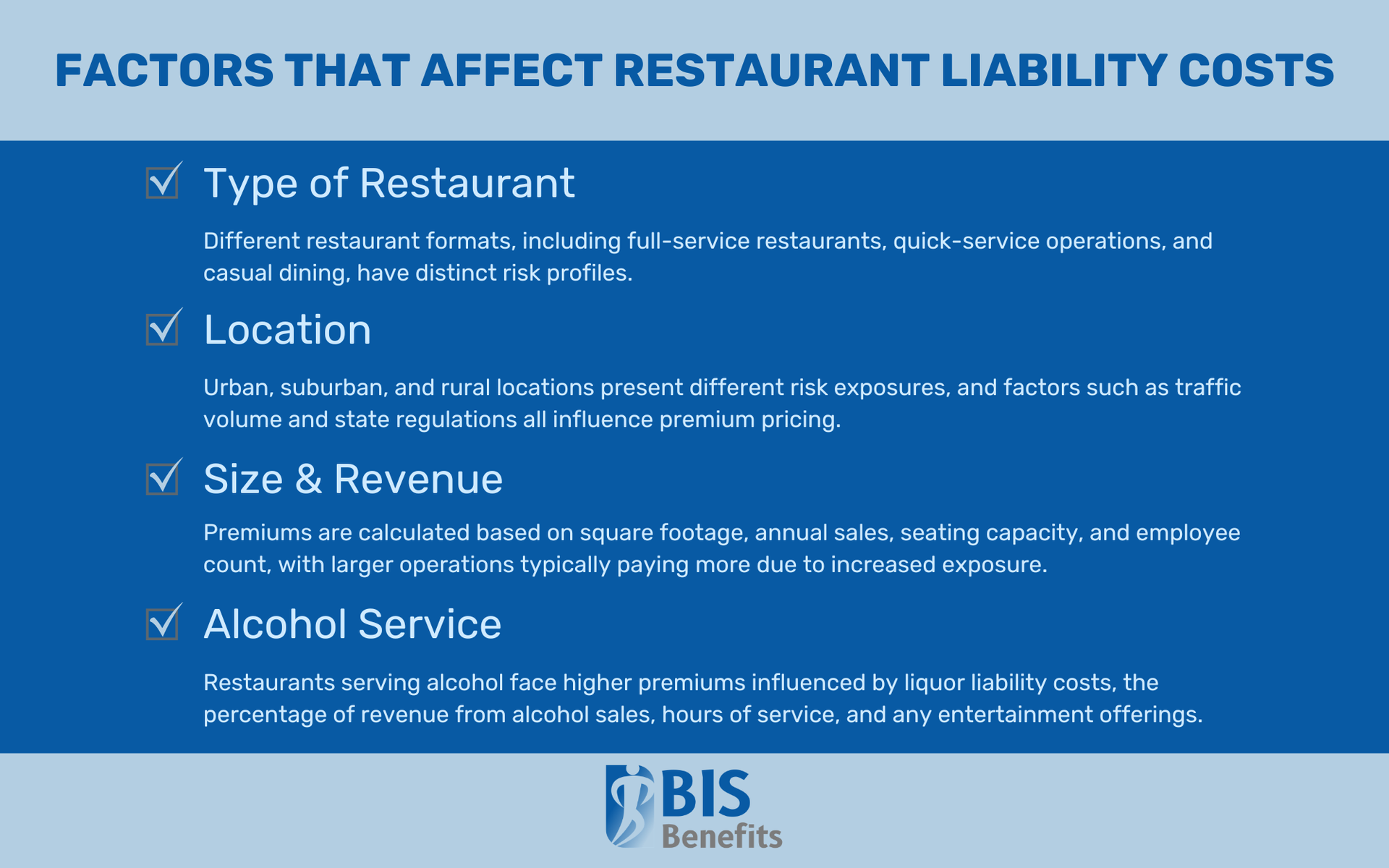
Factors That Affect Restaurant Liability Insurance Costs
Type of Restaurant
Full-service restaurants, quick-service operations, fine dining, and casual dining all have different risk profiles. Bars and nightclubs typically have higher premiums due to alcohol service and late-night operations. Food trucks and catering companies have unique risk profiles that affect pricing.
Location
Urban restaurants may face different risks than suburban or rural locations. High-traffic areas increase exposure, and local lawsuit trends affect pricing. State regulations and the legal environment also influence premiums.
Size and Revenue
Square footage, annual sales volume, number of seats and capacity, and number of employees all factor into premium calculations. Larger operations typically pay more due to increased exposure.
Alcohol Service
Restaurants serving alcohol face higher premiums, and liquor liability can face significant premium costs. The percentage of revenue from alcohol sales, hours of alcohol service, and entertainment offerings all affect pricing.
Claims History
Prior claims increase costs, and the frequency and severity of past incidents matter. Time since the last claim and any risk management improvements can help reduce premiums. A clean claims history earns better rates. Safety measures such as food safety certifications, slip-resistant flooring, security measures, employee training programs, and documented safety protocols can also reduce premiums.
How Can Restaurant Insurance Premiums Be Reduced?
The costs of restaurant liability insurance can vary significantly by location and specific risk factors. However, there are several ways to reduce premiums.
- Bundling liability with property and other coverages
- Implementing food safety programs
- Training employees on safety procedures
- Maintaining a clean claims history
- Installing safety equipment and security systems
- Working with a qualified insurance broker
Additional Coverage Options for Restaurants
Liquor Liability Insurance
Liquor liability coverage is required for restaurants serving alcohol. It covers claims from intoxicated patrons and protects against dram shop liability. This coverage can be added to an insurance policy or purchased separately.
Umbrella Insurance
Umbrella insurance provides additional liability limits above primary policies and kicks in when underlying limits are exhausted. This coverage is relatively affordable for the significant protection it provides and is recommended for restaurants with high exposure.
Employment Practices Liability Insurance (EPLI)
Employment practices liability insurance covers employee claims such as discrimination, harassment, and wrongful termination. The restaurant industry has high EPLI exposure, and this coverage is not included in general liability coverage.
Cyber Liability Insurance
Cyber insurance addresses data breaches and payment card theft, which is increasingly important as restaurants process more card transactions and expand online ordering.
Protect Your Restaurant with Liability Insurance
Restaurant liability insurance protects food service businesses from claims arising from bodily injury, property damage, foodborne illness, and other incidents. Coverage includes legal defense costs and damages up to policy limits, providing financial protection against the lawsuits that can threaten a restaurant's survival.
This coverage is essential for any restaurant owner and is required by most landlords and lenders. Contact an insurance professional experienced in restaurant insurance coverage to evaluate your risks and obtain liability insurance that protects your business from potentially devastating claims.
Get in Touch with an Insurance Broker at BIS Benefits Today
Working with a qualified insurance broker who is knowledgeable about your sector can help you find coverage that accounts for your specific risk profile and industry trends. At BIS Benefits, our professional brokers bring a hands-on approach that helps you find unique solutions for your unique business. If your business is located in the state of Georgia and has at least 15 employees, Request a Quote to learn more about our commercial insurance products.