
What Does Builder’s Risk Insurance Cover?
What Does Builder’s Risk Insurance Cover?
At a Glance: Builder's risk insurance is temporary property coverage that protects buildings and structures under construction from covered losses, including fire, storms, theft, vandalism, and other perils during the construction period. Coverage includes the structure itself, building materials and supplies on site, materials in transit, and additional expenses like debris removal and soft costs.
Construction projects involve significant investments in materials, labor, and time. But what happens if a fire, storm, or theft damages your project before it is complete? Without proper protection, a single loss event could derail your entire project and leave you facing substantial financial consequences.
Builder's risk insurance is a type of property insurance that protects buildings and structures under construction from covered losses during the construction period. This temporary additional coverage is designed to last as long as the construction project and can apply to new construction, remodeling, or installations. Understanding what builder's risk insurance covers and what it excludes helps ensure adequate protection for your construction project and investment.
What Is Builder's Risk Insurance?
Builder's risk insurance is property insurance specifically designed for construction projects. It protects buildings and structures while under construction, covering materials, fixtures, and equipment used in the construction process. This is temporary coverage that lasts for the duration of the project and is also called course of construction insurance.
The policy is typically purchased before construction begins and remains in effect throughout the construction period. Policy limits are based on the completed value of the project, and coverage ends when construction is complete or when the building is occupied. Builder's risk insurance can be purchased by the property owner, the general contractor, or both parties depending on contract requirements and project structure. Builder's risk insurance covers various types of projects, including both residential and commercial construction.
Who Needs Builder's Risk Insurance?
General contractors often have primary responsibility for the construction site and need builder's risk insurance to protect from different risks during the project. This coverage is frequently required by project owners or lenders and covers subcontractor work installed on the project. Property owners also need this coverage to protect their investment in the building under construction.
Construction companies undertaking large-scale commercial projects with significant material investments need builder's risk coverage. Multiple ongoing projects may each require separate insurance coverage, and higher policy limits are common for commercial buildings.
Other industries that commonly need builder's risk insurance include:
- Retail companies building new locations
- School districts constructing new facilities
- Healthcare organizations expanding their facilities.
Any business or organization undertaking a construction project should consider whether builder's risk coverage is appropriate for their situation.
What Does Builder's Risk Insurance Cover?
Builder's risk insurance covers the structure under construction during all phases of the building process. This includes permanent fixtures being installed, foundations, framing, roofing, and finishes. Coverage typically increases as construction progresses and the value of the project grows.
Building Materials and Supplies
Covered items under a builder’s risk insurance policy can include:
- Materials stored on the construction site
- Supplies waiting to be installed
- Fixtures and equipment for the building
Materials in temporary storage locations - Materials in transit
Covered Perils
Events that are covered under builder's risk insurance policy typically include:
- Fire and smoke damage
- Weather events (wind, hail, lightning, natural disasters, etc.)
- Theft of materials and equipment
- Vandalism and malicious mischief
- Water damage from non-flood sources
- Explosions
- Falling objects
- Vehicle or aircraft impact
Additional Expenses
Other covered expenses may include:
- Debris removal after a covered loss
- Temporary structures and scaffolding
- Soft costs (architectural fees, permits, financing costs during delays, etc.)
- Additional expenses to expedite repairs
- Building code upgrades required during rebuilding
What Does Builder's Risk Insurance Exclude?
While builder's risk insurance provides broad protection, several important exclusions apply.
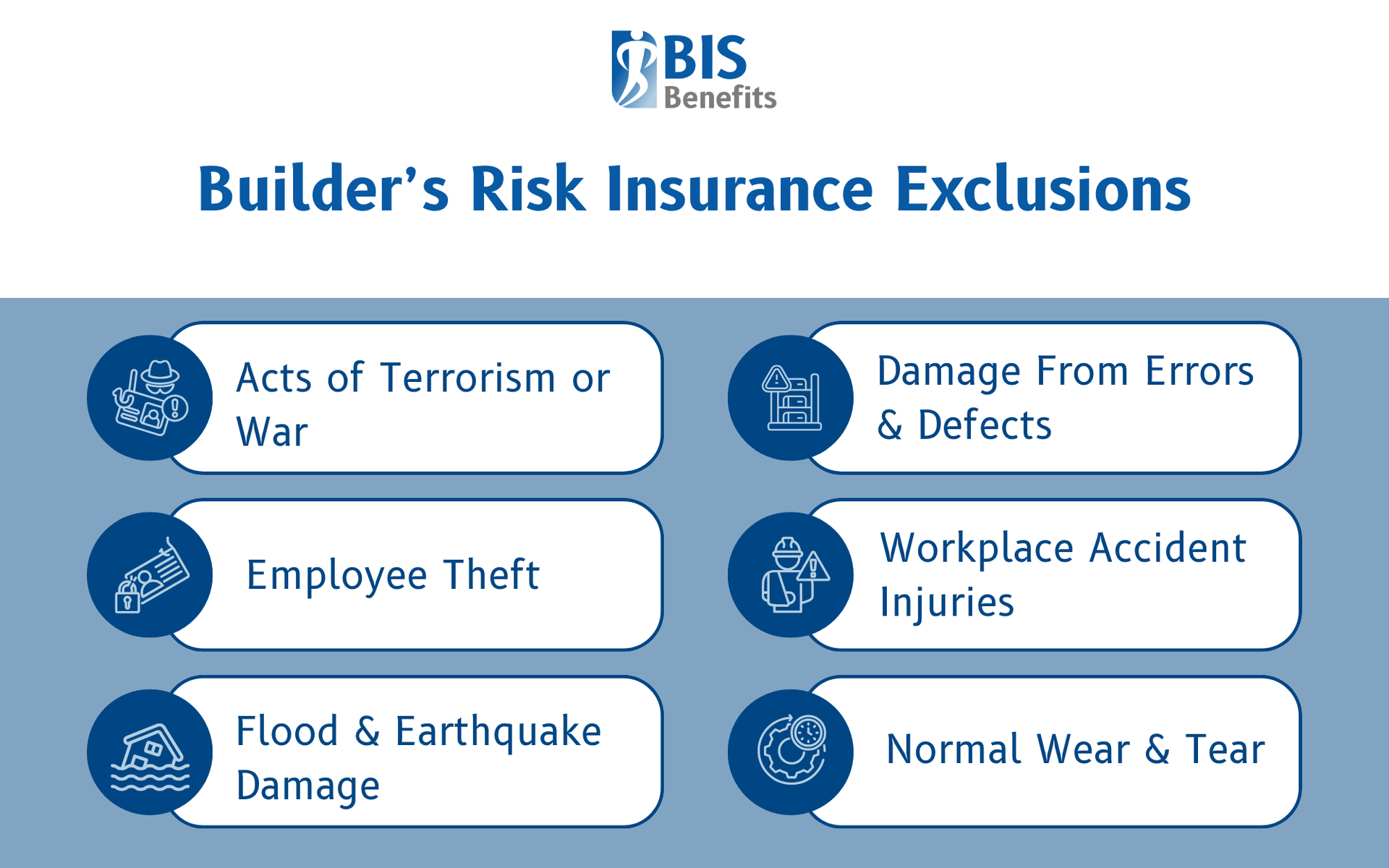
Acts of Terrorism
Damage from terrorist acts and military action are typically not covered under a builder’s risk policy. Terrorism coverage may be available as a separate endorsement, so review your policy language for specific exclusions.
Damage From Errors & Defects
Damage from faulty design, workmanship, or materials is excluded. Design errors, defective workmanship, and faulty materials that fail are not covered. However, resulting damage from these issues may be covered. For example, if faulty wiring causes a fire, the fire damage may be covered even though the faulty wiring itself is not.
Employee Theft
Theft by employees, contractors, or subcontractors is not covered under builder's risk insurance. Internal theft requires separate crime or fidelity coverage. Builder's risk covers theft by unknown third parties, which is an important distinction for job site security planning.
Bodily Injury
Injuries from a workplace accident would not be covered by builder's risk insurance because it is property coverage, not liability coverage. Workers' compensation insurance is required for employee injuries, and general liability insurance covers third-party injuries on the job site.
Other common exclusions include:
- Flood damage (which requires separate flood insurance)
- Earthquake damage (which requires a separate endorsement)
- Normal wear and tear
- Mechanical breakdown of equipment
- Damage from lack of maintenance
- Penalties and fines
- Loss of use or business interruption (unless specifically added to the policy)
Builder's Risk Coverage Limits and Deductibles
Coverage limits for builder's risk insurance are based on the completed value of the project, including the cost of materials, labor, and contractor fees. Soft costs may be included if that coverage is added. Limits should reflect the full completed value of the project to ensure adequate protection.
Some policies require reporting of values during construction as the project progresses. Coverage adjusts as construction advances, and accurate reporting is important to avoid underinsurance. The final value should reflect the completed project cost.
Deductibles represent the amount paid out of pocket before coverage applies. Higher deductibles reduce premium costs, and special deductibles may apply for certain perils such as wind, hail, or theft.
Optional Coverages and Endorsements
Several optional coverages can be added to builder's risk policies through endorsements.
Flood Coverage
Since standard builder's risk excludes flood damage, this is available as a separate policy or endorsement. This is important for projects in flood-prone areas, with coverage options available through the National Flood Insurance Program (NFIP) or private flood insurers. Earthquake coverage is also excluded from standard policies but available as an endorsement in earthquake-prone regions, typically with higher deductibles.
Soft Costs Coverage
Soft costs refers to additional expenses from construction delays, including architectural and engineering fees, additional financing costs and interest, permit fees and inspection costs, and lost rental income during delays. This coverage can be valuable for projects where delays create significant financial impact.
Inland Marine & Equipment Floater Coverage
Contractor's equipment may be excluded from builder's risk policies, requiring separate inland marine insurance or equipment floater coverage for tools, machinery, and mobile equipment.
Ordinance or Law Coverage
This add-on coverage addresses increased costs from building code compliance if parts of the building must be repaired or remodeled to meet current codes. This is important for projects that involve older structures or that have extended construction timelines.
How to Get Builder's Risk Insurance
Builder's risk insurance should be purchased before construction begins. Coverage should be in place before construction materials arrive on site, and the policy period should be matched to the estimated project timeline. Extensions are available if construction takes longer than planned.
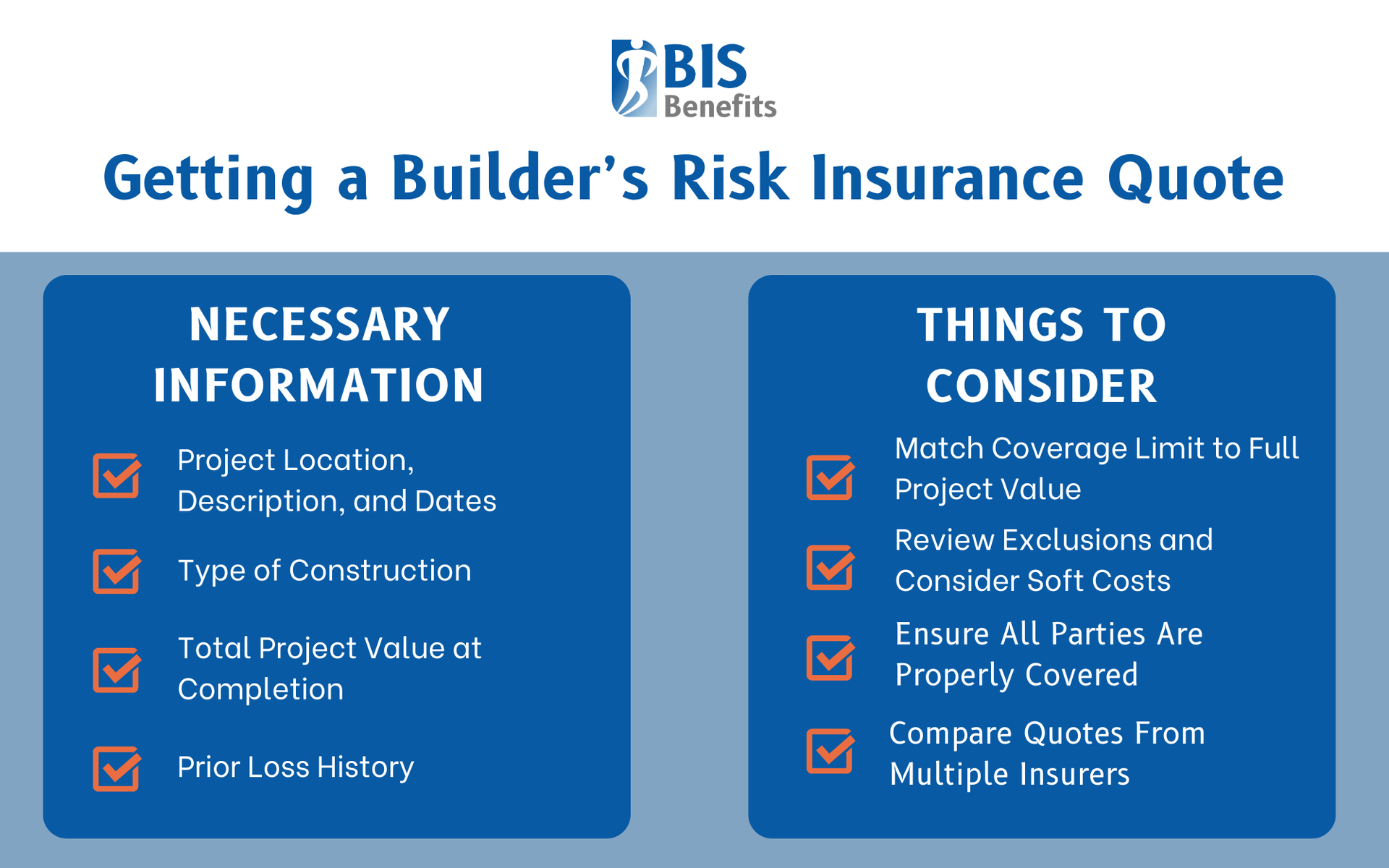
Information needed for a quote includes:
- Project location and description
- Type of construction (such as wood frame, masonry, or steel)
- Total project value at completion
- Construction start and estimated completion dates
- Security measures at the job site
- Prior loss history
Before choosing a builder’s risk insurance policy, individuals and companies should:
- Match coverage limits to the full project value
- Review exclusions carefully and add necessary endorsements
- Consider soft costs and delay coverage if appropriate
- Ensure all parties are properly covered as required by construction contracts
- Compare quotes from multiple insurers to find the best combination of coverage and price
Protect Your Construction Project with the Right Insurance Plan
Builder's risk insurance protects buildings and structures under construction from covered perils, including fire, weather events, theft, and vandalism. Coverage extends to the structure itself, building materials and supplies, and materials in transit throughout the construction period.
While builder's risk provides broad protection, it has some exclusions, including damage from faulty design, employee theft, and workplace accidents. Understanding both coverage and exclusions helps you build a comprehensive insurance program for your construction project.
Discover Group Benefits & Business Insurance Solutions with BIS Benefits
BIS Benefits connects businesses in Georgia with expert insurance brokers that can help them find
construction business insurance,
general contractor insurance, and more
commercial insurance solutions that fit their unique requirements. If you’re a business owner with at least 15 employees,
request a quote from BIS today.