What’s Included in Commercial Real Estate Insurance?
What's Included in Commercial Real Estate Insurance?
At a Glance: Commercial real estate insurance combines commercial property insurance with general liability insurance. This coverage applies to a wide range of property types, including apartment buildings, mixed-use properties, office buildings, retail centers, and industrial facilities.
Owning commercial real estate represents a significant investment, and protecting that investment from fires, storms, lawsuits, and other risks requires the right insurance coverage. Commercial real estate insurance is a combination of coverages designed to protect commercial properties from physical damage and liability exposures.
This coverage typically includes
commercial property insurance, which covers commercial buildings and physical assets from events like fires, explosions, storms, theft, and vandalism; and
general liability insurance, which protects against lawsuits arising from injuries or damage on the property. Understanding what commercial real estate insurance includes helps ensure adequate protection for your buildings, tenants, and investment returns.
What Is Commercial Real Estate Insurance?
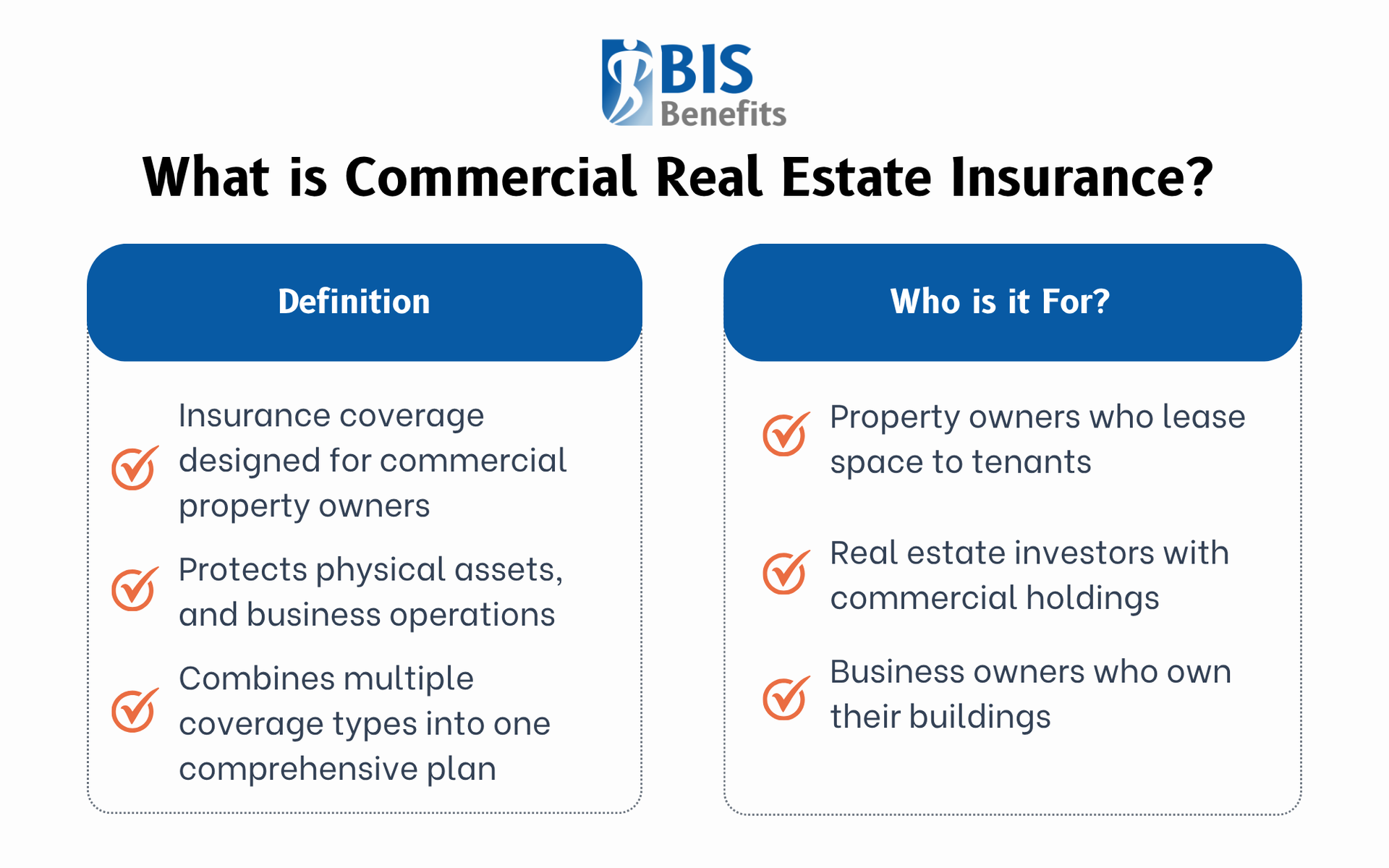
Commercial real estate insurance is coverage designed specifically for commercial property owners. It protects buildings, physical assets, and business operations by combining multiple coverage types into a comprehensive protection plan. This coverage differs from residential property insurance in scope and coverage limits, addressing the unique risks that commercial properties face.
The core components of
commercial real estate insurance include
commercial property insurance for physical assets and structures and
general liability insurance for third-party injury and damage claims. Additional coverages based on property type and risk exposures are often bundled together for comprehensive protection.
Property owners who lease space to tenants, real estate investors with business property holdings, business owners who own their buildings, and property management companies all need commercial real estate insurance. It protects investments from catastrophic loss, satisfies lender requirements for financed properties, covers legal defense costs from lawsuits, and provides income protection during repairs.
Types of Commercial Properties Covered
Commercial real estate insurance applies to a wide range of property types.
Apartment Buildings
Apartments and multi-family residential properties benefit from coverage for the building structure and common areas, landlord liability protection, and loss of rental income coverage.
Mixed-Use Buildings
Properties that combine residential and commercial space, such as retail on the ground floor with apartments above, require coverage addressing both uses.
Commercial Rental Properties
Rental properties leased to commercial tenants, including office buildings with multiple tenants, retail centers and strip malls, and industrial spaces, all need commercial real estate insurance.
Real Estate Investment Trusts
Real estate investment trusts (REIT) managing large portfolios of commercial properties require specialized coverage for institutional investors with portfolio-level risk management and coverage coordinated across multiple properties.
Office Properties
Single-tenant and multi-tenant buildings, professional office parks, and medical and dental office buildings benefit from this coverage.
Retail Properties
Shopping centers, standalone retail buildings, and restaurant and hospitality properties need protection.
Industrial Properties
Warehouses, distribution centers, manufacturing facilities, and flex space also require commercial real estate insurance.
Commercial Property Insurance Coverage
Building Coverage
Commercial property insurance covers the physical structure that houses your property, including walls, roof, foundation, and permanent fixtures. Electrical, plumbing, and HVAC systems are covered, along with building improvements and betterments and attached structures such as garages and storage buildings.
Business Personal Property
This type of property includes business materials and office supplies, manufacturing equipment and machinery, furniture, fixtures, and equipment, computers and technology equipment, and tools and specialized equipment.
Inventory Coverage
Inventory coverage protects stock and merchandise on premises, raw materials for manufacturing, and finished goods awaiting sale or shipment.
Outdoor Property
This coverage extends to fencing around the property, landscaping and trees, signage and outdoor displays, parking lot lights and fixtures, and detached structures.
Covered Events
Covered perils typically include fire and smoke damage, explosions, severe weather including wind, hail, and lightning, theft and burglary, vandalism and malicious mischief, water damage from non-flood sources, falling objects, and vehicle and aircraft damage.
Commercial Property Insurance Exclusions
Important exclusions apply to commercial property insurance. Flood damage requires separate flood insurance, and earthquake damage requires separate coverage or an endorsement. Normal wear and tear, intentional damage by the insured, and terrorism are excluded.
General Liability Insurance Coverage
General liability insurance covers third-party bodily injury claims, third-party property damage claims, personal and advertising injury, legal defense costs, and medical expenses for minor injuries. This coverage protects property owners when someone is injured on the property or when property damage occurs for which the owner may be held responsible.
Premises Liability
This coverage addresses the legal responsibility for safe property conditions, including the duty to maintain common areas, hazard identification and correction, snow and ice removal liability, and security and safety measures.
Legal Defense
This coverage pays attorney fees for covered claims, court costs, legal expenses, and settlement negotiations. Coverage applies even for frivolous lawsuits, and defense costs are often provided in addition to liability limits.
Additional Coverage Options
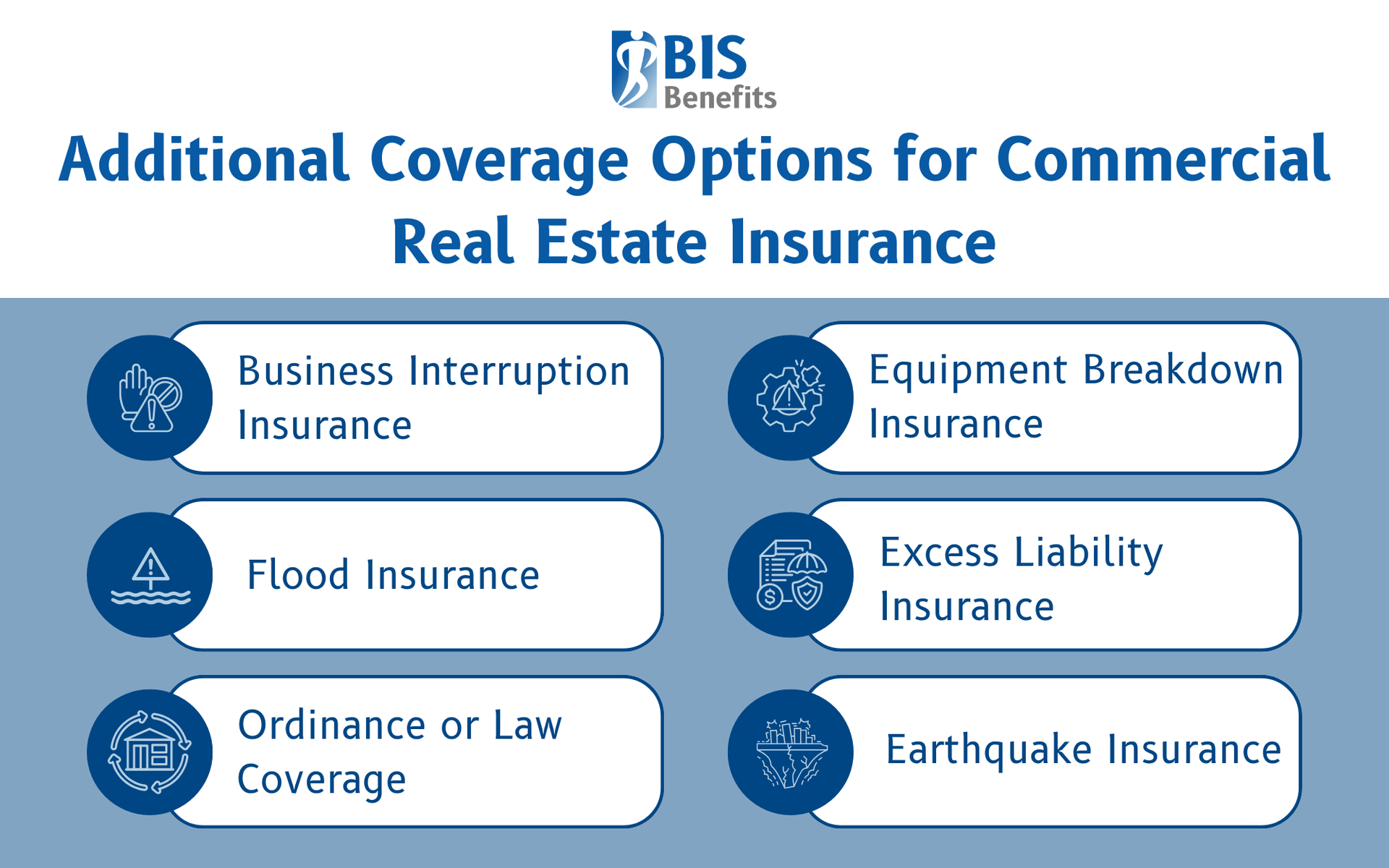
Business Interruption
Business interruption coverage pays for income loss from covered property damage while the building is uninhabitable or unusable and may include an extended period of restoration coverage.
Ordinance or Law Coverage
This coverage addresses increased costs from building code upgrades, which is required when older buildings must meet current codes after a loss. It covers demolition costs for undamaged portions and increased construction costs for code compliance.
Equipment Breakdown Coverage
This insurance add-on addresses mechanical and electrical equipment failures not covered under standard property policies. This includes HVAC systems, boilers, elevators, electrical panels, and wiring.
Flood & Earthquake Insurance
These extreme weather events require separate policies in addition to general liability insurance. Flood insurance is available through the National Flood Insurance Program (NFIP) or private insurers, and is required in high-risk flood zones for properties with mortgages. Earthquake coverage is available as a separate policy or endorsement and is essential in seismically active regions, though higher deductibles typically apply.
Excess Liability
Excess liability coverage provides additional liability limits above primary policies, protecting against catastrophic claims and covering gaps in underlying coverage. This is an important type of coverage for high-value properties.
Factors That Affect Commercial Real Estate Insurance Costs
Several factors influence commercial real estate insurance costs.
Property Characteristics
Building age, construction type, condition, square footage, number of stories, location, fire protection and security systems, and roof age and condition all affect pricing.
Occupancy and Use
Factors such as the type of tenants, hazards associated with tenant operations, vacancy rates, and mixed-use considerations also play a role.
Coverage Selections
Property coverage limits, valuation method, liability limits, deductible amounts, and optional coverages all impact insurance premiums.
Claims History
Insurers will evaluate prior losses on the property, frequency and severity of claims, loss control measures implemented, and time since the last claim.
Location
The building's geographic region, proximity to fire stations and hydrants, crime rates, and potential risks for natural disaster exposure influence pricing.

How to Determine the Right Coverage
Property Valuation
Proper property valuation is fundamental to adequate coverage. Understand the difference between replacement cost and actual cash value, use appropriate building valuation methods, and obtain regular appraisals to maintain adequate coverage. Liability limit selection should consider potential exposure, lease requirements and tenant expectations, lender requirements, and industry standards for your property type.
Reviewing Lease Agreements
Reviewing a lease helps clarify insurance requirements for tenants, who is responsible for which coverages, additional insured requirements, and waiver of subrogation clauses.
Working with an Insurance Broker
Trusting an insurance professional experienced in commercial real estate and business property insurance is important. Compare coverage rather than just price, and schedule annual policy reviews as your portfolio changes.
Protect Your Commercial Real Estate Investment
Commercial real estate insurance combines commercial property insurance, which covers buildings, business materials, inventory, and outdoor property, with general liability insurance, which protects against lawsuits from injuries or damage on the property. Coverage applies to a wide range of property types, including apartment buildings, mixed-use properties, rental properties, and office, retail, and industrial spaces.
Reviewing your current commercial real estate insurance coverage with a qualified insurance agent can help guarantee that your properties, tenants, and investment returns are properly protected. The experienced brokers at BIS Benefits help businesses with 15 employees or more find
group benefits and
commercial insurance policies that meet their specific needs. We can offer
commercial property,
workers' compensation,
general liability, and many more business insurance solutions.
Request a quote today to learn more!