How Do Employee Benefits Work? What Businesses Should Know
How Do Employee Benefits Work? What Businesses Should Know
At a Glance: Employee benefits are forms of compensation and workplace support provided to employees in addition to their wages. They may include health insurance, dental and vision coverage, retirement plans, life insurance, disability insurance, paid leave, wellness programs, and other supplemental benefits.
Businesses use employee benefits to support employee health, financial security, and workplace satisfaction. The benefits offered can vary based on the company’s goals, budget, workforce needs, and employee eligibility requirements.
How Do Employee Benefits Work?
Employee benefits are programs and forms of compensation employers provide to support employees beyond their regular wages. These benefits may help employees access healthcare, prepare for retirement, protect their income, and receive additional workplace support.
Employee benefits may include employer-sponsored insurance plans, retirement savings programs, paid time off, wellness programs, and voluntary supplemental coverage. The specific benefits available depend on the company, the type of plans selected, and employee eligibility requirements.
For businesses, managing employee benefits requires understanding how plans work, who qualifies for coverage, how enrollment works, and how costs are shared between employers and employees. Many businesses work with benefits brokers to compare coverage options, review plan structures, and develop benefits packages that align with their workforce needs.
How Employee Benefits Work for Businesses and Employees
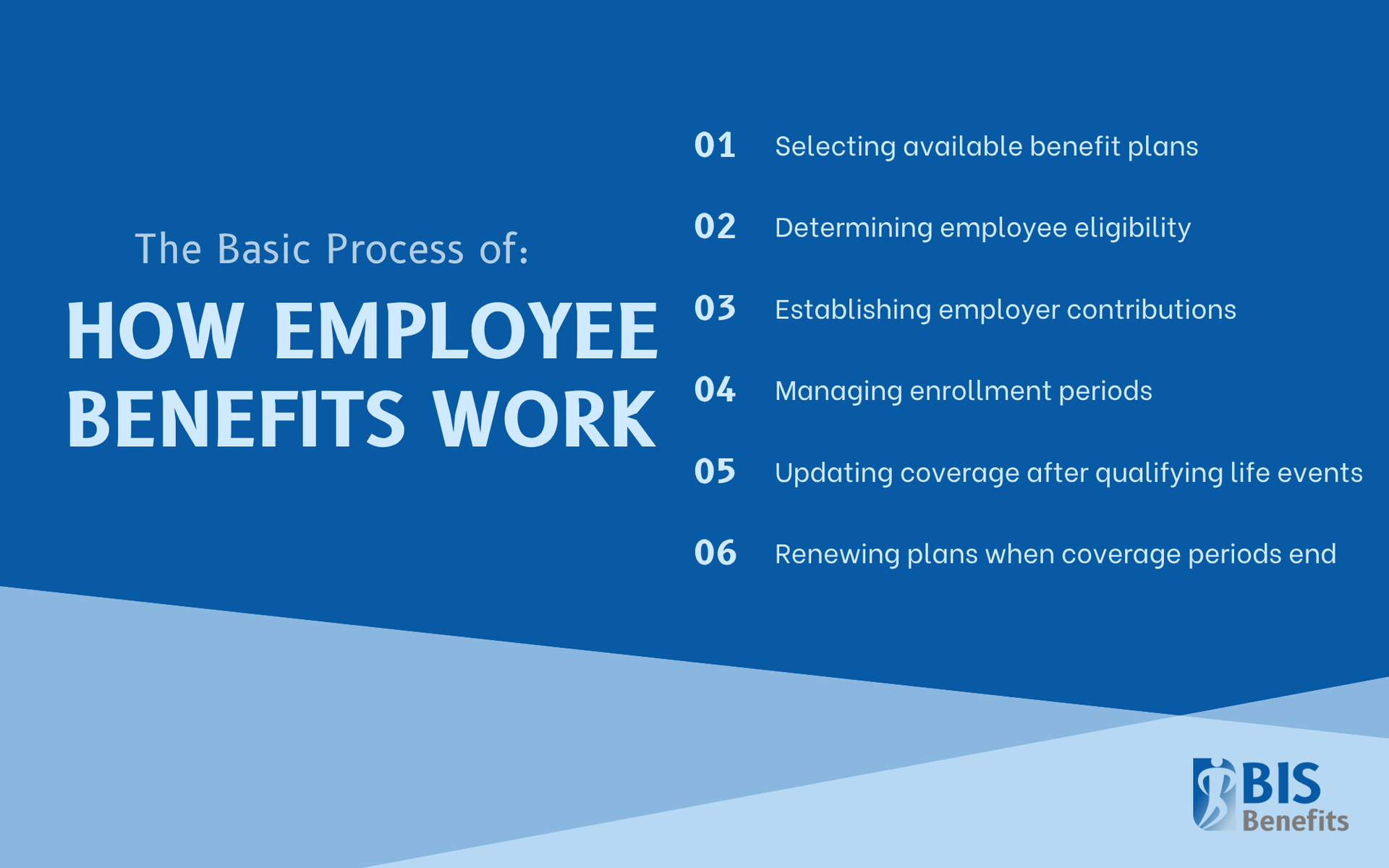
Employee benefits generally follow a process that includes selecting plans, establishing eligibility requirements, enrolling employees, and managing coverage updates throughout the year.
The basic process often includes:
- Selecting available benefit plans
- Determining employee eligibility
- Establishing employer contributions
- Managing enrollment periods
- Updating coverage after qualifying life events
- Renewing plans when coverage periods end
The details of each benefits program depend on the type of benefit and the terms established by the insurance company or provider.
Eligibility and Waiting Periods
Before employees can enroll in a benefit plan, businesses typically establish eligibility requirements. These requirements determine which employees can participate and when coverage begins.
Eligibility may depend on factors such as:
- Employment status
- Hours worked
- Length of employment
- Plan requirements
- Applicable regulations
Employee benefits plans may also define eligible dependents, which can include:
- Spouses
- Children
- Domestic partners, depending on the plan
- Other qualifying family members
Businesses should review plan documents and work with benefits professionals to understand eligibility requirements and enrollment rules.
Open Enrollment and Employee Benefit Elections
Open enrollment is a designated period when eligible employees can review available benefits and make changes to their coverage elections.
During open enrollment, employees may:
- Enroll in health insurance
- Change coverage options
- Add eligible dependents
- Review contribution amounts
- Update benefit selections
Open enrollment allows eligible employees to review available coverage options and make benefit elections for the upcoming plan year.
Special Enrollment and Qualifying Life Events
Employees typically make benefit elections during open enrollment, but certain situations may allow employees to make changes outside that period during a special enrollment period (SEP).
A qualifying life event may allow an employee to update their coverage after the normal enrollment period. Examples of
qualifying life events may include:
- Marriage
- Birth or adoption of a child
- Loss of other health coverage
- Divorce
- Changes in dependent eligibility
Understanding these rules helps businesses provide employees with accurate information when benefit changes are needed.
Premium Sharing and Employee Contributions
Businesses may structure benefit costs in different ways depending on the plan and company goals.
Common approaches include:
- Employer-paid coverage
- Shared premium costs between employer and employee
- Employee-paid voluntary benefits
Employee contributions may also apply to benefits such as:
- Dental benefits
- Vision coverage
- Accident insurance
- Critical illness coverage
- Retirement plan contributions
The amount an employer contributes toward benefits can affect employee participation and the overall cost of the program.
Plan Years and Renewals
Employee benefit plans operate according to specific plan periods. These periods determine when coverage begins, when employees can make elections, and when plans may renew.
Health insurance plans commonly have annual renewal periods.
Fully insured plans typically receive renewal information from the insurance company, while other funding arrangements may follow different renewal and funding processes. Reviewing benefits annually allows businesses to evaluate whether their current plans continue to meet employee needs and company goals.
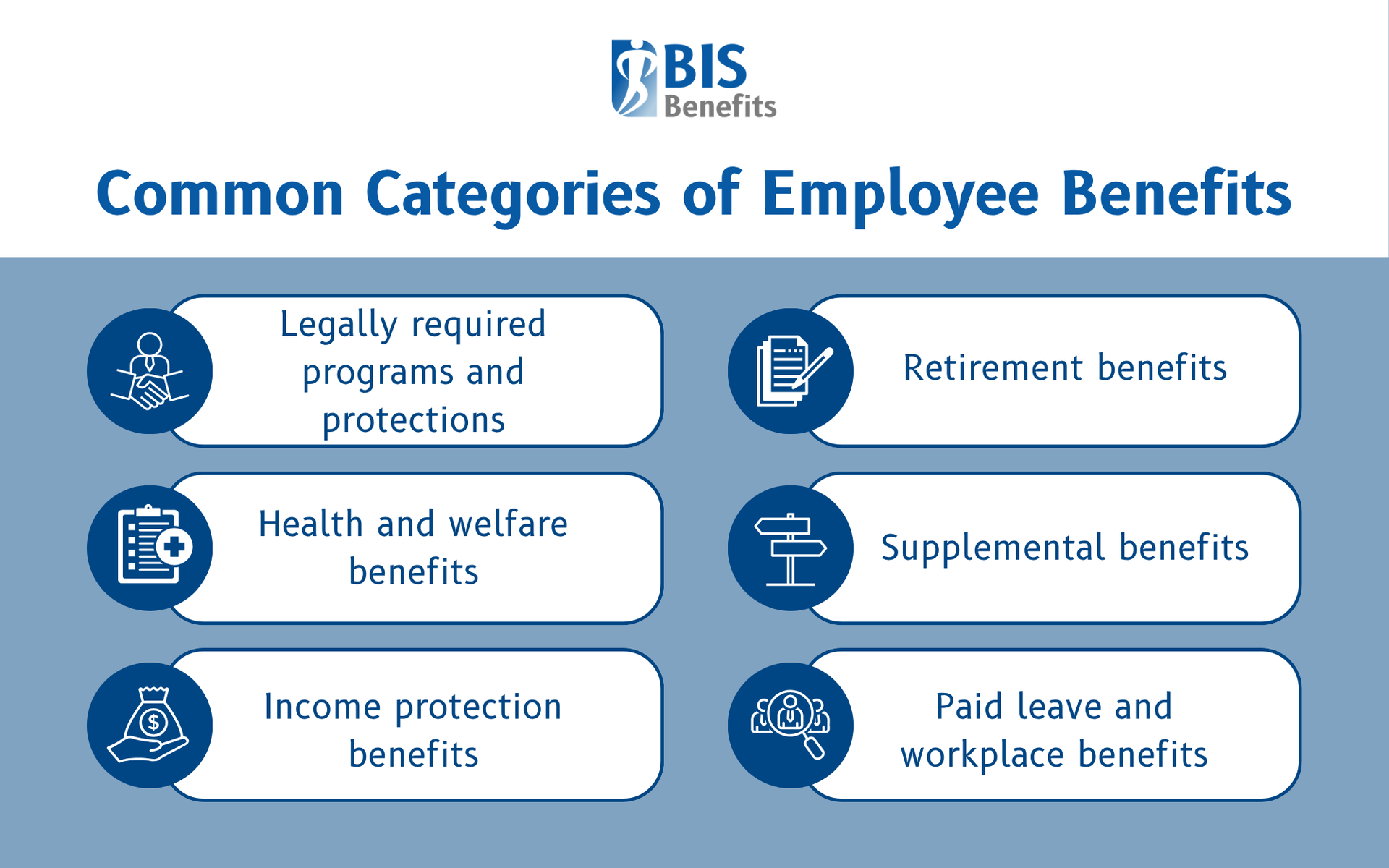
Common Categories of Employee Benefits
Businesses offer different types of employee benefits depending on their workforce, budget, and goals. Some benefits provide required workplace protections, while others are designed to support employee health, financial security, and overall well-being.
Common categories of employee benefits include:
- Legally required programs and protections
- Health and welfare benefits
- Income protection benefits
- Retirement benefits
- Supplemental benefits
- Paid leave and workplace benefits
The right combination of benefits depends on the needs of the business and its employees.
Legally Required Programs and Protections
Some employee benefits and workplace protections are required by federal or state laws. These requirements vary based on factors such as company size, location, and employee classification.
Social Security and Medicare
Employers and employees typically contribute to Social Security and Medicare through payroll taxes. These programs provide financial support and healthcare benefits for eligible individuals.
Payroll contributions help fund these programs and are managed according to federal requirements.
Unemployment Insurance
Unemployment insurance provides temporary financial assistance to eligible workers who lose their jobs through circumstances that qualify under state and federal requirements.
Employers generally contribute to unemployment insurance programs through payroll taxes.
Workers’ Compensation
Workers’ compensation provides benefits to employees who experience work-related injuries or illnesses. Workers’ compensation requirements vary by state and may depend on factors such as business size and industry. Businesses should review their state requirements to understand when coverage is required.
COBRA Continuation Coverage
Certain employers may be required to provide employees and their family members with the option to continue group health coverage after certain qualifying events.
Benefits professionals can help businesses understand
COBRA requirements and communicate available continuation coverage options to eligible individuals.
Health and Welfare Benefits
Health and welfare benefits are some of the most common employee benefits offered by businesses. These programs help employees manage healthcare costs and access important coverage.
Health Insurance
Health insurance helps employees manage eligible medical expenses through employer-sponsored group health plans.
Health coverage may include:
- Doctor visits
- Preventive care
- Prescription coverage
- Hospital services
- Other covered healthcare expenses
Many businesses compare
group health insurance options and choose plans that align with employee needs and company goals.
Dental and Vision Benefits
Dental benefits and vision coverage help employees access preventive care and services related to oral and eye health.
These benefits may help cover services such as:
- Dental exams
- Cleanings
- Vision exams
- Prescription lenses
- Contact lenses
Businesses may offer dental and vision coverage as part of a larger employee benefits package or as voluntary options that employees can choose.
Wellness Programs
Many businesses offer wellness programs designed to encourage employee health and engagement.
Examples may include:
- Health education resources
- Wellness challenges
- Fitness programs
- Preventive care resources
Wellness programs can be included as part of a broader benefits strategy that supports employee needs.
Employee Assistance Programs
An employee assistance program (EAP) provides employees with access to resources that may support personal and workplace challenges.
These programs may provide support related to:
- Mental health resources
- Financial concerns
- Family matters
- Workplace challenges
EAPs are often offered as part of a broader employee benefits package.
Income Protection Benefits
Income protection benefits help employees and their families maintain financial security when unexpected situations affect their ability to work.
Life Insurance
Life insurance provides financial protection for an employee’s beneficiaries if the employee passes away. Businesses may offer employer-paid life insurance coverage or allow employees to purchase additional coverage. Some plans may also allow employees to purchase dependent life insurance for eligible family members.
Disability Insurance
Disability insurance helps provide income protection when an employee cannot work due to an illness or injury.
Common types include:
These benefits can help employees replace a portion of their income while they recover.
Retirement Benefits
Retirement benefits help employees prepare for future financial needs.
Common retirement plans include:
- 401(k) plans
- SIMPLE IRA plans
- Other employer-sponsored retirement arrangements
A retirement plan can be an important part of a compensation plan because it supports employee financial planning and may contribute to employee retention efforts. Businesses may offer retirement benefits by allowing employees to contribute part of their earnings toward retirement savings or providing matching contributions.
Supplemental Benefits
Supplemental benefits provide additional coverage options that employees can choose based on their needs.
Examples include:
- Accident insurance
- Critical illness coverage
- Hospital indemnity coverage
- Additional life insurance
These benefits may help employees manage specific expenses that are not covered by traditional health insurance plans.
How Businesses Choose the Right Employee Benefits Package
Choosing the right employee benefits package requires understanding both employee needs and business goals.
Businesses may consider:
- Workforce size
- Employee demographics
- Budget
- Industry expectations
- Employee feedback
- Available insurance options
A benefits package may look different for every business. A benefits broker can help businesses evaluate options from insurance companies and develop a benefits approach that fits their workforce.

How a Benefits Broker Can Help Businesses Manage Employee Benefits
Managing employee benefits involves more than selecting insurance plans. Businesses must also communicate options, support enrollment, review changes, and help employees understand their available coverage.
A benefits broker can help businesses:
- Compare employee benefits options
- Review group health insurance plans
- Evaluate plan costs
- Support enrollment processes
- Understand available coverage options
- Review benefits strategies as the company grows
BIS Benefits helps Georgia businesses with 15 or more employees evaluate
group health insurance and
employee benefits options. Their brokers help businesses compare different coverage types, review benefits plans, and provide guidance throughout the benefits process.
Learn About the Right Employee Benefits for Your Team with BIS Benefits
Employee benefits provide additional value beyond an employee’s wages by supporting healthcare needs, financial security, and workplace satisfaction. As businesses grow, reviewing employee benefits programs regularly can help ensure they continue to support both employees and company goals. Working with an experienced benefits broker can help businesses compare options and develop benefits packages that fit their workforce.
BIS Benefits helps Georgia businesses evaluate group health insurance and employee benefits solutions. Their team works with businesses to review available coverage options and develop benefits strategies that align with their workforce needs.
Request a Quote from BIS Benefits to learn more about employee benefits options for your organization.