
What to Know About Workers' Compensation in Georgia
What to Know About Workers' Compensation in Georgia
At a Glance: Georgia law requires employers with three or more employees to carry workers' compensation insurance, which provides medical care, rehabilitation services, and income benefits to workers injured on the job regardless of who was at fault. Benefits include medical treatment with no deductibles or copays, plus income benefits based on the severity and duration of the injury.
Workplace injuries can happen in any industry, from construction sites and warehouses to offices and retail stores. Georgia law requires most employers to carry workers' compensation insurance to protect both their employees and their business. This coverage provides medical care, rehabilitation services, and income benefits to employees injured in workplace accidents, regardless of who was at fault.
Understanding workers' compensation requirements helps employers stay compliant with state law and ensures employees know their rights if an injury occurs. Whether you are a business owner determining your coverage obligations, an HR professional managing compliance, or an employee who has been hurt at work, knowing the basics of Georgia workers' compensation law is essential.
What Is Workers' Compensation Insurance?
Workers' compensation insurance is coverage that pays for work-related injuries and illnesses. It operates as a no-fault system, meaning benefits are paid regardless of who caused the injury. An employee does not need to prove that the employer was negligent, and the employer is protected from most lawsuits related to workplace injuries. This trade-off benefits both parties by providing quick access to medical care and wage replacement for employees while limiting employer liability.
The system works through a straightforward process. The employer purchases coverage from an insurance carrier or qualifies as self-insured. When an employee is injured on the job, they report the injury to their employer, who then files a claim with the insurance carrier. The insurance company pays for medical treatment and lost wages according to state guidelines. The employee receives benefits without having to file a lawsuit or prove employer negligence.
Workers' compensation covers a wide range of work-related incidents. This includes:
- Injuries occurring during normal work duties
- Occupational illnesses caused by work conditions
- Repetitive stress injuries from job tasks
- Accidents on employer premises during work hours are covered
- Injuries sustained while performing work-related travel
Georgia Workers' Compensation Coverage Requirements
Georgia law requires employers with three or more employees to carry workers' compensation insurance. This threshold includes both full-time and part-time employees in the count. Corporations must carry coverage, and corporate officers count as employees for this purpose. Non-profit organizations are also included in this requirement, and the mandate applies regardless of industry or job type.
When counting employees to determine if coverage is required,
all regular employees count toward the three-employee threshold. Part-time workers are included in the count, and seasonal and temporary workers may be included depending on the circumstances. Independent contractors are generally not counted, but proper classification matters. Corporate officers count as employees unless they have formally exempted themselves through the proper procedures.
Misclassifying employees as independent contractors to avoid workers' compensation requirements can result in significant penalties.
Operating without required coverage is illegal in Georgia and carries serious consequences. Employers who fail to maintain coverage are subject to fines and penalties from the
Georgia State Board of Workers' Compensation. Without insurance, the employer becomes personally liable for all medical costs, which can be financially devastating for a single catastrophic injury. Willful non-compliance may result in criminal charges, and the State Board can issue stop-work orders that shut down business operations until insurance coverage is obtained.

Types of Workers' Compensation Benefits in Georgia
Georgia workers' compensation provides several types of benefits to injured workers.
Medical Benefits
These cover all reasonable and necessary treatment related to the work injury. This includes doctor visits and specialist consultations, hospital stays and emergency room treatment, physical therapy and rehabilitation, prescription medications, and medical equipment and supplies. Injured workers may also receive mileage reimbursement for traveling to medical appointments. Importantly, there are no deductibles or copays for injured workers receiving treatment for their work-related injury.
Income Benefits
These provide wage replacement when an injury prevents an employee from working. These benefits are calculated as a percentage of the employee's average weekly wage and are subject to state maximum and minimum limits. Different benefit types apply based on the severity and duration of the disability.
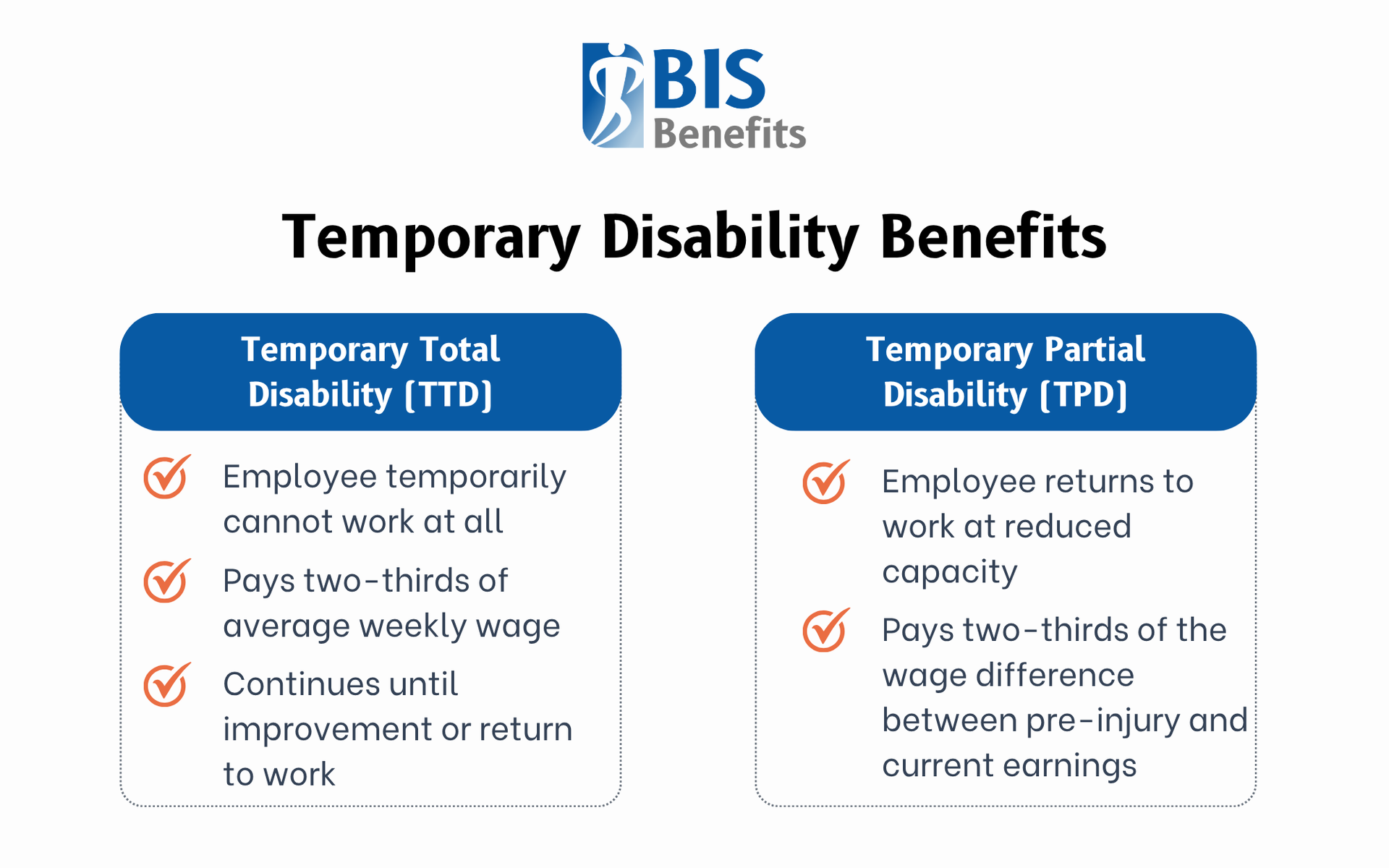
Temporary Total Disability (TTD)
These benefits are paid when an employee cannot work at all during recovery. TTD pays two-thirds of the employee's average weekly wage, subject to state caps. Benefits begin after a seven-day waiting period and continue until the employee reaches maximum medical improvement or returns to work.
Temporary Partial Disability (TPD)
These benefits apply when an employee returns to work at reduced capacity, such as light duty with fewer hours or lower pay. TPD covers the difference between pre-injury and current wages, paying two-thirds of the wage difference. This helps bridge the income gap during recovery while the employee works in a limited capacity.
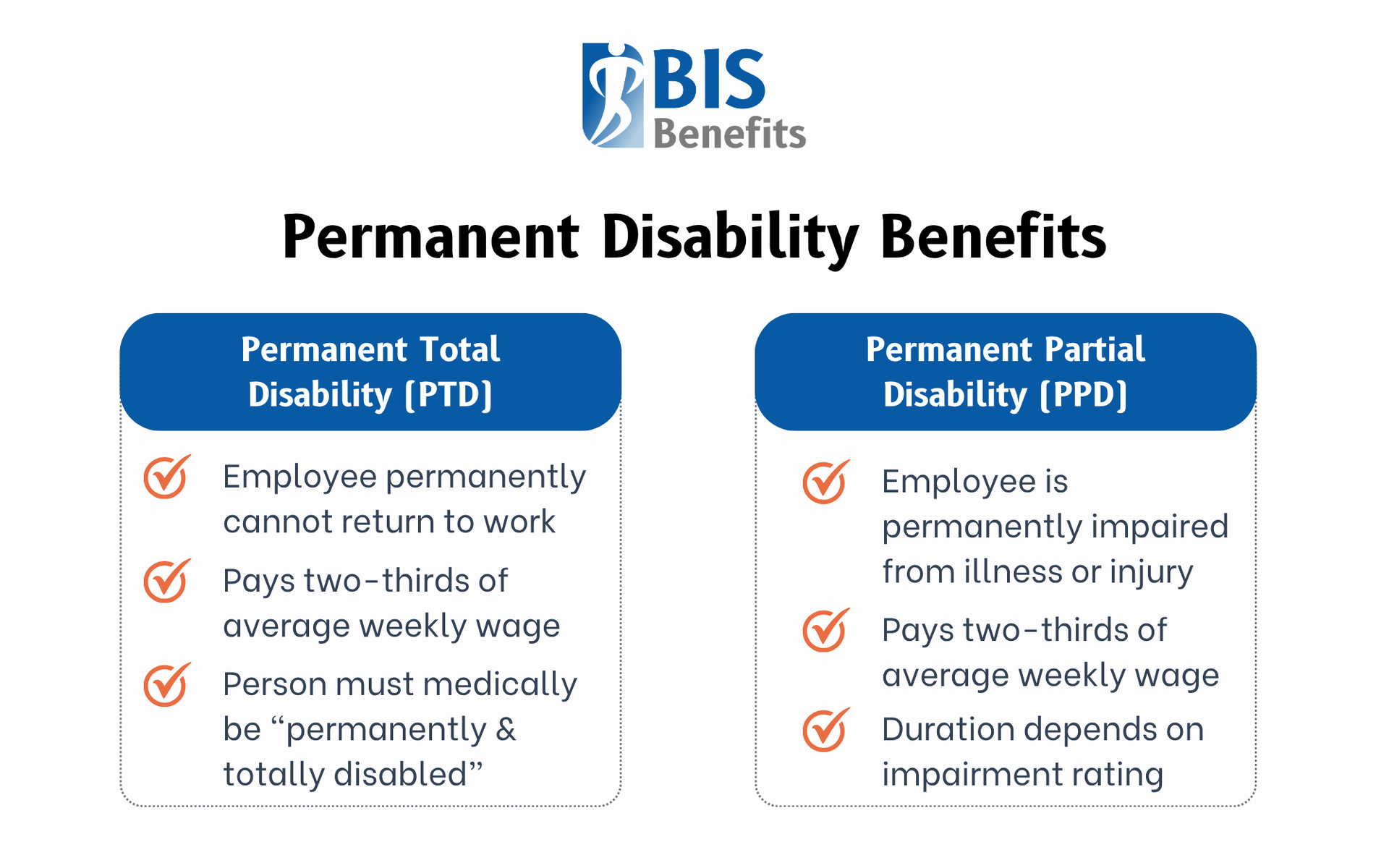
Permanent Total Disability (PTD)
These benefits apply when an injury leaves an employee permanently and completely unable to return to any type of gainful employment. PTD pays two-thirds of the employee's average weekly wage, subject to state caps, and may continue for the duration of the disability. Certain catastrophic injuries may automatically qualify for permanent total disability status under Georgia law.
Permanent Partial Disability (PPD)
These benefits are paid when an injury results in permanent impairment. The amount is based on an impairment rating from the treating physician and calculated according to Georgia's schedule of benefits. Scheduled injuries involve specific body parts with predetermined compensation values, while non-scheduled injuries receive whole body impairment ratings.
Death Benefits
These are paid to dependents if a worker dies from a job-related injury. Surviving spouses and dependent children are eligible to receive weekly benefits based on the worker's wage. Burial expenses are also covered up to the state maximum.
The Georgia Workers' Compensation Claims Process
The claims process begins when an employee reports an injury to their employer. This should happen immediately or as soon as possible after the injury occurs. The employer then notifies their insurance carrier and the employee seeks treatment from a physician on the employer's authorized panel. The insurance carrier investigates the claim and processes it according to state guidelines. If the claim is accepted, benefits begin.
During claim investigation, the insurance carrier reviews the injury report and obtains medical records. The employer provides wage information used to calculate income benefits. The carrier determines if the injury is compensable under Georgia law and communicates the decision to both the employee and employer. If a claim is denied or benefits are disputed, the employee can file a request for hearing with the State Board of Workers' Compensation.
Employer Responsibilities and Compliance
Employers must obtain workers' compensation coverage from a licensed insurer. Those unable to obtain coverage through standard markets can consider the assigned risk pool. Large employers may qualify for self-insurance, and group self-insurance programs are available for certain industries. Regardless of how coverage is obtained, employers must maintain continuous coverage without lapses.
Legal Requirements
Georgia law imposes several workplace requirements on employers.
- A workers' compensation notice must be posted in a visible location where employees can see it.
- The panel of authorized physicians must also be posted prominently.
- Employers must maintain records of workplace injuries, report injuries to their insurance carrier promptly, and file required forms with the State Board.
Carrier Communication
Working effectively with your insurance carrier helps the claims process run smoothly. Report claims promptly and accurately, and provide wage information for benefit calculations. Cooperate with claim investigations and communicate with injured employees throughout the process. Implementing return-to-work programs when possible helps employees transition back to their jobs and can reduce claim costs.
Risk Management
Implementing workplace safety programs, training employees on injury prevention, and addressing hazards before injuries occur all reduce the likelihood of claims. Documenting safety efforts and training creates a record of your commitment to workplace safety. These improvements may also reduce insurance costs over time through experience rating modifications.
Protect Your Business and Your Employees with BIS Benefits
Georgia workers' compensation laws require employers with three or more employees to carry insurance that provides medical, rehabilitation, and income benefits to workers injured on the job, regardless of fault. Both employers and employees benefit from understanding coverage requirements, reporting deadlines, and the claims process. Employers stay compliant and avoid penalties, while employees receive the care and wage replacement they need to recover.
A commercial insurance broker can help employers verify that their coverage meets Georgia requirements and ensure they have the best workers' comp insurance plan for their needs. BIS Benefits offers several
group health and
business insurance brokerage services, including
worker’s compensation.
Request a Free Quote from BIS Benefits today to review your coverage and protect your business and your employees.