What Is the Role of HR in Handling Employee Benefits?
What Is the Role of HR in Handling Employee Benefits?
At a Glance: The role of HR in handling employee benefits is to help businesses evaluate, manage, and communicate benefits programs that support employees and company goals. HR teams help coordinate benefit providers, support benefits enrollment, and help employees understand their available coverage options.
Employee benefits are an important part of attracting and retaining employees, but managing these programs requires planning, communication, and ongoing attention. The role of HR in handling employee benefits includes helping evaluate benefit options, coordinating with insurance providers, supporting enrollment, communicating plan details, and assisting employees with benefits questions.
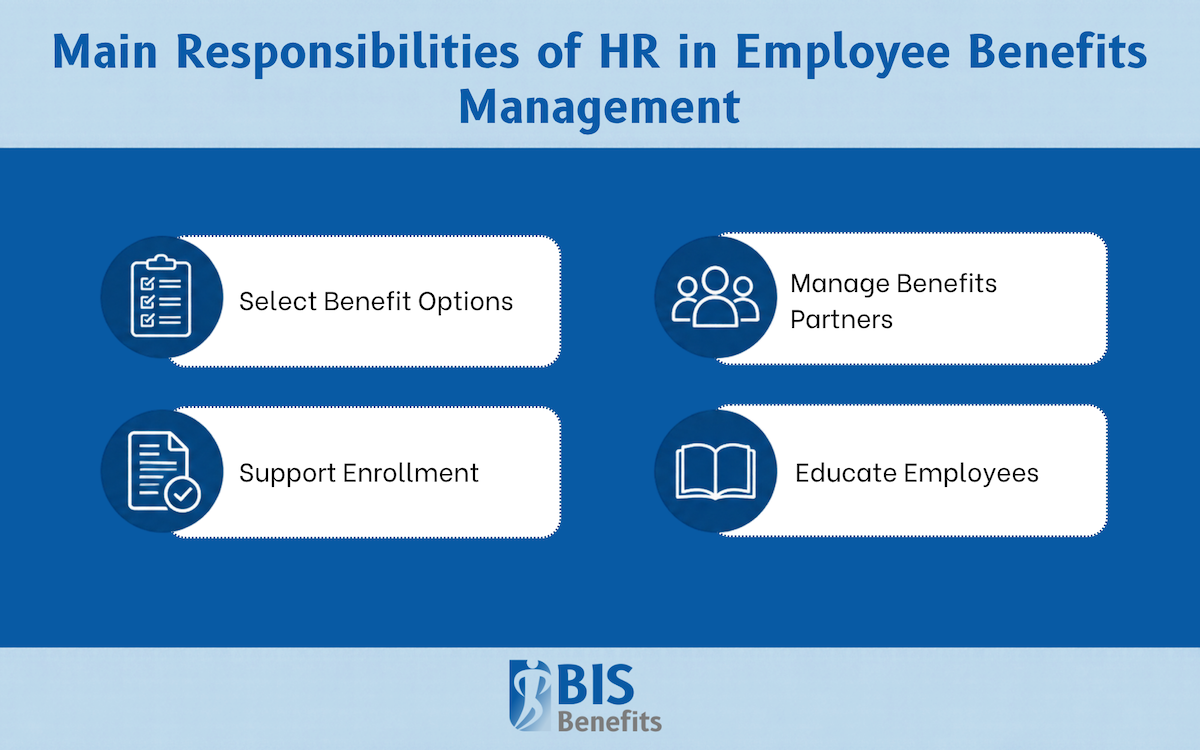
Main Responsibilities of HR in Employee Benefits Management
HR serves as the connection between a company’s goals, employee needs, and the partners that support its benefits programs. Many HR teams work with benefits brokers, insurance carriers, and company leadership to compare options and support decisions about coverage.
Through effective human resource management, HR teams help create benefits strategies that support employee engagement, workplace satisfaction, and long-term business goals. This includes managing the benefits administration process and helping employees understand available insurance benefits, retirement savings options, and workplace programs.
A strong benefits strategy from an
experienced benefits broker can help businesses provide valuable employee benefits while creating a
positive experience for employees.
Designing and Selecting Employee Benefits Packages
One of HR’s responsibilities is helping businesses evaluate employee benefits options and support decisions about benefits packages that meet the needs of their workforce.
When reviewing benefits options, HR teams may consider:
- Employee needs and preferences
- Company budget
- Workforce demographics
- Hiring and retention goals
- Available coverage options
Employee benefits packages may include a variety of insurance benefits and workplace programs, including:
- Health insurance
- Dental insurance
- Vision insurance
- Life insurance
- Retirement benefits
- Retirement plans
- Wellness programs
- Supplemental benefits
- Flexible spending accounts
- Health savings accounts
The right benefits package depends on the company, employees, and available coverage options. HR teams may also consider eligibility requirements when selecting plans, including which full-time employees and eligible dependents qualify for coverage.
HR teams often work with
benefits brokers to compare plans and understand how different coverage choices align with their goals. A broker can help businesses evaluate available options and review how benefits programs support employee needs.
Managing Benefits Providers and Insurance Partners
HR teams often work with outside partners involved in employee benefits, including insurance carriers and benefits brokers. These partnerships give businesses additional guidance when reviewing coverage options, managing costs, and evaluating available employee benefits programs.
Responsibilities may include:
- Reviewing available plan options
- Comparing coverage and costs
- Communicating with insurance providers
- Coordinating benefit changes
- Reviewing employee needs
Benefits brokers can help businesses evaluate coverage options, compare insurance carriers, and provide guidance when selecting employee benefits programs. BIS Benefits works with Georgia businesses to evaluate
group health insurance and
employee benefits options. Their brokers help businesses compare available coverage, review plan options, and provide guidance throughout the benefits process.
Supporting Open Enrollment and Employee Education
Open enrollment is an important part of the benefits enrollment process. It gives employees an opportunity to review available benefits and make coverage decisions for the upcoming plan year.
During open enrollment, HR teams often help by:
- Sharing information about available benefit options
- Sharing enrollment information
- Answering employee questions
- Providing benefit resources
- Helping employees understand coverage differences
During this period, HR teams may explain
health insurance options, retirement benefits, wellness programs, and other available
employee benefits. Clear benefits communication helps employees understand their choices and select coverage that fits their needs.
HR teams may also provide ongoing education throughout the year by sharing information about available programs, coverage options, and employee resources.

Helping Manage Employee Benefits Administration
Employee benefits programs involve ongoing HR benefits administration responsibilities that businesses must manage throughout the year.
HR teams may help with tasks such as:
- Tracking employee eligibility
- Maintaining benefit records
- Providing employee information
- Coordinating updates with benefit providers
- Confirming eligible employee and eligible dependent information
- Reviewing coverage eligibility changes
Because benefits programs can change over time, HR teams often work with benefits professionals and advisors to review available options and stay informed about updates that may affect their employees.
This may include reviewing employee benefits compliance requirements related to programs such as the
Affordable Care Act (ACA),
COBRA compliance, and
ERISA requirements. HR teams often collaborate with benefits partners and other advisors to support these responsibilities.
Managing Daily Benefits Administration
Benefits administration continues throughout the year, not only during open enrollment. There are several options for benefits platforms that can be used by HR teams.
HR teams may assist with:
- Processing employee enrollments
- Updating coverage information
- Managing qualifying life events
- Adding or removing eligible dependents
- Answering employee benefits questions
- Coordinating updates with providers
Accurate benefits administration helps employees receive the correct coverage information and creates a smoother experience when managing benefit changes. A consistent benefits administration process can also help improve employee relations by giving employees a reliable resource for questions about their coverage.
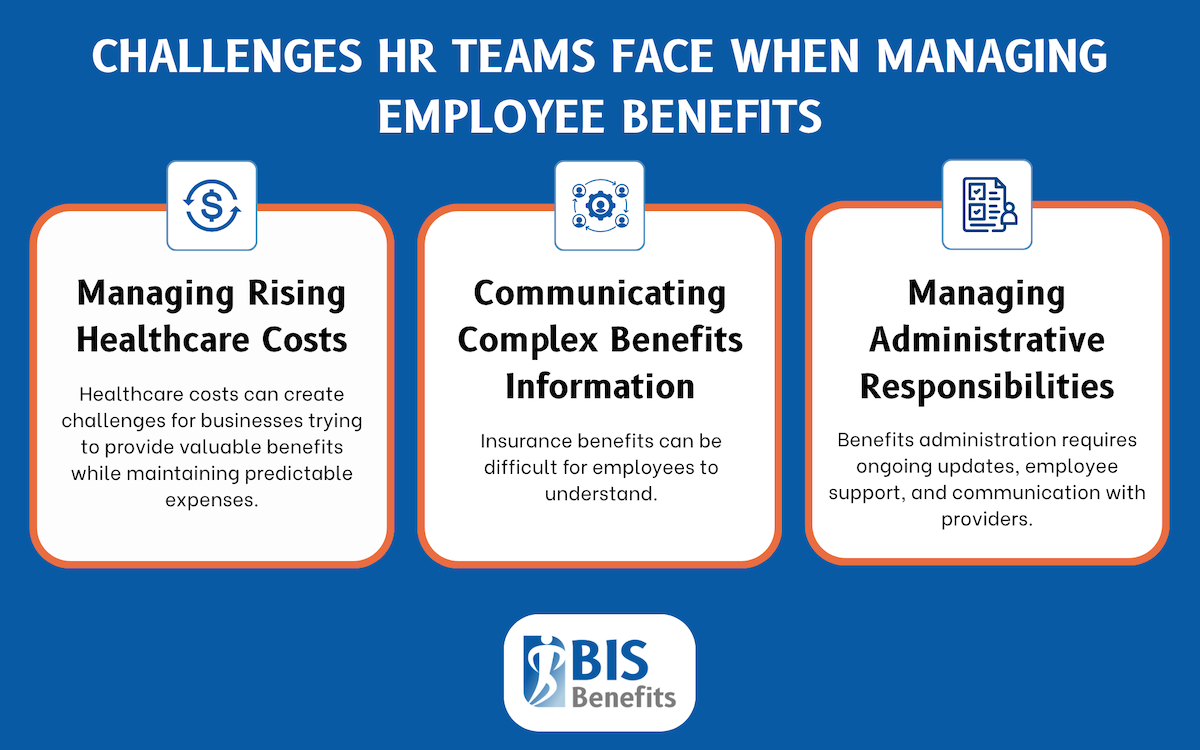
Challenges HR Teams Face When Managing Employee Benefits
Managing employee benefits requires balancing employee expectations, company budgets, and changing benefit needs.
Managing Rising Healthcare Costs
Healthcare costs can create challenges for businesses trying to provide valuable benefits while maintaining predictable expenses. HR teams often work with benefits brokers to review available options, compare plans, evaluate costs, and identify coverage solutions that fit their organization.
Communicating Complex Benefits Information
Insurance benefits can be difficult for employees to understand. Terms, coverage options, and costs may create confusion during enrollment. Clear communication through benefit guides, meetings, and educational resources can help employees better understand their choices.
Managing Administrative Responsibilities
Benefits administration requires ongoing updates, employee support, and communication with providers. As businesses grow, HR teams may need additional support when comparing options and managing changes to employee benefits programs.
The Importance of a Strong Benefits Strategy
A strong benefits strategy helps businesses create programs that support employees while aligning with company goals.
Effective employee benefits management may help businesses:
- Support employee satisfaction and retention efforts
- Provide competitive benefits offerings when recruiting employees
- Create a positive workplace experience
- Align benefits with employee needs
HR teams play an important role in helping employees understand their benefits while helping businesses manage programs that support their workforce. Working with experienced benefits professionals can provide additional guidance when reviewing coverage options and planning for future needs.
Learn How HR Plays a Role in Employee Benefits with BIS Benefits
HR plays a central role in managing employee benefits, from evaluating plans and coordinating providers to supporting enrollment and communicating coverage information. Effective benefits management requires planning, organization, and consistent communication. As businesses grow, working with an experienced benefits broker can help HR teams compare coverage options and create benefits packages that support their employees.
BIS Benefits helps Georgia businesses with 15 or more employees evaluate group health insurance and employee benefits options through experienced brokerage support. Their team helps businesses compare coverage options, support enrollment, and manage ongoing benefits needs.
Request a Quote from BIS Benefits to learn more about available benefits options for your organization.