What Is General Contractor Liability Insurance?
What Is General Contractor Liability Insurance?
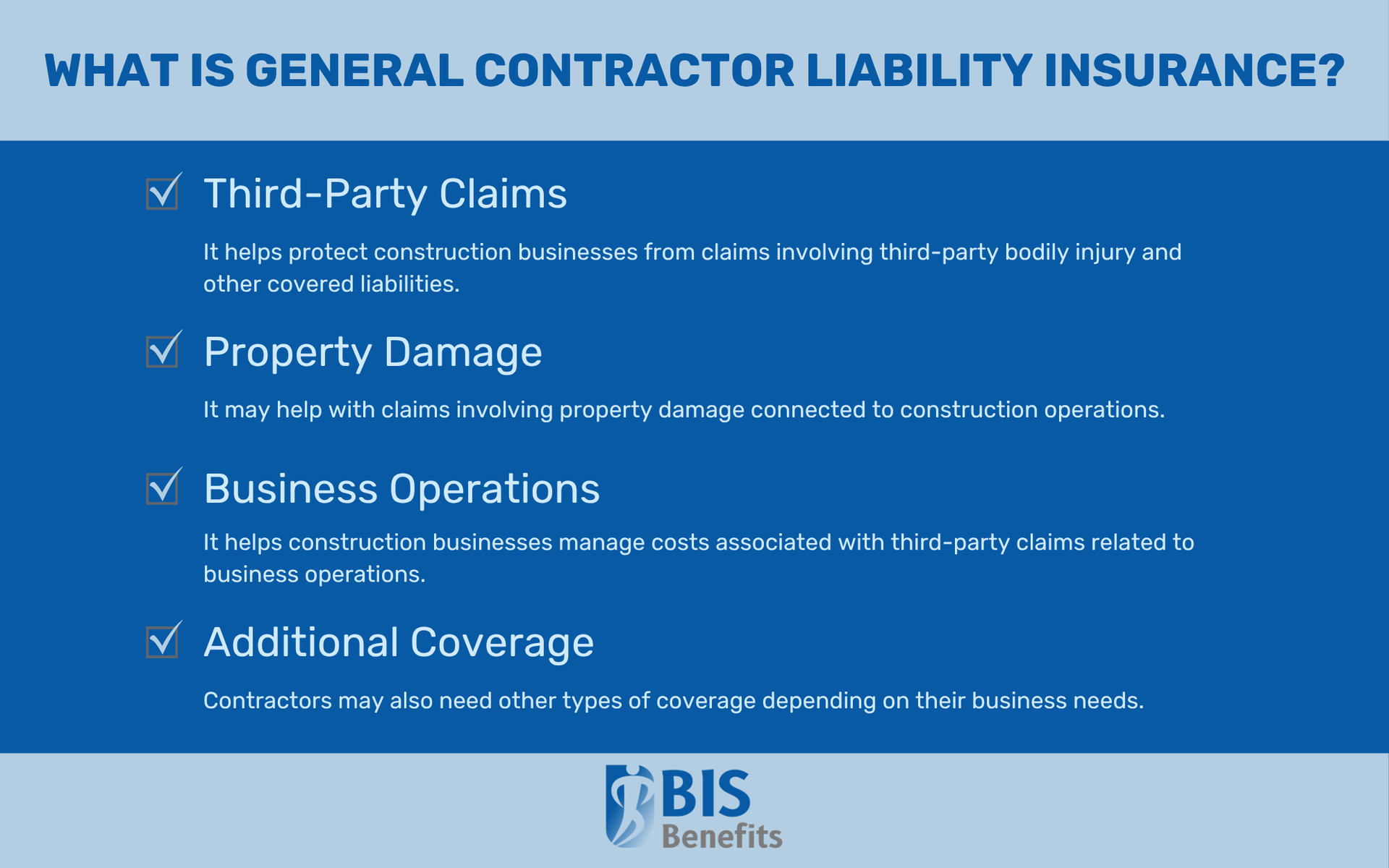
At a Glance: General contractor liability insurance helps protect construction businesses from claims involving third-party bodily injury, property damage, and other covered liabilities related to business operations. It may help with legal costs and other expenses when a covered claim occurs.
General contractor liability insurance is a type of commercial general liability insurance that helps construction businesses manage costs associated with third-party claims. Coverage may help with claims involving bodily injury, property damage, and other liabilities connected to construction operations.
While general liability insurance provides important protection, contractors may need additional coverage, such as
workers’ compensation,
commercial property insurance,
commercial auto insurance, or equipment coverage, depending on their business needs.
What is General Contractor Liability?
General contractor liability insurance is a type of business insurance that helps construction businesses manage costs associated with certain third-party claims related to their operations. This coverage is designed to help contractors handle expenses connected to covered claims involving bodily injury, property damage, and other covered risks.
Construction businesses face many hazards while completing projects. Contractors may work around clients, vendors, subcontractors, and members of the public, creating opportunities for accidents or unexpected damage. In situations like these, general liability coverage may help with expenses related to a covered claim.
General contractor liability insurance may help cover:
- Legal costs
- Medical expenses related to covered injuries
- Costs associated with covered property damage claims
- Other covered claim expenses
Many contractors include general liability insurance as part of a broader contractor insurance plan. The right combination of coverage depends on the type of construction work performed, business operations, and specific risks.
Why Do General Contractors Need Liability Insurance?
General contractors manage projects with many different risks, from job site accidents to accidental property damage. A single claim could create unexpected expenses that affect a construction business’s finances.
General liability insurance helps protect business owners by providing coverage for certain claims brought by third parties. This can help contractors manage costs associated with covered incidents.
Common situations where general contractor liability insurance may help include:
- A visitor being injured at a job site, which could result in legal costs related to a covered bodily injury claim.
- Construction activities that accidentally damage a client’s property, which may require repair expenses.
- Personal or advertising injury claims that create legal expenses.
General liability insurance does not replace every type of contractor insurance. Many construction businesses also review additional coverage options to address risks involving employees, vehicles, equipment, and property.
What Does General Contractor Liability Insurance Cover?
General liability insurance coverage varies by policy, but it commonly helps protect businesses from several types of third-party claims.
Bodily Injury
Bodily injury coverage helps protect contractors if someone outside of the business is injured because of their operations. If the contractor is responsible for a covered incident, general liability coverage may help with related expenses.
This coverage applies to third-party injuries. Employee injuries are typically handled through workers’ compensation insurance.
Property Damage
Property damage coverage helps protect contractors when their work causes damage to another person’s property. General liability insurance may help cover repair costs related to covered property damage claims.
Property damage coverage generally applies to damage involving someone else’s property. Separate insurance may be needed for the contractor’s own tools, equipment, or materials.
Personal and Advertising Injury
General liability insurance may also include coverage for certain personal and advertising injury claims.
This may include certain claims involving:
- Libel
- Slander
- Advertising-related injuries
If a contractor faces a covered claim, general liability coverage may help with legal expenses and other related costs.
What Does General Contractor Liability Insurance Not Cover?
General liability insurance provides protection for many common business risks, but it does not cover every situation a contractor may face.
Construction businesses often need additional insurance policies to address risks outside of general liability coverage.
Employee Injuries
Employee injuries are generally not covered by general liability insurance.
Workers’ compensation insurance helps protect businesses and employees when workplace injuries or illnesses occur. Coverage may help with medical expenses and lost wages related to covered employee injuries.
Businesses with employees should review their workers’ compensation requirements based on their location and business operations.
Tools and Equipment
General liability insurance typically does not cover a contractor’s tools, equipment, or machinery. Contractors may need additional equipment coverage to protect valuable business property used on job sites.
This may include coverage for items such as:
- Construction equipment
- Tools
- Machinery
- Business property used during projects
Design or Professional Errors
General liability insurance generally does not cover professional mistakes involving design, consulting, or engineering services. For these types of risks, contractors may need professional liability insurance, also called errors and omissions insurance.
Professional liability insurance may help protect businesses from claims involving mistakes or failures related to professional services.
Work Being Completed
General liability insurance is not designed to cover every type of damage involving the construction project itself.
Contractors may need
builders risk insurance to help protect certain materials, supplies, and property involved in a construction project while work is being completed.
Other Insurance Options for General Contractors
General liability insurance is one part of a complete business insurance plan. Construction businesses may need additional coverage depending on their services, employees, equipment, and projects. A broader contractor insurance plan may include coverage options designed around the specific risks contractors face.
Workers’ Compensation Insurance
Workers’ compensation insurance helps protect employees who experience workplace injuries or illnesses. It may help cover medical expenses and lost wages related to covered claims.
Commercial Property Insurance
Commercial property insurance helps protect business property from covered losses. This may include buildings, equipment, inventory, and other business assets.
Commercial Auto Insurance
Commercial auto insurance helps protect vehicles used for business purposes. Contractors who use trucks or other vehicles for business operations may need this type of coverage.
Builders Risk Insurance
Builders risk insurance may help protect certain property, materials, and supplies involved in a construction project while work is underway. Contractors may consider this coverage for projects involving buildings, materials, and supplies.
Professional Liability Insurance
Professional liability insurance helps protect businesses that provide professional services, advice, or consulting from claims involving errors or omissions.
Surety Bonds
Some construction projects may require a surety bond as part of the contract. A surety bond provides financial protection related to a contractor’s obligations under an agreement.
How to Choose General Contractor Liability Insurance
Choosing the right contractor insurance coverage starts with understanding the risks associated with your business.
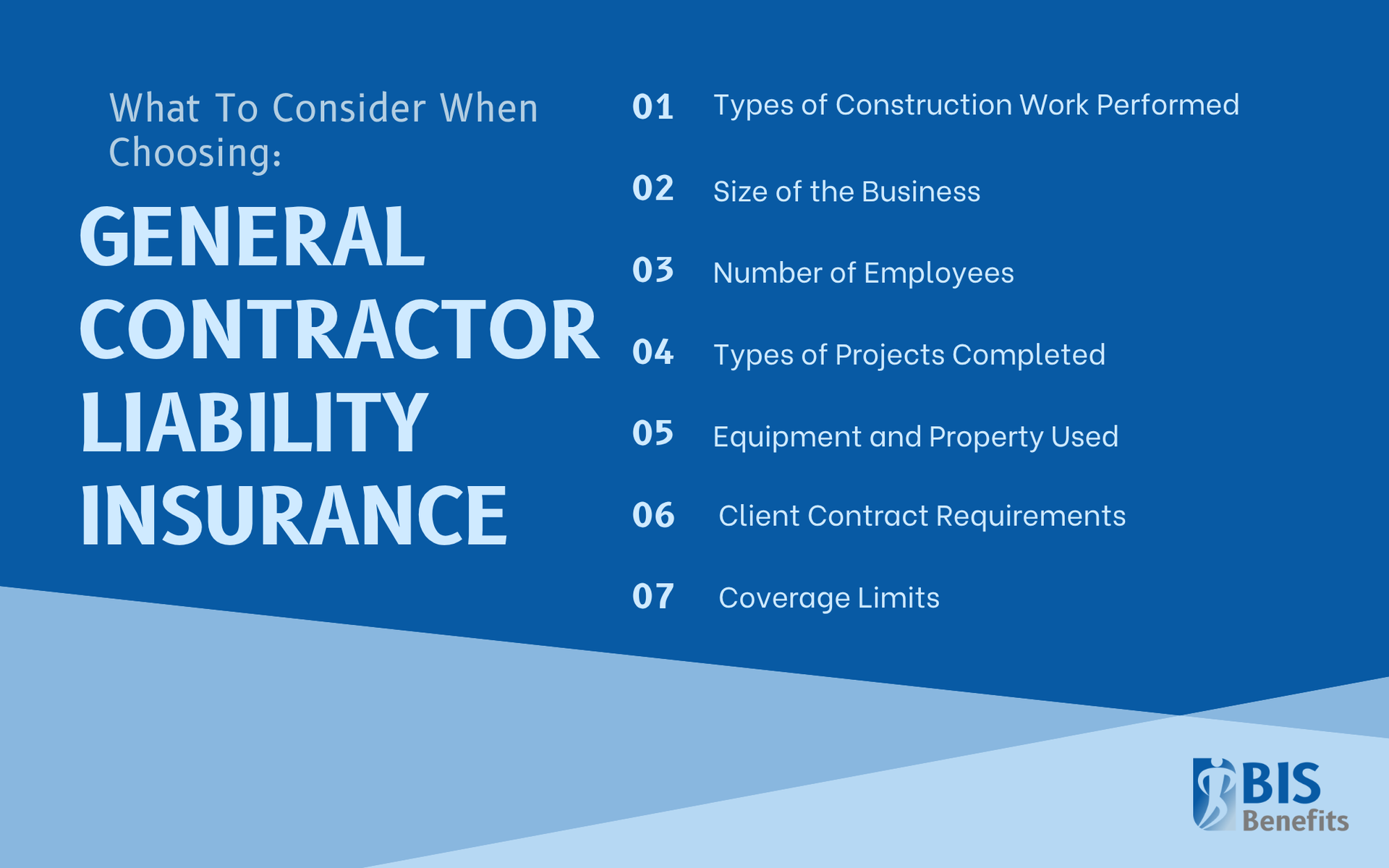
Contractors should consider:
- Type of construction work performed
- Size of the business
- Number of employees
- Types of projects completed
- Equipment and property used
- Client contract requirements
- Coverage limits
Many businesses are also asked to provide a
certificate of insurance as proof of coverage. This document shows important policy information and may be requested by clients, project owners, or other businesses before work begins.
Working with an experienced insurance broker can help contractors compare available coverage options and identify policies that fit their operations.
Protect Your Construction Business With the Right Coverage
General contractor liability insurance helps construction businesses manage risks related to third-party claims, including bodily injury and property damage. Having the right coverage can help businesses manage expenses associated with covered claims and better prepare for unexpected risks.
However, general liability insurance is only one part of a complete contractor insurance plan. Depending on the business, additional coverage such as workers’ compensation, commercial property insurance, commercial auto insurance, equipment coverage, and professional liability insurance may also be needed.
BIS Benefits helps businesses review their insurance needs and compare coverage options from leading insurance carriers. If your business is located in Georgia and you are looking for a broker that can give you guidance on
general liability insurance or
employee benefits,
Request a Quote from BIS Benefits to learn more about available options.